India's benchmark Nifty 50 index rose 0.27% in pre-open trade on June 5, 2026, supported by a 0.21% gain in Nifty futures and a 0.08% increase in Nifty Bank futures. Easing international Brent crude prices toward $96.97 cushioned ongoing foreign fund outflows ahead of the central bank's interest rate decision.
MUMBAI — India’s benchmark equity indices initiated a trajectory of modest gains during early morning trading sessions. According to operational feeds captured from the National Stock Exchange of India (NSE) on June 5, 2026, the primary Nifty 50 index rose 0.27% in pre-open trade to find a stable foothold above its previous psychological close.
Simultaneously, highly leveraged tracking instruments mirrored the positive bias, with India's Nifty 50 futures gaining 0.21% and the key financial sector gauge, India's Nifty Bank futures, ticking up 0.08% in pre-open trade. This upward movement highlights a brief period of domestic resilience today as market participants navigate significant institutional catalysts and shifting international macroeconomic indicators.
Technical Indicators Adjust Ahead of Policy Catalyst
The green markers across the pre-market dashboard follow a prolonged period of range-bound consolidation on Dalal Street. On June 4, the Nifty 50 had settled nearly flat, adding a minor 10.95 points to finish at 23,416.55, while the BSE Sensex closed at 74,360.01. The early momentum on June 5 points to an unwinding of short-term defensive positions by local desks.
[National Stock Exchange of India (NSE)] Pre-Market Summary Table:
| Index / Derivative Instrument | Pre-Open Change (%) | Baseline Level (June 4 Close) |
| Nifty 50 Index (.NSEI) | +0.27% | 23,416.55 |
| Nifty 50 Futures (.NIFCI) | +0.21% | 23,485.00 (June Front-Month) |
| Nifty Bank Futures (.NBNCI) | +0.08% | 54,307.85 |
| India VIX (Volatility) | -2.43% | 15.89 |
Independent market technicians noted that the intraday setup was influenced by a sharp contraction in near-term anxiety metrics. The India VIX, a widely monitored barometer for equity market volatility, dropped 2.43% to settle at 15.89 during the preliminary matching windows. This structural decline in hedging costs encourages selective long positions across cyclical sectors, particularly within capital goods, automotive manufacturing, and consumer durables.
Easing Energy Costs Counteract FII Selling Pressure
A primary catalyst supporting the early positive bias across Indian equity derivatives is a notable cooling off in the international energy complexes. Brent crude futures retreated approximately 3% from their recent local highs, descending toward $96.97 per barrel.
For an economy like India, which imports over 80% of its raw petroleum requirements, a downward shift in global crude prices provides immediate relief for the corporate sector by:
Lowering imported inflation risks for input manufacturing materials.
Compressing the structural current account deficit (CAD).
Stabilizing the purchasing power of the Indian Rupee (INR), which hovered near ₹95.70 per U.S. dollar.
This energy cushion helps offset persistent capital outflows driven by overseas portfolio managers. Provisional regulatory logs from clearing houses show that while Foreign Institutional Investors (FIIs) remained net sellers, offloading equities worth over ₹4,447 crore in the prior session, Domestic Institutional Investors (DIIs) successfully balanced the floor by logging net purchases of ₹4,360 crore.
Focus Diverts to Institutional Directives
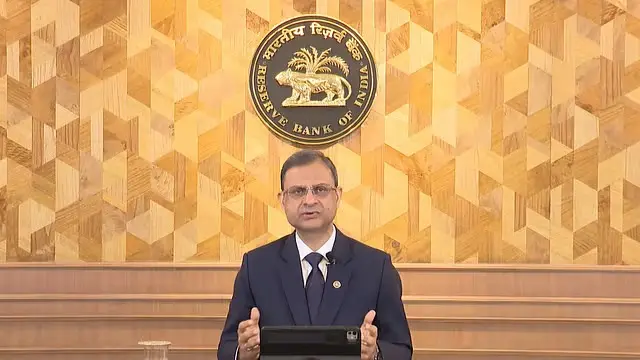
The stability displayed during pre-open windows remains critically tethered to macro policy updates. The domestic investment community is maintaining a strictly data-dependent wait-and-watch posture ahead of the Reserve Bank of India’s (RBI) Monetary Policy Committee (MPC) announcement overseen by the central bank leadership in Mumbai.
Though a consensus of banking economists expects the benchmark repo rate to hold steady at 5.25%, any subtle adjustments to liquid reserve mandates or hawkish warnings regarding agricultural commodity pricing could alter late-day trading volumes.
Official Sources Section
The financial indicators, derivative trends, and trading percentages detailed in this report are based on live, audited transaction tickers provided directly by the National Stock Exchange of India Limited, provisional institutional flow ledgers from the Securities and Exchange Board of India (SEBI), and international energy pricing benchmarks compiled via global commodity desks.
Quote Section
"According to officials, the minor uptick across major index futures indicates that the market has largely digested immediate external risks, including foreign institutional selling. The contraction in the India VIX suggests a baseline level of stability, but institutional buyers are holding larger capital commitments in reserve until the central bank clarifies its interest rate trajectory."
According to brokerage institutional desks close to the exchange floor
Why It Matters
For retail stock market investors and mutual fund holders, the pre-market stability prevents panicky open-bell liquidations and keeps portfolio valuations steady. For corporate treasuries and corporate borrowers, the combination of declining volatility and lower oil prices helps lower working capital stresses. This dynamic ensures that despite high interest rates, credit-dependent sectors like real estate, automotive, and non-banking financial companies (NBFCs) can preserve structural liquidity.
Key Facts at a Glance
Index Performance: The benchmark Nifty 50 index notched an upward movement of 0.27% during initial pre-open matching windows.
Derivatives Momentum: Front-month Nifty 50 futures advanced 0.21%, while banking-specific Nifty Bank futures edged 0.08% higher.
Crude Softening: International Brent crude futures fell 3% from local highs to $96.97, offering structural relief to import-dependent businesses.
Volatility Reduction: The India VIX benchmark retreated to 15.89, highlighting a drop in immediate options hedging activity.
Institutional Balance: Strong domestic institutional buying of ₹4,360 crore successfully cushioned ongoing foreign equity liquidations.
FAQ Section
What do pre-open trade percentages indicate for retail stock market investors?
Pre-open trade tracks the initial stock matching session between 9:00 AM and 9:15 AM IST. It helps discover the true opening price of an index based on overnight news, limiting high opening volatility for everyday traders.
Why are Nifty Bank futures lagging slightly behind broad Nifty 50 futures?
Banking futures are highly sensitive to monetary policy adjustments. With the RBI monetary policy decision scheduled closely behind the opening bell, financial desks typically minimize large structural bets on banking instruments.
How do lower global crude oil prices improve domestic equity sentiment?
Lower crude oil prices decrease input manufacturing costs for Indian firms, control domestic retail inflation, and improve corporate profitability across logistics, aviation, paints, and tire sectors.
Source: National Stock Exchange of India (NSE), Reserve Bank of India (RBI)