An urban forestry initiative in Lucknow has achieved an unprecedented 95% survival rate after translocating approximately 600 mature, heritage trees away from major infrastructure corridors. By employing strict root-preservation techniques and dedicated post-transplant care, the project successfully balanced rapid civic development with immediate, long-term environmental protection for the city's residents.
LUCKNOW — A massive urban forestry initiative in Uttar Pradesh’s capital has achieved a critical milestone. On World Environment Day, official records show that more than 95% of approximately 600 mature trees translocated to bypass major infrastructure corridors have successfully survived. The project counters traditional urban development frameworks by successfully saving decades-old native canopies from felling.
Balancing Rapid Infrastructure and Urban Ecological Health
As public discourse scales up surrounding global temperatures and shrinking metropolitan green spaces, the Uttar Pradesh Metro Rail Corporation (UPMRC) has verified that sustainable development policies can effectively mitigate urban heat island effects. The translocated specimens—including heritage Peepal, Banyan, Molshree, Semal, Kanji, and Lasora varieties—were meticulously shifted from areas slated for transit lines and civic expansion, including the Lucknow Metro Depot and the Polytechnic intersection.
The success stands in contrast to historic compensatory planting strategies, which typically replace a 40-year-old apex tree with minimal saplings that require decades to replicate the same carbon sequestration capabilities.
Rigorous Science Drives Complex Translocation Operations
According to project documentation, the entire transplantation pipeline utilized a highly structured technical framework. Forestry teams assessed tree health, root structures, and structural integrity before utilizing heavy machinery for excavation.
Horticultural experts emphasized that the most sensitive stage of the program occurs within the initial 60 days post-relocation. During this window, replanted specimens undergo intense irrigation regimens, root-growth chemical treatments, and structural stabilization to eliminate shock. This post-transplant protocol directly contributed to the unprecedented 95% survival threshold across Lucknow.
Official Sources Section
The initiative’s data has been cross-verified via announcements from the Uttar Pradesh Forest Department and engineering reports compiled by UPMRC project managers. Operations were physically executed across multiple key urban zones, including:
Chaudhary Charan Singh International Airport peripheries
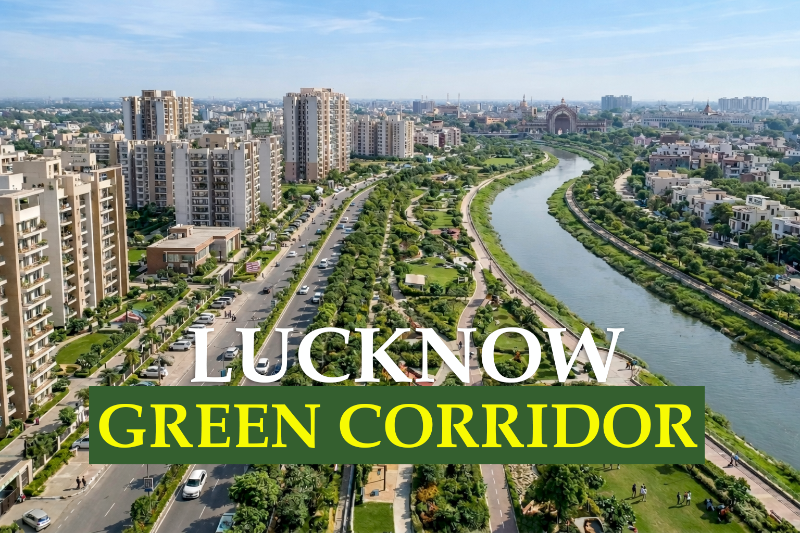
The Gomti Riverfront development corridor
The Lucknow Polytechnic College campus
Lakshman Mela Ground
Quote Section
"When the Metro project was being planned, hundreds of mature trees stood in areas earmarked for construction. Traditionally, such trees would have been felled and replaced through compensatory plantation drives. Instead, authorities chose a different path: transplantation."
— Sushil Kumar, Managing Director, Uttar Pradesh Metro Rail Corporation
"A tree takes decades to grow. Instead of cutting it, we should make every effort to save it. A transplanted tree can continue providing shade, oxygen and ecological benefits immediately, whereas a new sapling may take years to reach that stage."
— Ajay Nagar, Horticulture Expert, Rohit Nursery
Why It Matters
For citizens, travelers, and businesses operating in Lucknow, the survival of these mature canopies plays a clear role in environmental stabilization. Mature trees serve as functional infrastructure assets: they actively lower surface temperatures, trap hazardous PM2.5 and PM10 dust particles, and preserve local avian biodiversity in heavily developed zones. This established baseline offers an immediately active environmental barrier that new saplings simply cannot match.
Key Facts at a Glance
Total Relocated: Approximately 600 mature trees were translocated instead of being logged.
Verified Survival: Project audited at a record-high survival rate exceeding 95%.
Key Varieties Saved: Focus remained on long-lived indigenous species like Banyan, Peepal, and Molshree.
Primary Locations: Replanted trees are positioned at the Gomti Riverfront, Lucknow Airport, and civic institutional lands.
FAQ Section
What is tree translocation?
Tree translocation is the scientific process of uprooting a mature tree from its original location, transporting it, and replanting it at a new site to prevent it from being chopped down during construction work.
Why are saplings not a perfect replacement for mature trees?
While saplings are useful for long-term afforestation, a 30-to-40-year-old tree provides massive canopies, immense oxygen production, and immediate dust-trapping properties that take a new sapling up to three decades to achieve.
Which species were relocated in Lucknow?
The program focused on highly resilient indigenous species including Peepal, Banyan, Molshree, Semal, Kanji, and Lasora trees.
How long does it take for a translocated tree to stabilize?
The first two months are the most critical. The tree requires intensive daily monitoring, deep root watering, and specific nutrient management to survive transplant shock.
Source: Uttar Pradesh Metro Rail Corporation Official Statements, Uttar Pradesh Forest Department Records.