The Reserve Bank of India has maintained its benchmark repo rate at 5.25% and held a neutral policy stance during its June 2026 meeting. Citing economic pressures from the West Asia conflict and heatwave risks, the central bank also lowered its fiscal year GDP growth projection to 6.6%.
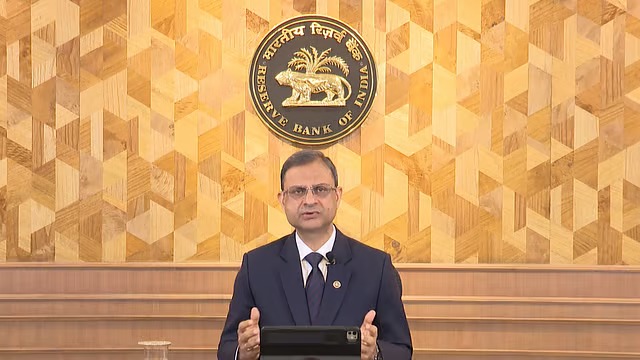
MUMBAI — The Reserve Bank of India (RBI) Monetary Policy Committee (MPC) voted unanimously today to keep the benchmark policy repo rate unchanged at 5.25%. Announcing the central bank’s second bi-monthly policy decision for the 2026–27 fiscal year, RBI Governor Sanjay Malhotra stated that the committee will maintain its "neutral" policy stance. The decision to pause rate cuts underscores growing concerns over escalating global geopolitical conflicts, volatile energy prices, and domestic weather vulnerabilities.
Downward Revision to Economic Growth Forecast
A major highlight of today's review is the central bank's downward adjustment of India's macroeconomic outlook. The RBI has cut its real Gross Domestic Product (GDP) growth projection for the current fiscal year to 6.6%, down from its previous estimate of 6.9%.
According to Governor Malhotra, the primary driver for this reduction is the spillover effect from the ongoing US-Iran war in West Asia. The conflict has heavily impacted international supply channels and sent crude oil prices higher.
While domestic financial momentum remains supported by strong discretionary consumer spending and steady manufacturing investments, the high cost of imported industrial inputs is beginning to weigh on overall economic expansion.
Evolving Supply Shocks Pressure Consumer Inflation
The decision to stall interest rate adjustments follows a period of aggressive easing, during which the central bank cut the repo rate four times by a cumulative 125 basis points between February 2025 and early 2026. However, the upside risks to consumer inflation have resurfaced, complicating the path toward further cuts.
In addition to geopolitical friction, the committee highlighted structural risks in the agricultural sector. Evolving El Niño conditions and severe domestic heatwaves are threatening monsoon distribution, raising expectations of higher food inflation in the upcoming quarters. The pass-through of global energy costs into retail products has already become visible, forcing the central bank into a cautious, wait-and-watch approach.
Official Sources Section
The current fiscal determinations conform directly to official regulatory notifications and operational reviews released by India's central banking authority:
MPC Resolution: The structural adjustments to national interest rates were formally adopted following a comprehensive review session held from June 3 to June 5, 2026.
Monetary Framework: The framework operates under section 45ZB of the Reserve Bank of India Act, 1934, which mandates price stability while supporting growth objectives.
Statistical Data: Baseline calculations incorporate preliminary consumer and wholesale inflation indices prepared by the Ministry of Finance.
Institutional Commentary
In his live statement to media networks following the conclusion of the three-day policy session, RBI Governor Sanjay Malhotra observed:
"The Monetary Policy Committee met on the third, fourth, and fifth of this month to deliberate and decide on the policy repo rate after a detailed assessment of the evolving macroeconomic developments. The rise in prices of energy and other inputs, coupled with supply disruptions, is likely to weigh on economic activity. The full impact will depend on the duration of the conflict and the normalization of supply chains."
Analyzing the commercial implications of the status quo, Pranjul Bhandari, Chief India Economist at HSBC, noted:
"The June policy decision was closely balanced. The repo rate remains unchanged as headline inflation stays within the target level, but tightening global financial conditions mean the RBI will prefer liquidity management and currency stabilization over immediate adjustments."
Why It Matters
For borrowers and households, the interest rate pause means lending benchmarks will stay flat. Floating-rate home loans, personal lines of credit, and vehicle loans linked to the External Benchmark Lending Rate (EBLR) will not see immediate shifts in monthly installment costs.
For investors and businesses, the lowering of the GDP forecast highlights a need for cautious capital allocation. Industries that rely heavily on energy inputs, logistics, or foreign raw materials face margin compression due to global supply shocks. Conversely, debt market participants stand to find stable yields, as the central bank focuses heavily on defending the rupee against depreciation pressures.
Key Facts at a Glance
Repo Rate Held: The benchmark policy interest rate stays at 5.25% after a unanimous vote by the six-member MPC panel.
Growth Outlook Trimmed: India’s full-year GDP expansion estimate is cut down from 6.9% to 6.6%.
Geopolitical Impact: Rising energy costs from the West Asia conflict are directly filtering into corporate input costs.
Stance Unchanged: The RBI maintains its official policy stance as "neutral," leaving future moves data-dependent.
FAQ Section
Will my monthly home loan EMIs decrease after this meeting?
No. Because the RBI kept the primary repo rate steady at 5.25%, retail lending rates across commercial banks will remain unchanged for now.
Why is the RBI cutting India's GDP growth projection?
The downward revision to 6.6% is caused by external shocks. High crude oil prices and broken global logistics routes from the Middle East conflict are raising costs for domestic businesses.
When is the next RBI Monetary Policy Committee meeting scheduled?
According to the published calendar for the 2026–27 financial year, the next bi-monthly review meeting is scheduled to take place from August 3 to August 5, 2026.
Source: Reserve Bank of India,Ministry of Finance ,The Times of India