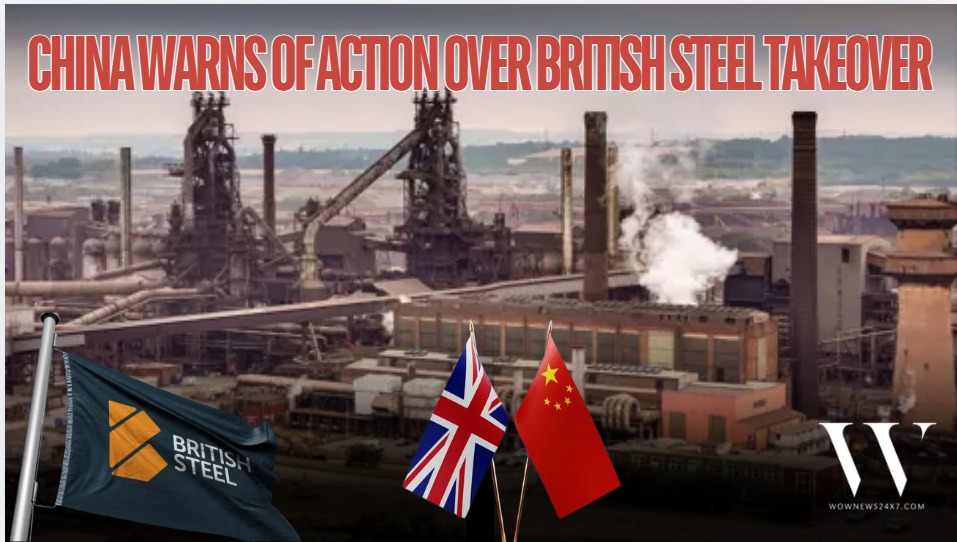
China has vowed to protect its rights after the UK nationalized British Steel, a subsidiary of the Chinese-owned Jingye Group. Beijing expressed "strong dissatisfaction" with the takeover, citing concerns over investor confidence and the UK's commitment to bilateral investment agreements, while the UK government defends the move as necessary for national security.
Beijing has expressed "strong dissatisfaction" and warned that it will take necessary measures to protect its interests after the UK government brought British Steel into public ownership.
BEIJING — The Chinese government has issued a stern warning that it will take "necessary measures" to safeguard its rights following the United Kingdom’s decision to nationalize British Steel, a subsidiary previously controlled by the Chinese conglomerate Jingye Group.
The UK government officially brought British Steel into public ownership on July 16, 2026, invoking the Steel Industry (Nationalisation) Act. The move, aimed at securing domestic steelmaking capacity and protecting thousands of jobs, has drawn immediate and sharp criticism from Beijing, which has labeled the takeover an act that undermines the legitimate interests of Chinese investors.
Tensions Over National Security and Investment
The nationalization, which the UK government justifies as a matter of national interest and security, marks a significant shift in the industrial landscape of Britain. Prime Minister Keir Starmer stated that the decision was essential to "stabilize the business" and protect the future of the UK steel industry.
However, Chinese officials have challenged the legitimacy of the move. A spokesperson for the Chinese Ministry of Commerce on Friday expressed "firm opposition" to the takeover, arguing that the UK ignored Jingye Group’s capital contributions and efforts to retain jobs since acquiring the company.
"How the UK handles this matter will directly influence how Chinese investors view the investment environment in the UK and its government's credibility," a Chinese Foreign Ministry spokesperson stated on Saturday. Beijing has urged London to abide by the China-UK bilateral investment protection agreement and respect market principles.
Legal Recourse and Compensation
The UK government has committed to establishing a compensation mechanism via secondary legislation, including an independent assessment to determine if payments are due to the former owners. Despite this, the Chinese government is maintaining a hardline stance.
Beijing has emphasized that it is "closely following the developments" and will support Chinese enterprises in pursuing legal means to defend their interests. Jingye Group, which had been managing the site since 2020, has reportedly indicated it intends to seek compensation for the losses incurred through its investment.
Impact on Future Ties
The standoff has raised concerns about the broader bilateral relationship. Analysts note that the dispute could dampen investor confidence, as Chinese firms may perceive the UK’s regulatory environment as increasingly volatile. By bringing British Steel into public ownership, the UK government is prioritizing domestic industrial resilience, but it now faces the prospect of a protracted diplomatic and legal dispute with its third-largest trading partner.
Official Sources
UK Government: Department for Business and Trade announcement on the nationalization of British Steel.
Chinese Ministry of Foreign Affairs: Official statements regarding the protection of Chinese investors’ rights and monitoring of developments.
Chinese Ministry of Commerce: Official response expressing "firm opposition and strong dissatisfaction" over the UK's decision.
Why It Matters
The dispute over British Steel serves as a flashpoint for global economic tensions, where national security concerns increasingly collide with international investment protections. For the UK, the nationalization is a strategic move to secure essential supply chains. For China, it is a test case for the safety of its overseas investments and the reliability of the UK as a destination for foreign capital.
Key Facts at a Glance
Nationalization Date: July 16, 2026, following the enactment of the Steel Industry (Nationalisation) Act.
Core Dispute: China opposes the takeover of the Jingye Group-owned subsidiary, citing a violation of market principles and investment protection agreements.
UK Rationale: The UK government cites national security, the protection of thousands of jobs, and the safeguarding of essential infrastructure as primary drivers.
Government Action: The UK plans to establish a compensation mechanism through secondary legislation and independent valuations.
FAQ
1. Why did the UK nationalize British Steel?
The UK government states the move is necessary to stabilize the steel industry, protect jobs, and safeguard national infrastructure and security.
2. How has China responded?
China has expressed strong dissatisfaction, arguing that the UK ignored the contributions of Chinese investors and has warned that it will take necessary measures to protect its rights.
3. Will the former owners be compensated?
The UK government has announced plans to appoint an independent valuer to determine if any compensation is payable under the new legislation.
4. What are the broader implications of this move?
The dispute threatens to strain UK-China economic relations and potentially impact the confidence of Chinese investors in the UK’s investment climate.
Source: Department for Business and Trade (UK), Chinese Ministry of Commerce, Xinhua News Agency, Global Banking & Finance Review