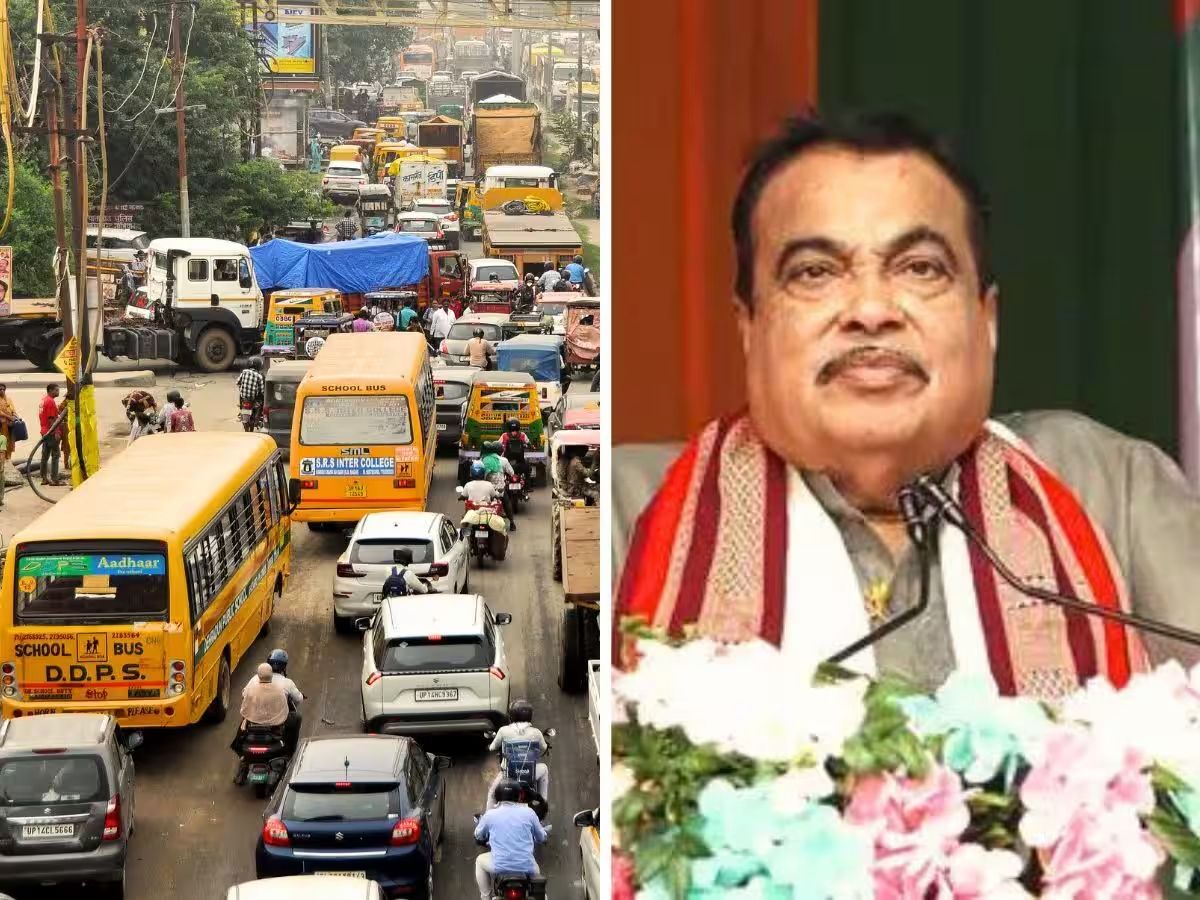
The Union Ministry of Road Transport and Highways is set to approve a low-cost retrofit emission-control device based on an IIT-Delhi innovation. Priced between ₹4,000 and ₹5,000, the system reduces particulate matter emissions by up to 90%, helping older diesel trucks and buses approach strict BS-VI compliance without total vehicle replacement.
Backed by official ministerial announcements, an indigenous engineering breakthrough offers an affordable alternative to vehicle scrappage by curbing toxic tailpipe emissions.
Addressing the persistent challenge of urban air pollution originating from legacy commercial transport, the Indian government is preparing to authorize a low-cost pollution-control system derived from an IIT-Delhi innovation. Speaking at an industry event hosted by the Society of Indian Automobile Manufacturers (SIAM) in New Delhi, Union Minister for Road Transport and Highways Nitin Gadkari announced that the Retrofit Emission Control Device (RECD) has successfully completed testing.
Priced economically between ₹4,000 and ₹5,000, the device can be fitted onto existing BS-III, BS-IV, and older diesel trucks and buses, cutting particulate matter (PM) emissions by up to 90% and nitrogen oxide (NOx) levels by roughly 60%.
Evaluating Retrofit Mechanics, Emission Reductions, and Regulatory Standards
Analyzing the functional design of the retrofit system highlights a pragmatic approach to bridging older mechanical architectures with modern environmental norms. According to official ministry outlines and technical disclosures released in September 2026, key parameters of the deployment include:
Exhaust Filtration Function: Operating similarly to an advanced air purifier for internal combustion exhaust, the RECD is installed directly into the tailpipe system of legacy diesel engines.
Compliance Thresholds: While it does not structurally convert an older engine into a factory-built model, the filtration efficiency successfully brings pollutant output down to levels comparable with strict BS-VI benchmarks.
Cost Efficiency: Compared to the high capital outlay required to buy a brand-new commercial vehicle, the ₹5,000 retrofit price tag provides a vital financial cushion for independent truck and bus operators.
Standardization Framework: To govern manufacturing quality and performance, the Ministry of Road Transport and Highways is finalizing the notification of Automotive Industry Standard 228 (AIS-228).
Why It Matters
The practical implications of this low-cost retrofit technology affect commercial fleet operators, small-scale logistics businesses, and municipal air quality management programs. For thousands of truck and bus owners who cannot immediately afford to purchase brand-new commercial vehicles, the device provides a legally compliant and economical path to continue operations without violating local environmental restrictions. By lowering particulate smog significantly, the nationwide adoption of the IIT-Delhi designed filter supports public health goals while easing economic pressures on the transport sector.
Key Facts at a Glance
Innovation Origin: Developed from research conducted at the Indian Institute of Technology, Delhi (IIT-Delhi).
Estimated Cost: Economically priced between ₹4,000 and ₹5,000 per unit.
Emission Reduction: Cuts particulate matter (PM) by up to 90% and nitrogen oxides (NOx) by 60%.
Target Vehicles: Applicable to BS-III, BS-IV, and older legacy diesel trucks and buses.
FAQ Section
What is the IIT-Delhi developed device designed to do?
The Retrofit Emission Control Device (RECD) is engineered to filter out toxic exhaust pollutants from older diesel engines, bringing their emissions close to modern BS-VI standards.
How much will the retrofit device cost vehicle owners?
Official estimates project the market price of the device to be between ₹4,000 and ₹5,000.
Will this replace the government's existing vehicle scrappage policy?
No, transport officials have clarified that the retrofit option is designed to complement and supplement the existing scrappage framework rather than replace it entirely.
Which vehicle categories are eligible for this retrofit installation?
The system is targeted primarily at legacy commercial transport, including BS-III, BS-IV, and older diesel-powered heavy trucks and buses.
Source: Ministry of Road Transport and Highways (MoRTH), The Economic Times, The Times of India, India Today