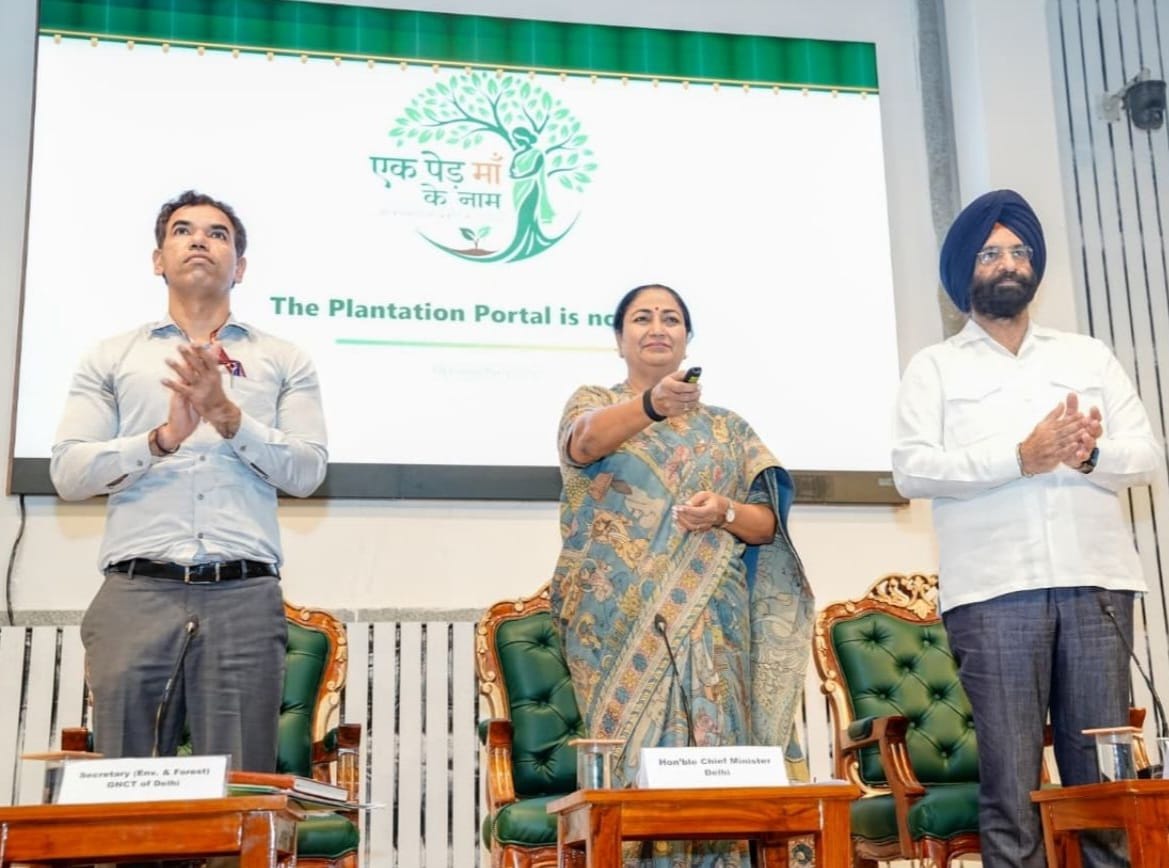
Delhi Chief Minister Rekha Gupta has launched the Rs 8,300-crore "Swachh Hawa, Swasth Delhi" project to combat air pollution. Running from September 2026 to 2033, the initiative receives 65% of its funding from the World Bank and deploys advanced command centers alongside transport overhauls to systematically lower emissions.
NEW DELHI — Delhi Chief Minister Rekha Gupta announced on Friday the launch of the "Swachh Hawa, Swasth Delhi" (Clean Air, Healthy Delhi) project, an extensive Rs 8,300-crore pollution mitigation initiative. Set up as a joint enterprise between the local administration and international financial institutions, the seven-year environmental program aims to fundamentally restructure the capital’s air quality management frameworks.
The developmental push comes as a response to persistent urban smog and is strategically aligned with the objectives of the central government’s National Clean Air Programme (NCAP) as well as the long-term objectives of the "Viksit Bharat 2047" vision. Execution is scheduled to begin across all administrative districts of the national capital from September 2026, running through August 2033.
World Bank Financing Fuels Comprehensive Emission Control Reforms
Under the newly cleared fiscal framework, international funding will play a decisive role in addressing the city’s environmental strain. The World Bank will provide 65 percent of the required capital through financial assistance, while the Delhi Government will bear the remaining 35 percent of the Rs 8,300-crore expenditure.
The multi-year project explicitly prioritizes major known sources of urban particulate matter. According to project outlines released by the Chief Minister’s Office (CMO), operations will deploy resources across seven high-impact sectors:
Transport emissions and vehicular fossil-fuel dependencies
Road dust suppression and urban street sweeping infrastructure
Construction and demolition (C&D) waste recycling protocols
Municipal solid waste management and landfill remediation
Industrial unit emissions monitoring
Urban green cover expansion and intensive afforestation
Water pollution mitigation in connected drainage systems
Two-Pillar Execution Model to Restructure Air Quality Monitoring
The strategy introduced by Chief Minister Rekha Gupta rests on two foundational operational pillars designed to introduce deep technological and regulatory oversight into Delhi's daily atmosphere management.
The first pillar is aimed entirely at structural oversight and data-driven administrative interventions. The initiative establishes a dedicated Project Management Unit (PMU) alongside advanced air quality monitoring systems and localized data analytics. A central core of this pillar will feature an Integrated Command and Control Centre (ICCC), allowing inter-departmental enforcement teams to track real-time pollution spikes and direct municipal cleaning crews immediately to problem zones.
The second pillar targets structural source reduction by modifying the city's transport footprint. This will involve the phased removal of older, highly polluting commercial and private vehicles alongside the targeted promotion of electric vehicles (EVs). To support this transition, the project will expand the public transport grid and deploy an advanced, tamper-proof Pollution Under Control (PUC) monitoring network.
Official Sources Section
According to official announcements from the Chief Minister's Office and documentation synchronized with the Department of Economic Affairs (DEA) under the Government of India, the initiative acts as an integrated multi-agency response. Key executing partners tasked with delivering baseline improvements include the Delhi Pollution Control Committee (DPCC), the Public Works Department (PWD), the Municipal Corporation of Delhi (MCD), and the Delhi Jal Board (DJB). To formalize deployment strategies, a major inter-agency coordination workshop is scheduled for July 10, 2026.
Quote Section
"The 'Swachh Hawa, Swasth Delhi' project is not merely a short-term pollution control program but a significant long-term investment in the capital's future. Our ultimate objective is to provide citizens with cleaner air, improved public health, and a genuinely sustainable urban environment."
— Rekha Gupta, Delhi Chief Minister
Why It Matters
For millions of residents, daily commuters, and businesses operating in the National Capital Region (NCR), the project shifts pollution management from a seasonal crisis response to a permanent municipal utility. Commuters and transport operators face immediate impacts as the city scales up public transport networks and advances EV subsidies under concurrent local frameworks like the Delhi EV Policy 2026. For real estate and infrastructure businesses, tighter construction and demolition guidelines will mandate strict particulate screening, while the medical sector anticipates a reduction in the long-term fiscal strain caused by chronic respiratory illness.
Key Facts at a Glance
Project Scope: A seven-year anti-pollution initiative active from September 2026 to August 2033 across all districts of Delhi.
Capital Allocation: Total estimated cost stands at Rs 8,300 crore, with the World Bank covering a 65% funding share.
Primary Targets: Interventions target transport, road dust, construction waste, industrial emissions, solid waste, green cover, and water pollution.
Tech Deployment: Introduces a centralized Integrated Command and Control Centre (ICCC) for real-time tracking.
FAQ Section
What is the primary objective of the "Clean Air, Healthy Delhi" project?
The project aims to accelerate Delhi's comprehensive air pollution mitigation plan, enhance multi-departmental enforcement capability, and significantly reduce particulate emissions over a seven-year timeline.
How is the project being funded?
The total cost of Rs 8,300 crore is split between international and local state channels: the World Bank is contributing 65% via financial support, while the Delhi Government covers the remaining 35%.
When will the project's actual field implementation begin?
While preparations and stakeholder alignment workshops commence in July 2026, the formal field implementation phase is scheduled to run from September 2026 through August 2033.
How will this initiative change public transportation in Delhi?
The second pillar of the project mandates a phased removal of aging, highly polluting vehicles, coupled with a massive expansion of cleaner public transport fleets and enhanced electric vehicle integration.
Source: Chief Minister's Office (CMO) Delhi, The World Bank India Project Portal, Department of Economic Affairs (DEA)