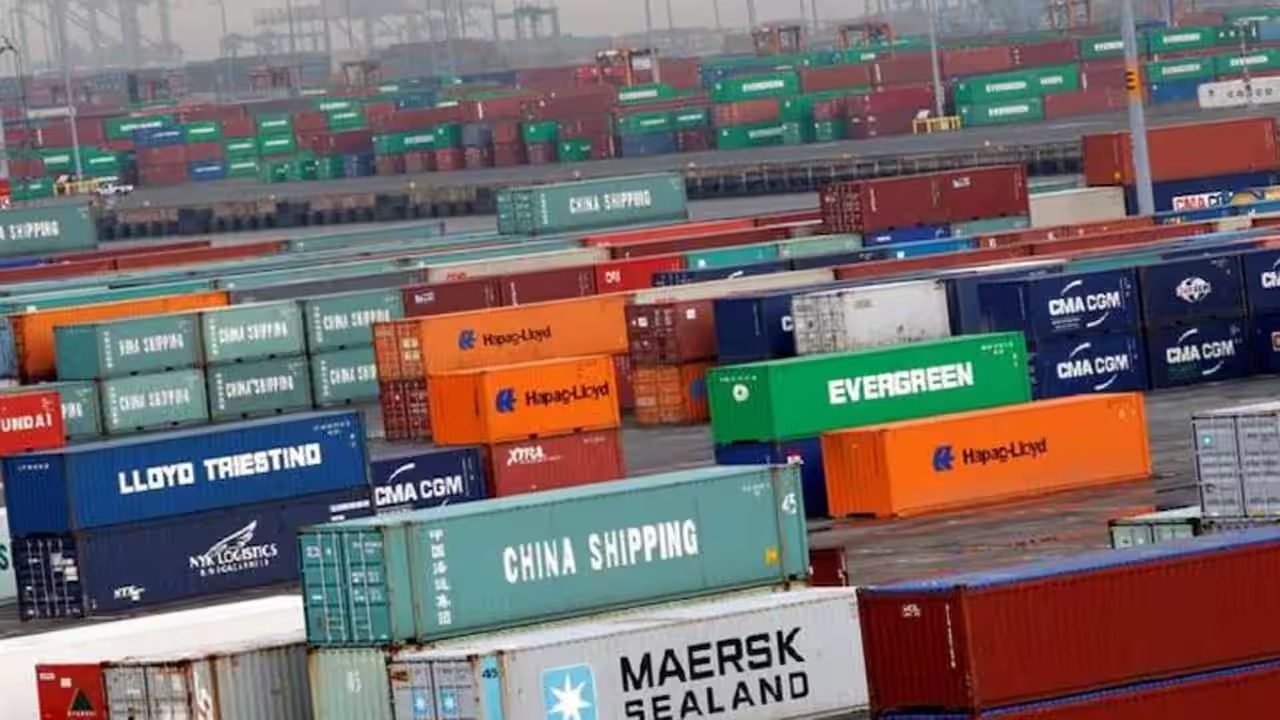
India has launched a coordinated national strategy to hit $1 trillion in total exports for the 2026-27 fiscal year. Driven by strong first-quarter growth and upcoming bilateral trade pacts like the India-UK FTA, the plan uses decentralized district hubs to scale manufacturing and services globally.
NEW DELHI — India has established a clear operational target to cross $1 trillion in total exports for the current 2026-27 financial year, expanding significantly from the $863 billion recorded in the previous fiscal period. Union Minister of Commerce and Industry Piyush Goyal announced the formal trade resolution on July 3, 2026, following a structural review with industry leaders and state representatives during the Board of Trade meeting in the national capital. The target demands a synchronized expansion across manufacturing and service sectors to consolidate India's presence within newly accessed international markets.
Sectoral Blueprints and First-Quarter Trajectory
The targeted trade architecture splits the $1 trillion objective into distinct thresholds for tangible goods and services. To secure the overarching goal, India's merchandise exports must expand by 16% to 17%, moving from $442 billion to approximately $530 billion. Concurrently, services exports are projected to maintain an 11% growth trajectory, climbing from $421 billion to roughly $470 billion within the current fiscal cycle.
Initial figures from the April-June quarter demonstrate early compliance with these objectives. First-quarter data highlights that merchandise shipments grew by 15%, while services trade expanded by 11%. Minister Goyal emphasized that these initial metrics prove the baseline infrastructure is on track, though maintaining the pace will require consistent administrative oversight and industrial scaling.
Decentralization and the Seven-Point Action Plan
To support small-scale manufacturers and expand production beyond historic urban centers, the Ministry of Commerce and Industry is rolling out a decentralized strategy to convert individual districts into specialized export hubs.
A central element of this model includes the deployment of trained nodal officers across local jurisdictions. These officers undergo a four-to-six-month instruction program in New Delhi to equip them with specialized trade data, customs documentation frameworks, and market-access toolkits designed to guide Micro, Small, and Medium Enterprises (MSMEs).
The programmatic strategy also utilizes the Directorate General of Trade Remedies (DGTR) to defend local supply lines against international dumping and predatory pricing. To lower structural overheads for smaller businesses, the central government has committed to full state funding for required industrial testing facilities.
Leveraging International Bilateral Agreements
The trade expansion relies heavily on utilizing recently finalized Free Trade Agreements (FTAs) that span 38 developed economies. A primary near-term catalyst is the India-UK Free Trade Agreement, scheduled to become operational on July 15, 2026. This bilateral pact guarantees zero-duty access for 99% of Indian merchandise entering the British market, which currently accounts for nearly $900 billion in total import volume.
The government is actively sending joint official and corporate delegations to key partner nations to convert these tariff reductions into long-term supply contracts. Exporters have been explicitly urged to diversify beyond the domestic market and leverage these structural international openings.
Official Sources Section
The detailed trade figures, growth percentages, and institutional policy rollouts conform with the official communiqués released during the Board of Trade assembly at Vanijya Bhawan, supplemented by public records from the Press Information Bureau (PIB) and the Ministry of Commerce and Industry.
Quote Section
Addressing the assembled policymakers and private sector representatives, Union Minister Piyush Goyal stated:
"Everyone has taken an oath that this year we will do an export of $1 trillion. We are on track. But when you fly a kite, you have to hold it tight. So we have to achieve this with everyone's collective effort. The whole world is our stage, but the actors have to come from within India."
Why It Matters
The transition toward a structural export-driven model influences multiple economic sectors:
MSME Integration: Localized testing facilities and dedicated nodal officers remove traditional compliance barriers, enabling smaller manufacturers to access foreign consumer bases directly.
Investment Security: Active enforcement of DGTR anti-dumping provisions provides domestic industrial clusters with a predictable, legally protected operating environment.
Corporate Scale: Zero-duty access via international FTAs expands addressable market sizes for engineering, textile, and agricultural firms, encouraging capital investment.
Key Facts at a Glance
Total Annual Target: $1 trillion combined goods and services exports for FY2026-27.
Merchandise Projection: Aiming for $530 billion, necessitating a 16% to 17% growth rate.
Services Projection: Target set at $470 billion, representing an 11% year-on-year increase.
Immediate Catalyst: The India-UK FTA goes live on July 15, 2026, dropping duties on 99% of eligible goods.
Defense Trade Surplus: Defense exports hit a record Rs 38,400 crore last year, marking a net trade surplus for the sector.
FAQ Section
Q1: How does the government plan to help small businesses export?
The government is training dedicated nodal officers to guide MSMEs through custom protocols, providing 100% funding for essential product-testing centers, and extending financial support via the Export Promotion Mission.
Q2: What are the specific growth targets for goods and services?
To cross the $1 trillion milestone, merchandise exports must rise from $442 billion to $530 billion, while services must grow from $421 billion to approximately $470 billion.
Q3: When will the free trade agreement with the United Kingdom take effect?
The India-UK Free Trade Agreement is officially scheduled to become operational on July 15, 2026, granting zero-duty access to the majority of Indian goods.
Source: Ministry of Commerce and Industry Official Portal, Press Information Bureau (PIB) Archive.