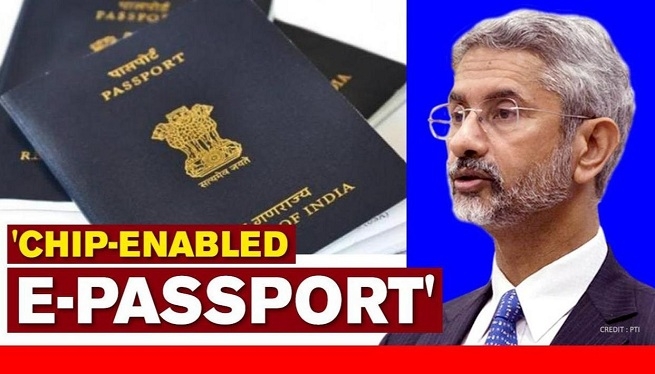
India has completed its national transition to biometric chip-enabled ePassports across all regional offices. Incorporating a secure 64 KB microchip that encrypts facial, fingerprint, and iris data, the new travel document complies with international standards to eliminate forgery, safeguard user privacy, and accelerate customs processing via automated airport e-gates.
The Ministry of External Affairs transitions entirely to biometric travel documents, accelerating airport clearance and securing passenger data globally.
NEW DELHI — The Ministry of External Affairs (MEA) has finalized the nationwide rollout of its biometric, chip-enabled ePassports across all Regional Passport Offices and global diplomatic missions. Announcing the full integration at the Annual Regional Passport Officers' Conference in June 2026, external affairs officials confirmed that all fresh issuances and renewals for ordinary citizens are now processed exclusively as electronic passports. This technical overhaul modernizes India's border infrastructure, shifting the country away from traditional machine-readable paper booklets toward internationally standardized smart-card security protocols to combat identity theft and streamline international arrivals.
Technical Architecture of India's Advanced Travel Document
The transition to chip-enabled ePassports integrates paper-based identity tracking with advanced digital cryptographic architecture. While the physical look of the booklet remains fundamentally familiar, its core operation relies on automated data processing.
The Microchip and Antenna Inlay
Every new passport booklet is manufactured with an embedded silicon microprocessor chip and a Radio Frequency Identification (RFID) loop antenna built directly into the front or back cover. This contactless chip operates on an interface compliant with the ISO/IEC 14443 international standard, drawing wireless power directly from official electronic immigration terminal scanners during border crossings.
Cryptographic Security via Public Key Infrastructure
To prevent sophisticated counterfeiting and cloning, the Indian government has deployed a specialized Public Key Infrastructure (PKI) system.
Data Integrity: The chip stores a Document Security Object (SOD), which holds unique digital signatures and cryptographic hashes of all files.
Tamper Protection: Any unauthorized modification of the data page or the digital file triggers an immediate mismatch error when processed by international border control systems.
Enhanced Data Storage and Biometric Authentication
According to Technical specifications verified by the National Informatics Centre (NIC), the newly deployed embedded microchips feature an upgraded storage capacity of 64 kilobytes (KB). This space is heavily guarded by advanced access control measures to prevent non-consensual electronic data skimming.
Triple Biometric Parameters
Unlike older machine-readable variants, the ePassport stores encrypted, high-resolution digital representations of three distinct physical traits:
Facial Recognition: Digital photographs formatted to match precise geometric facial vectors.
Fingerprint Recognition: Automated data indices representing individual fingerprint ridge paths.
Iris Scans: Biometric maps of the eye's iris patterns, optimizing identity verification for high-throughput security terminals.
Privacy Safeguards and Basic Access Control (BAC)
Addressing data security concerns raised by privacy advocates, immigration officials clarified that the microchip is not an active tracking device. It lacks long-range transmission capabilities and cannot be read passively from a distance. Under the International Civil Aviation Organization (ICAO) Doc 9303 standard, the automated scanner must physically scan the passport's printed Machine Readable Zone (MRZ) to generate a unique digital key before it can access the encrypted data on the chip.
Operational Impact on Global Travelers and Citizens
The structural deployment of the biometric document impacts Indian travelers, international airport operators, and domestic authorities alike by systematically upgrading global border convenience.
Accelerated Airport Clearance and Fast-Track Immigration
For domestic outbound passengers, the immediate benefit centers around the utilization of automated e-Gates at major global transit hubs. By allowing e-borders to autonomously verify identity against the live scans of the passenger, the ePassport significantly cuts down wait times at traditional manual customs counters. Furthermore, the technology works in tandem with India's newly deployed Fast Track Immigration-Trusted Traveller Programme (FTI-TTP), facilitating expedited clearance pathways.
Phased Migration and Validity Timelines
The MEA has explicitly confirmed that the transition to the new document format does not invalidate current passports. Regular machine-readable paper booklets remain legally valid for international travel until their designated date of expiration. Citizens will receive the chip-enabled ePassports automatically upon normal renewal cycles or when applying for fresh booklets via the standard online portal.
Official Sources Section
The corporate, technological, and legislative data presented throughout this journalistic report are derived directly from official public statements, administrative guidelines, and regulatory documentation provided by the following public authorities:
The Ministry of External Affairs (MEA), Government of India via regional conference declarations.
The National Informatics Centre (NIC) technical operational sheets.
The International Civil Aviation Organization (ICAO) standard guidelines for Doc 9303 biometric documents.
Official Statements
"Our transition to biometric chip-enabled ePassports operates in tandem with an advanced tech ecosystem to enhance modern governance," stated India's External Affairs Minister during the annual regional review. "The major benefit of the ePassport comes with an enhanced ability to maintain the integrity of the passport holder's data. This safeguards the travel document from forgery and fraudulent activities globally."
Why It Matters
The absolute transition to chip-enabled ePassports elevates the international standing of India’s travel documentation, aligning its border security with over 140 nations already using biometric standards. Practically, the move protects regular citizens from identity fraud and cloning, which frequently complicate consular assistance overseas. For business travelers and tourists, the automated document ensures smooth compatibility with next-generation electronic border gates across North America, Europe, and Asia, mitigating airport congestion and accelerating international mobility.
Key Facts at a Glance
Total Integration: All Regional Passport Offices across India and global consulates now issue chip-enabled ePassports exclusively for new applicants and renewals.
Storage and Tech: The travel document features an embedded RFID microchip with 64 KB of memory containing encrypted biometric and demographic data.
Anti-Fraud Protections: Powered by Public Key Infrastructure (PKI), the digital signature blocks duplicate passport creation and alerts border control of data tampering.
Legacy Continuity: Existing traditional paper passports remain entirely valid until their recorded expiration dates; immediate replacement is not mandatory.
Frequently Asked Questions
Q: Do I need to replace my current valid passport with a chip-enabled ePassport immediately? A: No. All currently active passports remain completely valid for international travel until their printed expiration dates. You will be automatically issued the new chip-enabled version when you apply for a routine renewal or a fresh booklet.
Q: Is there an extra fee to obtain the biometric ePassport compared to the old version? A: No. The standard application fee structure remains consistent under the Ministry of External Affairs guidelines, varying only by age, page volume (36 pages vs. 60 pages), and processing speed (Normal vs. Tatkaal).
Q: Can hackers skim or steal my biometric information from the passport chip wirelessly? A: No. The microchip uses Basic Access Control (BAC) protocols compliant with ICAO standards. The chip cannot be accessed unless an official terminal reader physically scans the Machine Readable Zone (MRZ) on the passport's data page to decrypt the communication channel.
Sources