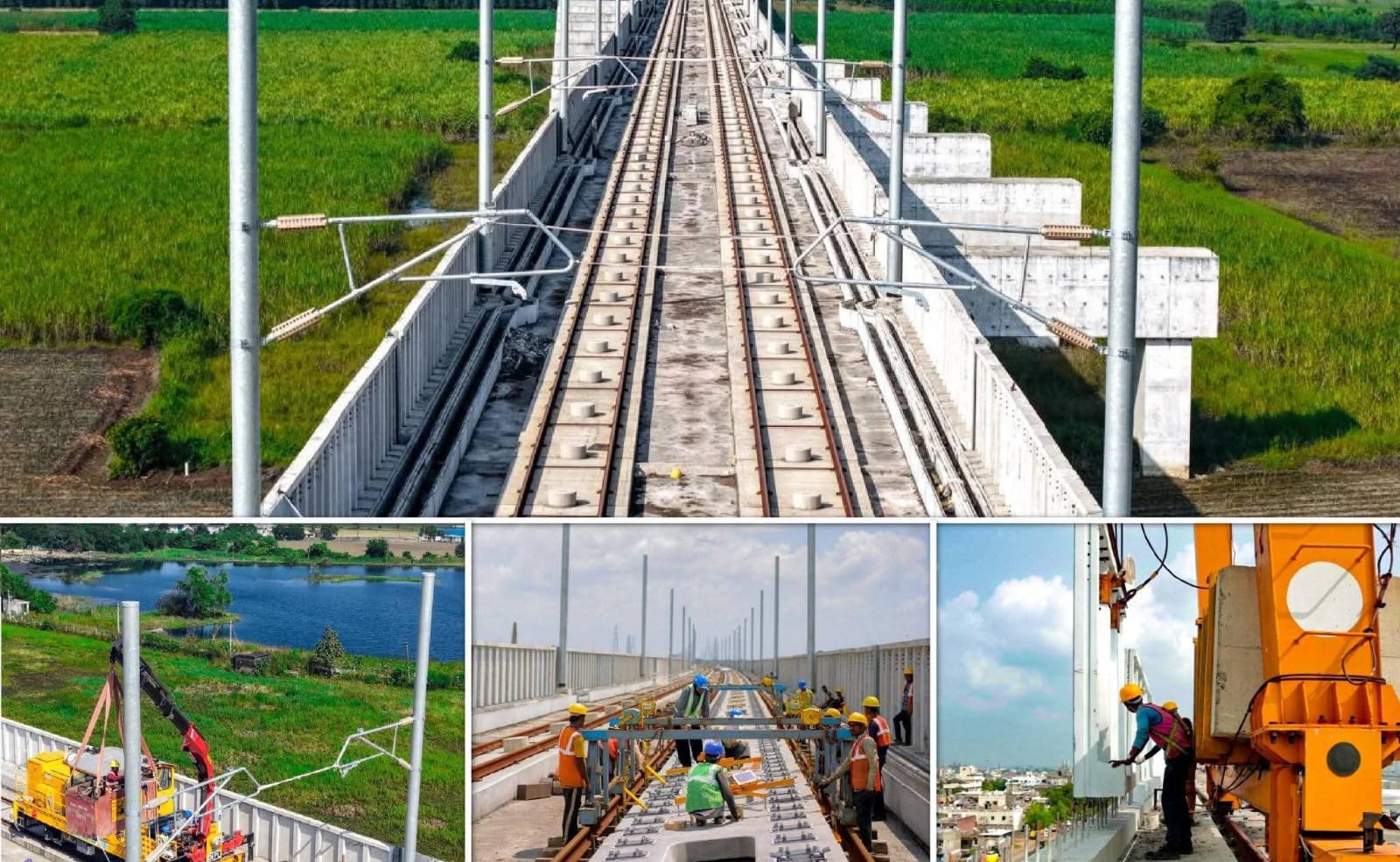
Indian Railways is undertaking an ambitious infrastructure project to four-track 11,000 km across seven high-density corridors. Announced by Railway Minister Ashwini Vaishnaw, the quadrupling effort separates passenger and freight operations across major trunk lines, aimed at eliminating network congestion, boosting safety, and improving overall train speed.
Indian Railways has initiated groundwork on a major network expansion project to four-track 11,000 kilometers across seven major high-density corridors. Union Minister for Railways Ashwini Vaishnaw confirmed the development, outlining a targeted capital investment plan designed to eliminate chronic capacity bottlenecks along India's heavily traveled railway routes.
The line quadrupling program marks one of the largest infrastructure expansions undertaken by Indian Railways. By establishing dedicated multi-track corridors, the government aims to separate heavy freight logistics from fast-moving passenger trains, significantly boosting track velocity and reducing delays across intercity trunk lines.
Strategic Overview of the 11,000 km Quadrupling Program
The initiative targets seven critical High-Density Network (HDN) corridors that collectively handle the majority of national rail traffic. Currently, these arterial routes operate at line capacity utilization levels exceeding 110% to 140%, resulting in operational friction, maintenance window constraints, and cascading passenger train delays.
Under the expansion roadmap, existing dual-line sections along these high-density routes will be upgraded to four parallel lines. Two dedicated lines will carry freight trains carrying coal, iron ore, containerized cargo, and agricultural commodities, while the remaining two lines will host express passenger operations, including Vande Bharat and Amrit Bharat services.
Breakdown of the 7 High-Density Corridors
The 11,000-kilometer track quadrupling effort focuses on high-traffic passenger and industrial freight arteries connecting key metropolitan hubs:
Delhi–Mumbai Corridor: Quadrupling key saturated sectors connecting northern industrial centers to JNPT port terminals.
Delhi–Howrah Corridor: Enhancing line capacity through northern and eastern industrial hubs to accommodate dense passenger movements.
Mumbai–Chennai Corridor: Expanding cross-peninsular logistics capacity between major western and southern economic zones.
Howrah–Chennai (Eastern Coastal Line): Addressing port-connectivity demands and passenger bottlenecks across eastern coastal routes.
Bengaluru–Chennai Sector: Supporting rapid industrial expansion and regional suburban connectivity across southern industrial clusters.
Central Feeder Routes: Upgrading high-capacity heavy-haul mineral belts across Odisha, Jharkhand, and Chhattisgarh.
Western Logistics Feeders: Quadrupling critical hinterland connections serving major commercial ports in Gujarat and Maharashtra.
Official Sources
Data and infrastructure planning frameworks cited in this report originate from official ministry briefings and government project dockets:
Ministry of Railways: Official policy statements and infrastructure target announcements by Union Railway Minister Ashwini Vaishnaw.
Press Information Bureau (PIB India): Government releases detailing capital expenditure allocations for high-density network expansion.
Dedicated Freight Corridor Corporation of India (DFCCIL): Operational directives on long-distance logistics routing and track integration.
Ministry Guidance and Expert Directives
According to senior Ministry of Railways officials, track quadrupling represents the most cost-effective method to expand national transit capacity without incurring severe land acquisition delays associated with greenfield lines.
"Indian Railways is working to four-track 11,000 km of seven high-density routes. This structural capacity addition will allow complete separation of freight movements from passenger trains, vastly improving punctuality and track velocity," stated Union Minister for Railways Ashwini Vaishnaw during an official project review.
Organizers and senior railway engineers noted that all quadrupled sections will feature modern ballastless track technology in station yards, high-load electronic interlocking, and complete track fencing to enable maximum train speeds up to 160 km/h.
Why It Matters: Impacts on Passengers, Freight, and Trade
The quadrupling of 11,000 kilometers of main line track carries broad practical implications across the Indian economy:
For Passenger Commuters: Separating freight trains eliminates major causes of passenger train detentions, allowing higher average speeds and improved on-time arrival performance across long-distance routes.
For Logistics and Industry: Freight transit times will drop significantly, enabling predictable supply chains for core industries like steel, cement, power, and manufacturing.
For Rail Safety: Adding dedicated tracks reduces operational density on over-utilized lines, creating safer maintenance windows for track inspection crews and enabling uniform installation of the KAVACH ATP safety network.
Key Facts at a Glance
Scale of Project: 11,000 kilometers of track quadrupling planned across seven high-density corridors.
Primary Objective: Structural separation of passenger and freight traffic to clear track congestion.
Capacity Impact: Designed to reduce line capacity utilization below 80% on primary routes.
Safety Integration: Full deployment of indigenous KAVACH anti-collision systems along all expanded lines.
Frequently Asked Questions
Why is Indian Railways four-tracking 11,000 km of existing routes?
Current high-density trunk lines operate well over maximum design capacity. Quadrupling lines allows Indian Railways to run freight and passenger trains on separate tracks, eliminating bottlenecks and improving overall network speed.
Which routes are included in the 7 high-density corridors?
The program targets major trunk routes connecting Delhi, Mumbai, Howrah, Chennai, and Bengaluru, alongside high-volume mineral and port-connectivity corridors.
Will this project help speed up Vande Bharat and Rajdhani express trains?
Yes. By clearing freight traffic off passenger lines, express passenger trains can operate up to their maximum design speeds of 130 km/h to 160 km/h without frequent signal holds.
How does line quadrupling differ from dedicated freight corridors?
Line quadrupling expands existing Indian Railways right-of-way by adding third and fourth tracks directly alongside existing lines, whereas dedicated freight corridors (DFCs) are entirely separate greenfield rail highways built primarily for heavy cargo.
Sources: Ministry of Railways Press Office, Press Information Bureau Releases, DFCCIL Corporate Portal