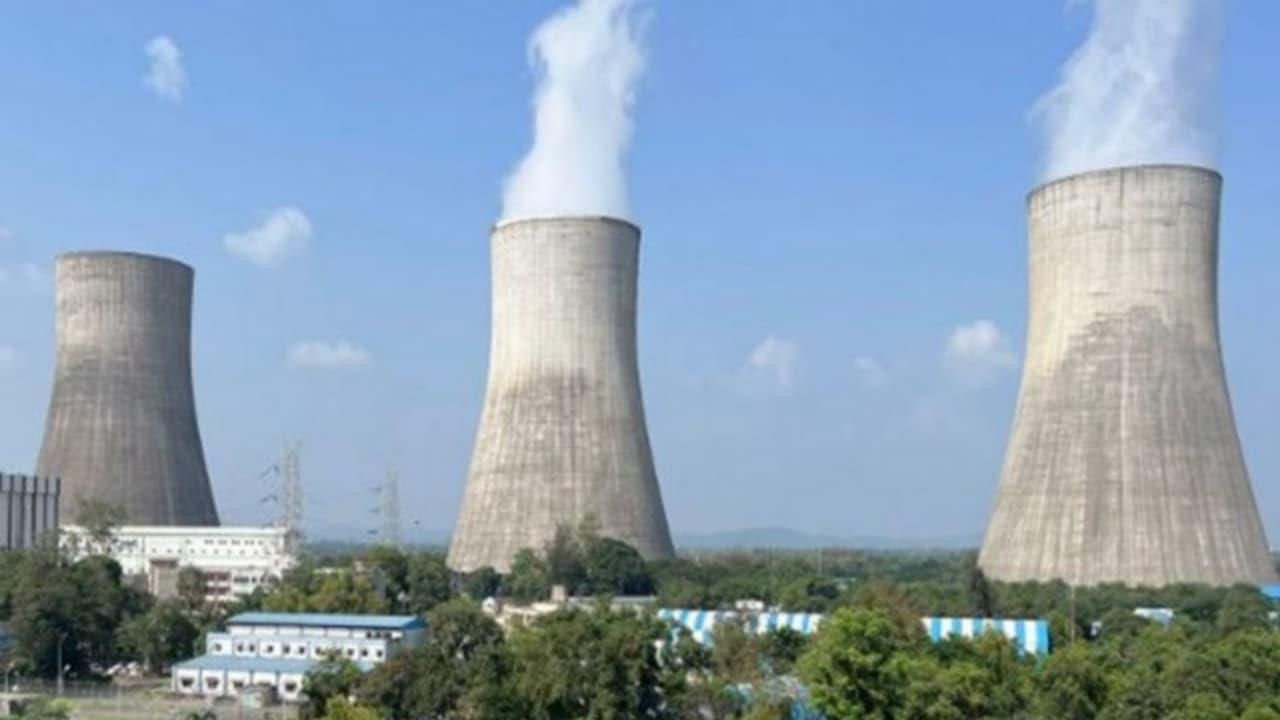
The Department of Atomic Energy announced that operational rules enabling private sector entry into India's nuclear power sector under the SHANTI Act are being drafted. The framework sets tiered operator liabilities, mandates insurance, and supports national goals to expand nuclear capacity.
Union Minister Jitendra Singh announces that operational guidelines for private sector participation under the SHANTI Act are currently being finalized.
The Department of Atomic Energy (DAE) is actively drafting the formal rules and licensing frameworks necessary to operationalize private sector entry into India's civil nuclear power sector under the Sustainable Harnessing and Advancement of Nuclear Energy for Transforming India (SHANTI) Act. Union Minister of State in the Prime Minister's Office Jitendra Singh stated in a written reply in Parliament on Wednesday, July 23, 2026, that official applications from private operators will be formally considered once these legislative rules are notified.
The regulatory milestone marks a monumental shift in India's energy policy, moving away from decades of strict state monopoly toward a collaborative framework aimed at meeting aggressive clean energy targets.
Legislative Framework and Civil Liability Provisions
According to official disclosures from the DAE, the SHANTI Act establishes a structured civil liability framework for nuclear accidents, featuring a tiered system based on the thermal power capacity of installations.
Operator Liability Caps: The legislation sets the maximum liability for operators at ₹3,000 crore for large-scale reactors with thermal power exceeding 3,600 megawatts (MW), with scaled-down caps for smaller installations.
Mandatory Insurance: Private operators are legally mandated to secure and continuously maintain comprehensive insurance policies or alternative financial securities before initiating plant operations.
Government Backstop: To manage contingencies exceeding private liability limits, the Central Government is empowered to establish a Nuclear Liability Fund through a levy on electricity tariffs sold to consumers.
Context, Capacity Goals, and Industry Impact
The push to integrate private enterprises is a core pillar of India's Nuclear Energy Mission, which targets a total nuclear capacity expansion to 22 gigawatts (GW) by fiscal year 2032 and an ambitious 100 GW by 2047. While sensitive fuel cycle operations—such as uranium enrichment and spent fuel reprocessing—remain under exclusive state control, eligible private companies will be permitted to build, own, and operate power generation units.
For energy markets, industrial consumers, and investors, this transition opens avenues for securing stable, round-the-clock baseload clean energy required for high-tech manufacturing and power-intensive data infrastructures.
Why It Matters
Establishing clear, transparent regulatory rules is essential for attracting corporate investments into capital-intensive nuclear infrastructure. Well-defined liability guidelines protect public safety while enabling private entities to contribute to India's long-term decarbonization goals.
Key Facts at a Glance
Supervising Body: Department of Atomic Energy (DAE), Government of India.
Governing Legislation: Sustainable Harnessing and Advancement of Nuclear Energy for Transforming India (SHANTI) Act.
Top-Tier Liability Cap: ₹3,000 crore designated for nuclear reactors exceeding 3,600 MW thermal power.
Long-Term Target: Reaching 100 GW of nuclear power capacity by 2047.
Frequently Asked Questions
When will private companies be able to apply for nuclear licenses?
Applications from private operators will be reviewed and processed once the rules under the SHANTI Act are officially notified through due legislative procedures.
What is the maximum liability for large nuclear reactors under the SHANTI Act?
The operator's liability is capped at ₹3,000 crore for reactors featuring thermal power output above 3,600 MW.
Are private entities allowed to handle all nuclear fuel processes?
No, sensitive operations such as enrichment, heavy water production, and spent fuel reprocessing remain under exclusive government control.
Source: Press Information Bureau, Business Standard, Parliament of India