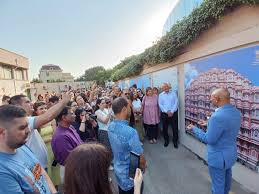
The Indian Embassy in Baku, Azerbaijan, has opened a permanent exhibition on India's UNESCO World Heritage Sites. Inaugurated on July 18, 2026, the 17-panel display showcases India's diverse cultural and natural history, serving as a platform to strengthen cultural ties and promote heritage awareness between the two nations.
BAKU — The Embassy of India in Azerbaijan has inaugurated a permanent exhibition dedicated to the UNESCO World Heritage Sites of India, creating a dedicated space in Baku to showcase the nation’s profound civilizational history. The exhibition, which opened its doors on July 18, 2026, features a curated display of 17 panels that bring India’s most iconic cultural and natural landmarks to a global audience [1.1.1, 1.1.2, 1.2.2].
The inauguration was jointly presided over by India's Ambassador to Azerbaijan, Abhay Kumar, and Anna Soave, Head of the Country Programme for UN-Habitat Azerbaijan. The event drew a distinguished crowd of diplomats, Azerbaijani parliamentarians, business leaders, and travel industry representatives, emphasizing the growing interest in India’s historical and architectural legacy within the region [1.1.3, 1.1.4, 1.2.2].
A Window into India’s Civilizational Journey
The exhibition serves as an educational platform, offering visitors an immersive look at a selection of India’s 44 UNESCO-recognized sites—comprising 36 cultural, seven natural, and one mixed site [1.1.2, 1.2.1]. Ambassador Abhay Kumar, who conceived the exhibition, highlighted that these landmarks represent not only India’s storied past but also the shared heritage of humanity.
Key sites featured in the panels include the ancient university of Nalanda, the iconic Taj Mahal, the Buddhist monuments at Sanchi, and the elaborate temple complexes of Hampi and Khajuraho [1.1.2, 1.2.2]. By bringing these narratives to Baku, the exhibition aims to inspire curiosity and provide a deeper appreciation for the diversity and creative evolution of one of the world's oldest continuous civilizations [1.1.2, 1.2.1].
Cultural Diplomacy and Shared Heritage
The opening ceremony reflected the strengthening bonds between India and Azerbaijan, evolving beyond traditional diplomatic exchanges into vibrant cultural engagement. Following the formal unveiling, the Embassy hosted a "Heritage-cum-Fashion Walk," where Azerbaijani participants wore traditional Indian attire from various states, showcasing a growing cultural affinity [1.1.2, 1.1.3, 1.2.2].
The event also featured an Indian Street Food Festival, providing guests with an authentic taste of India’s culinary heritage, alongside performances by Azerbaijani artists inspired by Indian artistic traditions [1.1.3, 1.2.1]. Anna Soave of UN-Habitat Azerbaijan commended the initiative, noting that such platforms are vital for fostering international dialogue and celebrating the collective preservation of humanity's invaluable treasures [1.1.2, 1.2.2].
Why It Matters
This permanent exhibition acts as a strategic instrument for cultural diplomacy, bridging the geographical distance between India and Azerbaijan through shared knowledge and appreciation of history. For travelers, students, and history enthusiasts in the region, it provides an accessible entry point to India’s heritage. The initiative also supports the tourism sector by highlighting India’s diverse natural and cultural landscapes, further cementing the friendly relations between the two nations [1.1.1, 1.1.2, 1.2.2].
Key Facts at a Glance
Permanent Location: Embassy of India in Baku, Azerbaijan [1.1.1, 1.2.2].
Exhibition Content: 17 panels featuring a curated selection of India’s 44 UNESCO World Heritage Sites [1.1.2, 1.2.2].
Site Diversity: The display encompasses India’s 36 cultural, seven natural, and one mixed UNESCO site [1.1.2, 1.2.2].
Core Objective: To promote cultural awareness, foster international dialogue, and strengthen ties between India and Azerbaijan [1.1.2, 1.2.2].
FAQ
What is the purpose of the permanent exhibition in Baku?
The exhibition aims to showcase India's rich cultural and natural heritage, foster deeper learning, and strengthen cultural ties between the people of India and Azerbaijan [1.1.1, 1.1.2].
What kind of sites are featured in the exhibition?
The exhibition features panels on India’s iconic UNESCO World Heritage Sites, including historical monuments like the Taj Mahal, ancient universities like Nalanda, and significant religious complexes like Hampi and Khajuraho [1.1.2, 1.2.2].
Who can visit the exhibition?
The exhibition is open to the general public at the Embassy of India in Baku, providing an opportunity for anyone interested in exploring India’s heritage [1.1.2, 1.2.2].
Source: Embassy of India in Azerbaijan, News On AIR, ANI News