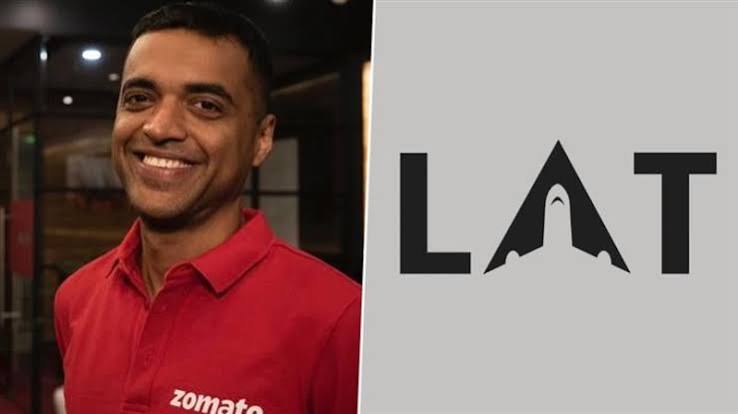
Former Zomato CEO Deepinder Goyal is entering the health tech and aerospace sectors. He is developing "Temple," a $1,000 metabolic-tracking wellness wearable, and scaling LAT Aerospace, a startup focused on regional STOL air travel that recently acquired the robotics firm Sharang Shakti to advance its indigenous aviation technology.
NEW DELHI — Deepinder Goyal, the former CEO of Zomato, is aggressively diversifying his portfolio with two major ventures: a high-end health tech wearable branded "Temple" and a strategic expansion of his aerospace startup, LAT Aerospace. These moves mark his first significant business steps since stepping down from the leadership of Eternal Ltd. earlier this year.
Health Tech: The "Temple" Wellness Wearable
Goyal’s most recent venture, Temple, aims to redefine personal health monitoring. The startup is developing a bean-shaped, forehead-worn wellness device designed to measure the body's metabolic state in real-time.
Unlike conventional smartwatches or rings that rely on heart rate as a proxy for metabolic activity, Goyal states that Temple directly measures a newly identified biomarker he calls "entropy." This metric is intended to offer deeper insights into stress, meditation, recovery, sleep, and exercise. The device is expected to retail for approximately $1,000, targeting a niche segment of athletes, founders, and executives rather than the mass market. The company anticipates a commercial launch within the next six months to a year.
Aerospace Ambitions: LAT Aerospace
In the aerospace sector, Goyal’s focus remains on LAT Aerospace, a company co-founded with former Zomato COO Surobhi Das. Initially established to disrupt regional connectivity, the startup is developing low-cost Short Take-Off and Landing (STOL) aircraft capable of operating from compact, parking-lot-sized "air-stops."
The venture is currently in a phase of aggressive growth. Following an initial $20 million investment from Goyal, the company has begun scaling its technical capabilities. In February 2026, LAT Aerospace completed its first acquisition: Gurugram-based defence robotics startup Sharang Shakti. This acquisition is designed to bring core technologies—including autonomy, sensing, navigation, and guidance systems—in-house, supporting both civil and defence aviation ambitions.
Official Sources
According to company filings and public disclosures, LAT Aerospace is actively building a vertically integrated R&D ecosystem. Goyal serves in a non-executive, strategic role at the aviation startup, while Surobhi Das oversees daily operations. Regarding the Temple wellness device, Goyal confirmed in recent media interviews that the product will undergo peer-reviewed studies to validate its metabolic tracking capabilities before hitting the market.
"Organizers stated that the focus remains on building indigenous capabilities from first principles, ensuring that critical technologies for both defence and civil aviation are controlled internally," according to recent corporate updates.
Why It Matters
These ventures represent a departure from the consumer-facing food delivery and quick-commerce models that defined Goyal's career at Zomato. For the broader industry, these bets highlight an increasing shift among Indian tech leaders toward deep-tech sectors like aerospace and advanced health diagnostics. The success of these initiatives could potentially democratise regional air travel and introduce a new category of "metabolic-first" wearable health technology.
Key Facts at a Glance
Temple Device: A forehead-worn wellness wearable measuring metabolic entropy.
Retail Target: Estimated price point of $1,000 for high-performing individuals.
LAT Aerospace Mission: Developing STOL aircraft to connect Tier 2 and Tier 3 cities.
Strategic Acquisition: Acquired Sharang Shakti in February 2026 to bolster robotics and autonomy.
Aviation Model: Designed as "buses in the sky" to utilize small, low-infrastructure air-stops.
FAQ
What is the primary function of the 'Temple' wearable?
Temple measures the body’s metabolic state in real-time by tracking a biomarker termed "entropy," offering more direct data than traditional heart-rate-based trackers.
What is the goal of LAT Aerospace?
The company aims to enhance regional connectivity in India by deploying small, 24-seat aircraft that can land on short, compact runways, bypassing the need for major airport infrastructure.
What was the significance of the Sharang Shakti acquisition?
The acquisition allows LAT Aerospace to bring critical technologies—such as autonomy and sensing—in-house, allowing for greater control over the development of both defence and civil aviation platforms.
Source: The Economic Times, Fortune India, Business Standard