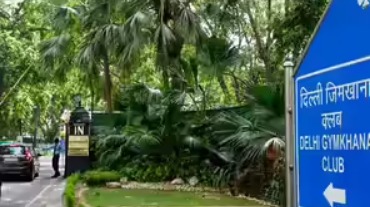
The Delhi Gymkhana Club, one of the capital’s oldest colonial-era institutions, has been ordered to vacate its 27.3-acre Lutyens’ premises, triggering legal action, political noise and a wave of nostalgia. On the surface, it is a fight over prime land and elite privilege. Scratch a little deeper, and it is also a story about what happens to a city’s conversational biodiversity when such spaces vanish or are violently repurposed.
For nearly a century, Gymkhana has been a very particular kind of ecosystem: bureaucrats, lawyers, diplomats, retired officers, journalists, the occasional artist, all squeezed into the same lawns, bars and card rooms. Not egalitarian, not representative, often exclusionary but undeniably a place where different worlds rubbed shoulders and traded gossip, ideas and favours face to face. As Delhi and other metros splinter into gated societies, corporate lounges and algorithm-sorted timelines, those messy, mixed-up spaces are thinning out.
What The Closure Fight Is Really About
The Centre’s notice asks Gymkhana to hand back the land for “strengthening and securing defence infrastructure and other vital public security purposes.” Supporters frame it as a long overdue correction: why should a government-supported, heavily subsidised parcel of land essentially function as an ultra-selective drawing room for “babus and their cohorts” Critics agree that the club is elitist, but argue two things can be true at once: an institution can need reform, not demolition, and a city can lose something intangible when another old crossroad of lives disappears. Former members and staff talk about it less as a luxury space and more as a second home for older Delhiites, a routine, a walking-distance refuge in a city that grows harsher by the year.
Conversational Biodiversity And The New Fragmented City
The phrase “conversational biodiversity” might sound soft, but urban researchers and writers use it to capture a real loss: as cities harden, people increasingly talk only to those like themselves. Old clubs, coffee houses, addas, maidan edges, university canteens, even local trains once forced different classes, professions and generations into shared air. You did not just meet your friends; you overheard the lawyer, the civil servant, the poet, the small trader at the next table. Indian cities are steadily replacing those “mixed habitats” with algorithmically curated feeds and tightly segmented spaces: mall food courts, co-working offices, influencer cafes, private WhatsApp groups. The range of conversations one stumbles into shrinks accordingly.
Gymkhana’s saga lands in the middle of that shift. It is easy, and not entirely wrong, to see it as the fall of one more colonial-era elite outpost. It is harder, but more useful, to ask what will replace it in the city’s social ecology. Another high-security compound More offices A park open to all, or a space that quietly becomes exclusive in new ways Meanwhile, Delhi’s other old conversational nodes Connaught Place cafes, university hangouts, local clubs, single-screen cinemas have been disappearing or morphing into something more transactional for years. Gymkhana just happens to be the one whose obituary is written in English and litigated in high courts.
Why This Moment Deserves A Bigger Conversation
The staff’s anxiety about livelihoods, the members’ sense of loss and the political jousting over “elitism versus egalitarianism” are all real. But there is a wider civic question tucked in: as we reclaim, redevelop or shut down inherited institutions, are we also thinking about where the next generation of shared, cross-class, cross-profession spaces will come from Cities that only offer siloed bubbles and transactional venues end up poorer not just in heritage, but in ideas and empathy.
It is possible to hold more than one thought here: that Gymkhana’s privilege needed reworking; that government land cannot be a private playground forever; and that India’s cities owe themselves new, more open “conversation forests” before the old ones are cut down completely.
Key City And Culture Highlights
1.Delhi Gymkhana ordered to vacate its historic 27.3-acre premises in Lutyens’ Delhi
2.Move framed by Centre as necessary for defence and security infrastructure
3.Closure debate has revived fault lines over elitism, entitlement and land use
4.Deeper worry is about shrinking “mixed” urban spaces and the loss of conversational biodiversity in Indian cities
Sources: Government notices and press reports on the Delhi Gymkhana Club eviction order; reactions and commentary from former members, politicians and urban commentators; essays and research on changing urban social spaces and the idea of “conversational biodiversity” in Indian cities.