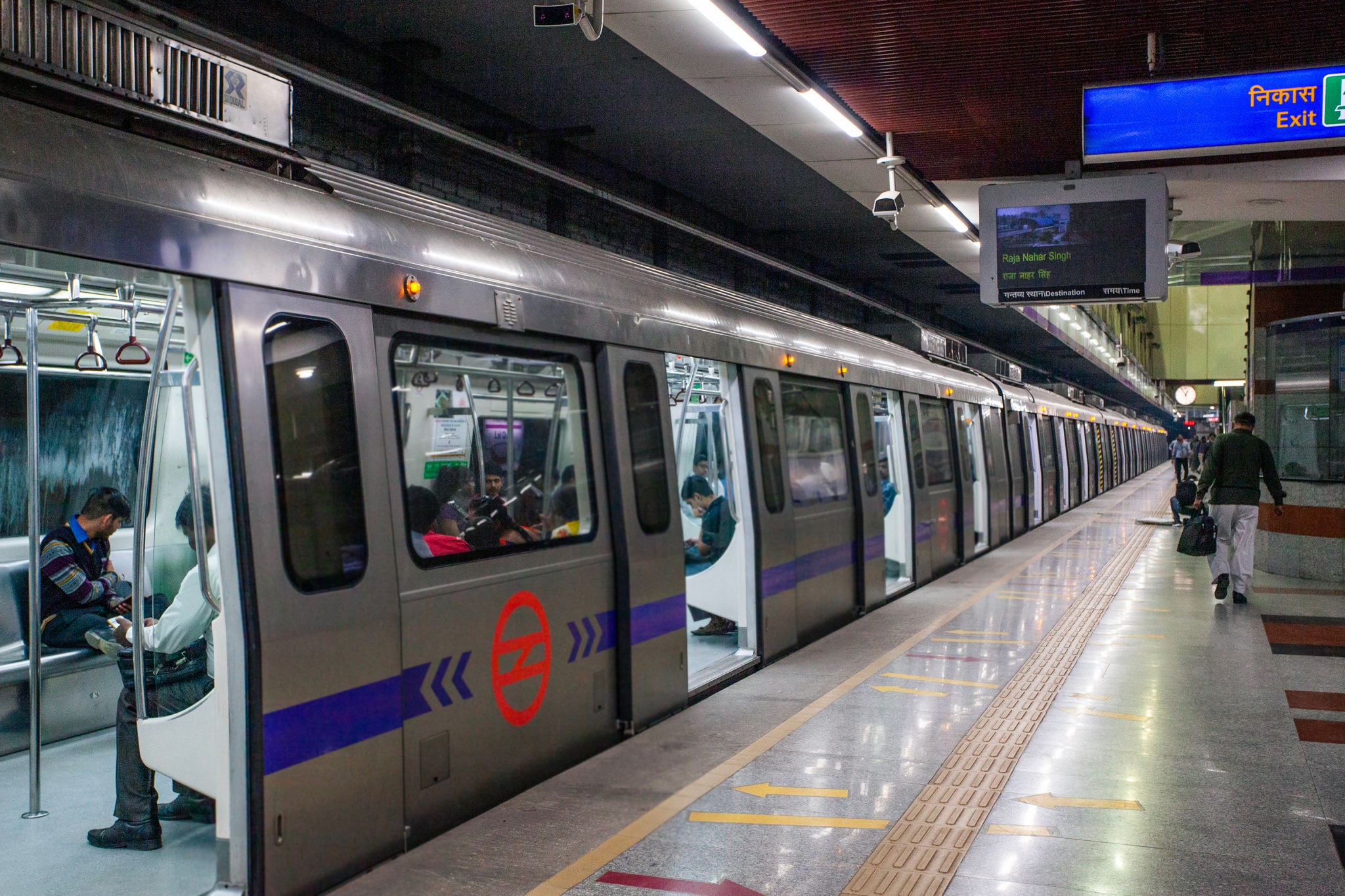
The Delhi Metro Rail Corporation (DMRC) recorded a 99.95 percent train punctuality rate in 2026, surpassing global rapid transit networks in Hong Kong, Paris, and New York. Advanced CBTC signalling, predictive maintenance, and driverless operations enabled the 390km network to maintain precise timetables while transporting over six million daily commuters.
NEW DELHI — The Delhi Metro Rail Corporation (DMRC) registered a train punctuality rate of 99.95 percent across its network during operational evaluations in 2026, positioning the capital’s rapid transit system ahead of major global networks including Hong Kong, Paris, and New York.
The operational milestone was confirmed in performance metrics released by the DMRC in New Delhi on Sunday, August 9, 2026. According to official data, the urban rail network maintained near-perfect adherence to daily timetables while operating over 3,000 trips daily across a network spanning more than 390 kilometers. The high reliability figure highlights the impact of automated signalling infrastructure, predictive maintenance protocols, and streamlined crowd control measures in sustaining large-scale public transportation in one of the world's most populous metropolitan regions.
Global Benchmarks and Comparative Performance Data
The 99.95 percent punctuality rate reflects the proportion of train trips completed within prescribed schedule margins across all operational lines, including the Red, Yellow, Blue, Green, Violet, Pink, Magenta, and Grey corridors, as well as the Airport Express Line.
International transit operational benchmarks demonstrate the relative standing of the Delhi Metro during the 2026 reporting period:
Delhi Metro (DMRC): 99.95% train punctuality rate across 390+ kilometers.
Hong Kong MTR: Historically maintains approximately 99.9% operational reliability.
Paris Métro (RATP): On-time performance across urban metro lines averages between 92% and 96% depending on line congestion and maintenance windows.
New York City Subway (MTA): On-time performance for subway lines averages between 80% and 85% according to official MTA operational tracking.
DMRC officials attribute the performance gap to modern driverless train operation (DTO) systems on select corridors, real-time central monitoring through Operations Control Centres (OCC), and off-peak preventive maintenance routines executed during nightly non-revenue hours.
Engineering and Operational Factors Driving Reliability
Maintaining high train punctuality across a massive network requires precise synchronization of rolling stock, power supply, and signalling systems.
Automated Signalling and Communications
The implementation of Communication-Based Train Control (CBTC) signalling on newer corridors, such as the Pink and Magenta lines, allows shorter headways between trains—down to 90 seconds during peak hours—without compromising safety thresholds. Automated interlocking minimizes human delay during platform dwell times and turnarounds at terminal stations.
Infrastructure and Maintenance Frameworks
DMRC utilizes automated track monitoring trains equipped with ultrasonic flaw detectors and optical sensors to identify rail wear and overhead equipment anomalies before structural faults cause service disruptions. Roll-out schedules for rolling stock are managed via digital asset management software that tracks mileage and component wear in real time.
Official Sources Section
According to official statistics released by the Delhi Metro Rail Corporation and statements issued by the Union Ministry of Housing and Urban Affairs (MoHUA), operational evaluations conducted in 2026 verify that DMRC's schedule adherence surpassed international urban transit benchmarks. Official filings confirm that daily passenger journeys exceeded 60 lakh (6 million) trips during peak weekdays without compromising timetable compliance.
Quote Section
"According to officials, continuous technological upgrades in signalling and predictive maintenance have enabled the network to sustain a 99.95 percent punctuality standard while managing record daily passenger volumes across the National Capital Region."
Why It Matters
High transit reliability directly reduces economic loss caused by commuter delays in urban centers. For millions of daily passengers in New Delhi, Noida, Ghaziabad, Gurugram, and Faridabad, consistent train schedules provide a dependable alternative to congested surface roads. For municipal planners and international transportation investors, DMRC's operational model offers a benchmark for scaling urban rapid transit infrastructure efficiently in developing megacities.
Key Facts at a Glance
Punctuality Benchmark: Delhi Metro achieved a 99.95% train punctuality rate in 2026 evaluations.
Global Standing: Outperformed major international networks including Paris Métro and New York City Subway.
Network Scale: Covers over 390 kilometers and 280+ stations across the Delhi-NCR urban region.
Core Technology: Supported by Communication-Based Train Control (CBTC) signalling and automated monitoring systems.
Frequently Asked Questions
How does Delhi Metro define train punctuality?
DMRC measures punctuality based on whether a train arrives at and departs from terminal stations within a strict time threshold (typically within 60 to 120 seconds of the scheduled timetable).
Which Delhi Metro lines utilize fully automated operations?
Driverless Train Operation (DTO) technology is currently deployed on the Magenta Line and Pink Line, enabling computer-controlled acceleration, braking, and station dwell times.
How does Delhi Metro punctuality compare to western transit systems?
Delhi Metro's 99.95% reliability rate exceeds average figures reported by transit authorities in New York (approx. 80-85%) and Paris (approx. 92-96%), placing it among the world's most punctual urban rail networks alongside Hong Kong and Tokyo.
Source: Delhi Metro Rail Corporation (DMRC) Official Releases, Ministry of Housing and Urban Affairs (MoHUA), International Association of Public Transport (UITP) Reports.