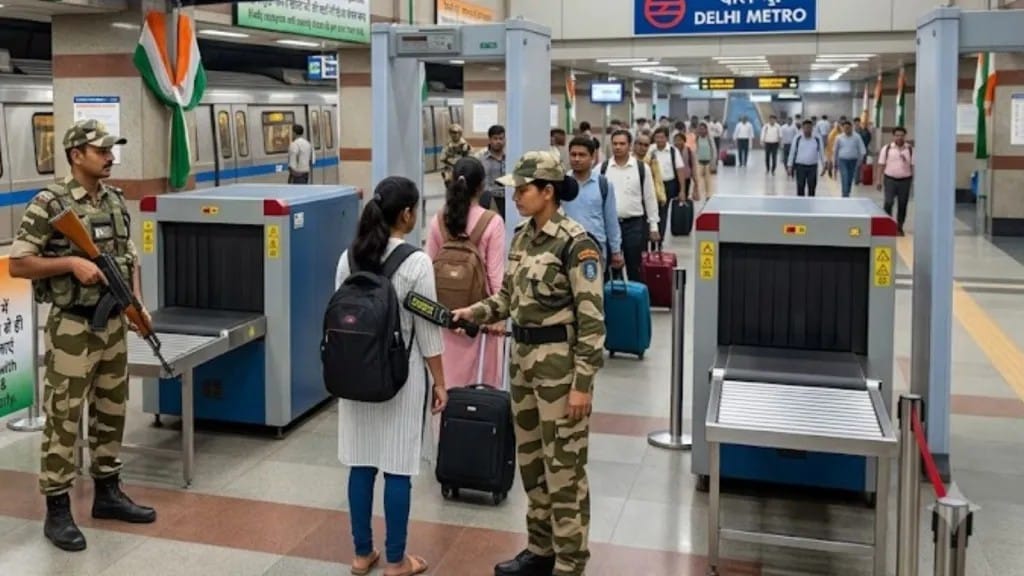
The Delhi Metro Rail Corporation and Central Industrial Security Force have intensified passenger security checks across all metro stations from August 9 to August 16, 2026, ahead of Independence Day celebrations. Commuters across Delhi-NCR are advised to plan extra travel time due to anticipated longer queues during peak operational hours.
NEW DELHI — The Delhi Metro Rail Corporation (DMRC) has issued a travel advisory announcing intensified security checks across all stations starting Sunday, August 9, 2026, ahead of India's 80th Independence Day celebrations. Conducted in coordination with the Central Industrial Security Force (CISF), the enhanced screening measures will remain in effect through Sunday, August 16, 2026. Metropolitan transit officials have urged daily commuters and travelers across the National Capital Region (NCR) to plan their journeys in advance and allocate additional travel time to accommodate potential delays at access control points.
Enhanced Screening Operations and Passenger Management
Under the updated security protocol, CISF personnel deployed across the rapid transit network will execute multi-layered physical and electronic screenings at station access gates. The expanded security measures involve comprehensive luggage scanning, manual body searches using hand-held metal detectors, and heightened monitoring at frisking booths.
Transit authorities noted that while screening infrastructure will operate at maximum capacity, the extra verification steps are expected to slow passenger entry flows, particularly during peak morning and evening operational hours.
Anuj Dayal, Principal Executive Director of Corporate Communications at DMRC, detailed the operational changes in an official statement, confirming that the intensified security checks aim to safeguard the transit network during the high-profile national event.
"In view of the enhanced security arrangements ahead of Independence Day on 15th August 2026, the security checks for passengers will be further intensified by CISF across the Metro stations starting from 9th August 2026," Dayal stated. "This might result in long queues at some Metro stations, especially during peak hours till 16th August 2026. Therefore, passengers are advised to plan their journey accordingly and allow for some additional time for their commute during these days. Passengers are requested to cooperate with the security personnel during security checks."
Multi-Agency Capital Security Grid and Public Directives
The security enforcement within the Delhi Metro forms part of a broader, multi-agency security umbrella established across New Delhi for the Independence Day festivities. Local law enforcement agencies, including the Delhi Police, have deployed over 12,000 personnel around the Red Fort, the central venue for the national celebrations.
As part of the surrounding air and ground surveillance framework, authorities have integrated real-time monitoring technologies:
Surveillance Network: Over 1,000 AI-enabled CCTV units and advanced 360-degree coverage cameras have been brought online to monitor crowd movement and detect anomalies in real time.
Airspace Restrictions: A strict no-fly zone has been declared across the National Capital Territory (NCT), banning drones, hot-air balloons, paragliders, and non-scheduled aerial vehicles, supported by active counter-drone technology deployments.
Commercial Restrictions: Around 300 commercial establishments in the Chandni Chowk area adjacent to the Red Fort will remain closed between August 12 and August 15. Public visitor access to the Red Fort complex itself was suspended in mid-July ahead of event preparation.
In addition, law enforcement officials in Central Delhi conducted inter-agency coordination meetings under the "Eyes & Ears Scheme," briefing local hotel owners, cyber cafe operators, SIM card vendors, and volunteer groups to maintain vigilant reporting mechanisms.
Context and Operational Impact on Commuters
The Delhi Metro serves as the transit backbone of the capital, carrying millions of daily passengers across Delhi, Noida, Ghaziabad, Gurugram, and Faridabad. During high-security periods, station entry points frequently experience bottlenecking as frisking lines lengthen.
The advisory serves to prevent transit disruptions for commuters who rely on precise schedules for work and regional travel. Transport experts suggest that adding 15 to 30 minutes to standard transit planning will help passengers manage the additional screening checkpoints without missing onward connections.
Official Sources
The details surrounding the security measures and commuter advisories are based on official announcements released by the following organizations:
Quote Section
According to official statements issued by the Delhi Metro Rail Corporation, transit personnel and security forces are working to balance commuter convenience with strict safety protocols.
"Passengers are requested to cooperate with the security personnel during security checks to ensure smooth operations across the network," stated DMRC Corporate Communications.
Why It Matters
The annual tightening of security across the Delhi Metro network highlights the critical challenge of securing mass rapid transit infrastructure during major national events. For the millions of daily commuters across Delhi-NCR, early notice enables proactive travel adjustments, minimizing workplace delays and reducing platform overcrowding. For security agencies, comprehensive screening at metro entry points prevents unauthorized access and secures critical urban transit nodes across the National Capital Region.
Key Facts at a Glance
Security Phase: August 9, 2026, through August 16, 2026.
Enforcing Agency: Central Industrial Security Force (CISF) in coordination with DMRC.
Affected Areas: All stations across the Delhi Metro network covering Delhi, Noida, Ghaziabad, Gurugram, and Faridabad.
Commuter Guidance: Plan extra travel time, especially during peak morning and evening commute windows.
Frequently Asked Questions (FAQ)
Why are security checks being intensified across the Delhi Metro?
Security checks are being heightened by the CISF as part of standard preventive security protocols ahead of India's Independence Day celebrations on August 15.
When do the enhanced security measures begin and end?
The intensified screening protocols start on Sunday, August 9, 2026, and will remain active through Sunday, August 16, 2026.
Which metro stations will be affected by longer queues?
All metro stations across the network are subject to enhanced security checks, with high-interchange and major commuting hubs expected to experience longer queues during peak hours.
How much extra time should commuters budget for their journeys?
Transit authorities advise passengers to allow for additional travel time beyond their normal schedule, particularly when traveling during morning and evening rush hours.
Source: Delhi Metro Rail Corporation (DMRC), Central Industrial Security Force (CISF), and Delhi Police.