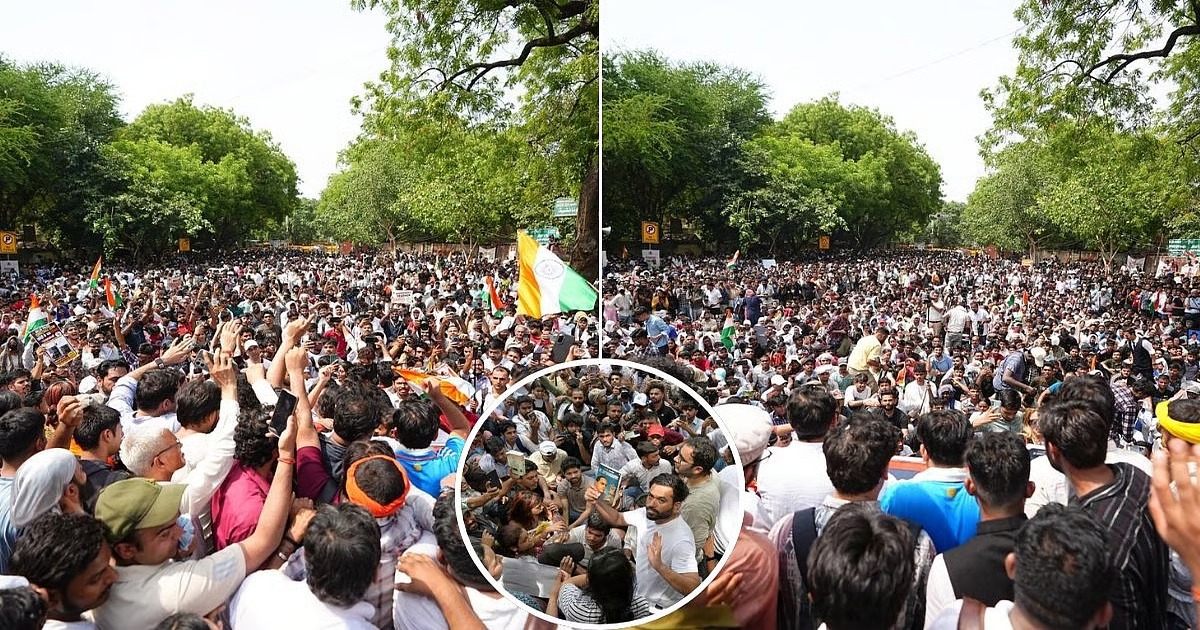
Delhi Police utilized lathis to disperse Cockroach Janta Party (CJP) marchers at Jantar Mantar who were attempting to march toward Parliament today, July 20, 2026. The security action followed the strict enforcement of Section 163 of the BNSS to protect vital government zones during the Monsoon Session opening.
NEW DELHI, India — Security personnel deployed at the Jantar Mantar protest site utilized lathis to disperse thousands of political demonstrators attempting to breach multi-layered police barricades.
The security intervention occurred today, July 20, 2026, as marchers affiliated with the Cockroach Janta Party (CJP) sought to advance toward the Parliament building. The dynamic escalation coincided exactly with the commencement of the high-profile Monsoon Session of Parliament. Activists had assembled to demand the immediate resignation of the Union Education Minister over highly publicized national examination irregularities and the NEET question paper leak controversy.
Prohibitory Mandates and Multi-Layered Security Blocks
The administrative clearance for the police intervention follows a strict regulatory stance taken by the regional police command. The New Delhi District administration had pre-emptively clamped down on public movement by enforcing Section 163 of the Bharatiya Nagarik Suraksha Sanhita (BNSS)—the updated regulatory framework replacing Section 144 of the legacy CrPC.
According to detailed statements released by the Assistant Commissioner of Police for the Parliament Street subdivision, the security parameters implemented across the national capital follow precise logistical boundaries:
Denial of March Authorizations: Deputy Commissioner of Police (New Delhi) Sachin Sharma explicitly clarified that the political organization had neither sought nor been granted legal permission to conduct an active procession or march toward the Central Vista.
Sweeping Equipment Bans: Operating under the legal authority of Section 70(1)(b) of the Delhi Police Act, 1978, the administration banned all assemblies of five or more individuals along with the carrying of placards, banners, swords, and lathis.
Deployment Interventions: Multi-layered iron barricades were backed by specialized central deployment units, including the Rapid Action Force (RAF) and elements of the Nagaland Armed Police.
Barricade Breach Triggers Enforcement Actions
The physical clashes began shortly after noon when a surging crowd of CJP protesters, led by organizational founder Abhijit Dipke, attempted to tear down the primary iron fencing units to begin their march toward Parliament.
As the crowd ignored repeated warnings broadcast over police megaphones regarding the ongoing Section 163 orders, security personnel charged the front lines to push back the advance. Eyewitnesses reported that several student activists and political organizers were detained and moved into parked police vans to prevent further public disorder.
The enforcement action caused temporary traffic jams across Central Delhi, forcing the Delhi Traffic Police to issue emergency route diversions around Connaught Place, Tolstoy Marg, and Janpath.
Parliamentary Disruption and Political Backlash
The security actions outside Jantar Mantar immediately triggered political reactions inside the legislative houses. Opposition members disrupted early proceedings during the Monsoon Session, demanding an independent discussion on the police actions against the student groups and criticizing the government's handling of the national testing grids.
Conversely, treasury benches defended the police response, arguing that maintaining public order and protecting key government facilities during active legislative sessions is a non-negotiable statutory duty.
Official Sources Section
According to official law and order advisories published by the Delhi Police and statutory security announcements detailed by the Ministry of Home Affairs, the emergency security restrictions across the Parliament Street subdivision will remain actively in force until August 22, 2026, to ensure public safety.
Official Quote Section
"According to officials and regional security directors managing the Central Delhi grid, the police deployment acted within standard parameters to prevent an unauthorized breach of restricted zones," stated a senior law and order advisor tracking the national capital's security logistics. "With Parliament entering its active session today, no unpermitted processions can be allowed past the designated boundaries of Jantar Mantar. The use of minimum defensive force was required to ensure public safety, protect protectees, and secure vital government installations."
Why It Matters
For regular daily commuters, corporate personnel, and regional travelers in New Delhi, this security development underscores the ongoing operational friction surrounding public demonstrations in high-security zones. The strict enforcement of Section 163 of the BNSS limits large-scale gatherings to designated areas, helping to prevent wider gridlock across the central business district while highlighting the persistent political tensions surrounding national educational standards.
Key Facts at a Glance
Enforced Dispersal: Delhi Police used lathis to turn back thousands of CJP marchers attempting to advance past Jantar Mantar.
Statutory Restrictions: Prohibitory orders under Section 163 of the BNSS remain actively enforced across the New Delhi district.
Monsoon Session Timeline: The high-stakes demonstration coincided with the opening day of the Monsoon Session of Parliament.
Core Demands: Protesters assembled to protest the NEET paper leak and demand the immediate resignation of the Union Education Minister.
FAQ Section
Why did the Delhi Police use force against the CJP marchers at Jantar Mantar?
According to official police reports, the demonstrators attempted to breach multi-layered security barricades to conduct a march toward Parliament without holding the required legal permits.
What is Section 163 of the BNSS, and where is it currently active?
Section 163 of the Bharatiya Nagarik Suraksha Sanhita (which replaces the old Section 144 of the CrPC) bans the unlawful assembly of five or more people. It is currently active across the Parliament Street subdivision and the wider New Delhi district.
Where can the public track live Delhi traffic diversions during these protests?
Real-time traffic updates, route closures, and safety circulars are published continually on the official digital feed of the Delhi Police.
Source: Delhi Police Statutory Public Orders, Ministry of Home Affairs Security Directives, Press Information Bureau (PIB) Legislative Records.