India is hosting the 16th BRICS Health Ministers' Meeting in Chandigarh from July 22 to 24, 2026, under its BRICS Chairship. Chaired by Union Health Minister J.P. Nadda, the summit focuses on pandemic preparedness, digital health, artificial intelligence, and traditional medicine across the expanded 11-member alliance.
CHANDIGARH, India — India is hosting the 16th BRICS Health Ministers' Meeting in Chandigarh from July 22 to 24, 2026, bringing together health ministers, policymakers, and technical experts from across the expanded 11-member bloc. Convened under India's 2026 BRICS Chairship, the three-day summit addresses crucial public health challenges, digital health architecture, and equitable access to affordable medicine for the Global South.
The ministerial meeting will be chaired by Union Minister of Health and Family Welfare Jagat Prakash Nadda on July 23. Delegates from Brazil, Russia, India, China, South Africa, Egypt, Ethiopia, Iran, Saudi Arabia, the United Arab Emirates, and Indonesia—collectively representing nearly half of the world's population and roughly 40 percent of global GDP—are taking part in the proceedings.
Key Priority Areas and Global Health Agenda
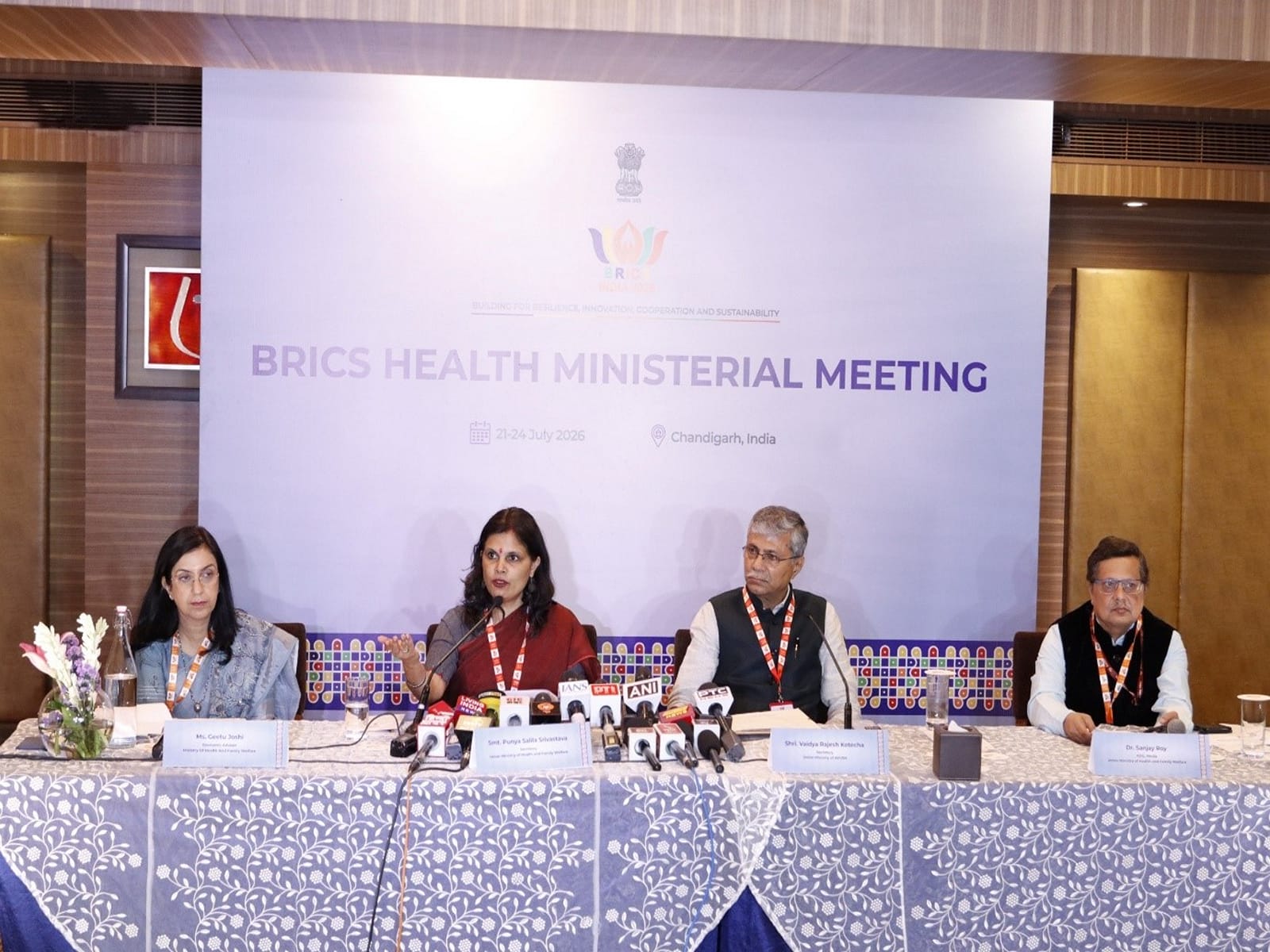
Briefing reporters ahead of the summit, Union Health Secretary Punya Salila Srivastava and Ministry of Ayush Secretary Vaidya Rajesh Kotecha outlined nine priority areas guiding the Chandigarh deliberations. The discussions center on the overarching theme, "Building for Resilience, Innovation, Cooperation and Sustainability."
The agenda includes advancing the BRICS Tuberculosis (TB) Research Network, establishing early warning systems for mass infectious diseases, and promoting joint regulatory cooperation among medical product authorities. A key focus remains on addressing communicable and non-communicable diseases while accelerating progress toward Universal Health Coverage (UHC).
Focus on Digital Health, AI, and Traditional Medicine
A major feature of the summit program is a high-level side event scheduled for July 24 titled "BRICS Dialogue: From Digital Health Records to AI-Enabled Healthcare." The session explores interoperable data infrastructure, cross-border digital records, and the responsible adoption of artificial intelligence to strengthen continuum of care in remote regions.
Simultaneously, the Ministry of Ayush is leading discussions on Traditional, Complementary, and Integrative Medicine (TCIM). Participating nations are working to finalize the Terms of Reference for a dedicated BRICS Expert Working Group on TCIM to institutionalize clinical validation, regulatory alignment, and scientific research sharing.
Practical Impact on Citizens, Industry, and Healthcare
For citizens and public health networks across member nations, the summit aims to accelerate emergency response capabilities through real-time disease surveillance systems. Improved regulatory convergence between member countries is expected to streamline market approvals for essential pharmaceutical products, reducing costs and widening access to generic medicines.
For the healthcare technology and pharmaceutical industries, joint frameworks on interoperable digital health architecture offer new opportunities for AI integration, telemetry, and cross-border research collaborations.
Official Sources
According to official briefings and government releases:
Ministry of Health and Family Welfare (MoHFW): Confirmed the agenda, priority pillars, and ministerial participation details via official announcements from the
Press Information Bureau (PIB)Ministry of Ayush: Outlined progress toward establishing the BRICS Expert Working Group on Traditional, Complementary, and Integrative Medicine through the
Ministry of Ayush PortalBRICS Chairship Secretariat: Provided administrative and session details via the official
BRICS India Secretariat Platform
Official Statements and Leadership Quotes
"The Sixteenth BRICS Health Ministers' Meeting reflects India's commitment under its 2026 Chairship to advance collective action on vital health priorities," stated Union Health Secretary Punya Salila Srivastava. "Our discussions focus on building resilient health systems, digital health architecture, and advancing the priorities of the Global South."
According to officials, the delegates will adopt the formal Sixteenth BRICS Health Ministerial Declaration at the conclusion of the sessions on July 23, setting the strategic roadmap for intra-BRICS health initiatives over the coming year.
Why It Matters
As global health systems rebuild post-pandemic and navigate emerging bio-security challenges, the BRICS alliance provides an influential platform representing over 3.5 billion people. By establishing standardized digital health records, early warning infection networks, and harmonized pharmaceutical regulations, the Chandigarh summit creates a practical framework for health security across developing and emerging economies.
Key Facts at a Glance
Event: 16th BRICS Health Ministers' Meeting.
Dates & Venue: July 22–24, 2026, in Chandigarh, India.
Chairmanship: Chaired by Union Health Minister J.P. Nadda under India's 2026 BRICS Chairship.
Participants: Delegations from 11 BRICS member countries (including newly joined members).
Core Outcomes: Adoption of the Health Ministerial Declaration and creation of the TCIM Expert Working Group.
Frequently Asked Questions (FAQ)
What is the theme of the 16th BRICS Health Ministers' Meeting?
The theme under India's 2026 BRICS Chairship is "Building for Resilience, Innovation, Cooperation and Sustainability."
Which countries are attending the summit in Chandigarh?
The meeting includes health representatives from 11 BRICS member states: Brazil, Russia, India, China, South Africa, Egypt, Ethiopia, Iran, Saudi Arabia, the United Arab Emirates, and Indonesia.
What is being discussed regarding AI and digital health?
Delegates are holding a high-level dialogue on July 24 focusing on interoperable digital health infrastructure, cloud-based health records, and deploying responsible AI to improve remote patient care.
How does this summit impact traditional medicine?
The Ministry of Ayush is working with member countries to finalize the Terms of Reference for a BRICS Expert Working Group on Traditional, Complementary, and Integrative Medicine (TCIM) to boost clinical research and evidence sharing.
Source: Official press statements and media releases issued by the Ministry of Health and Family Welfare (MoHFW), the Ministry of Ayush, and the Press Information Bureau (PIB India).