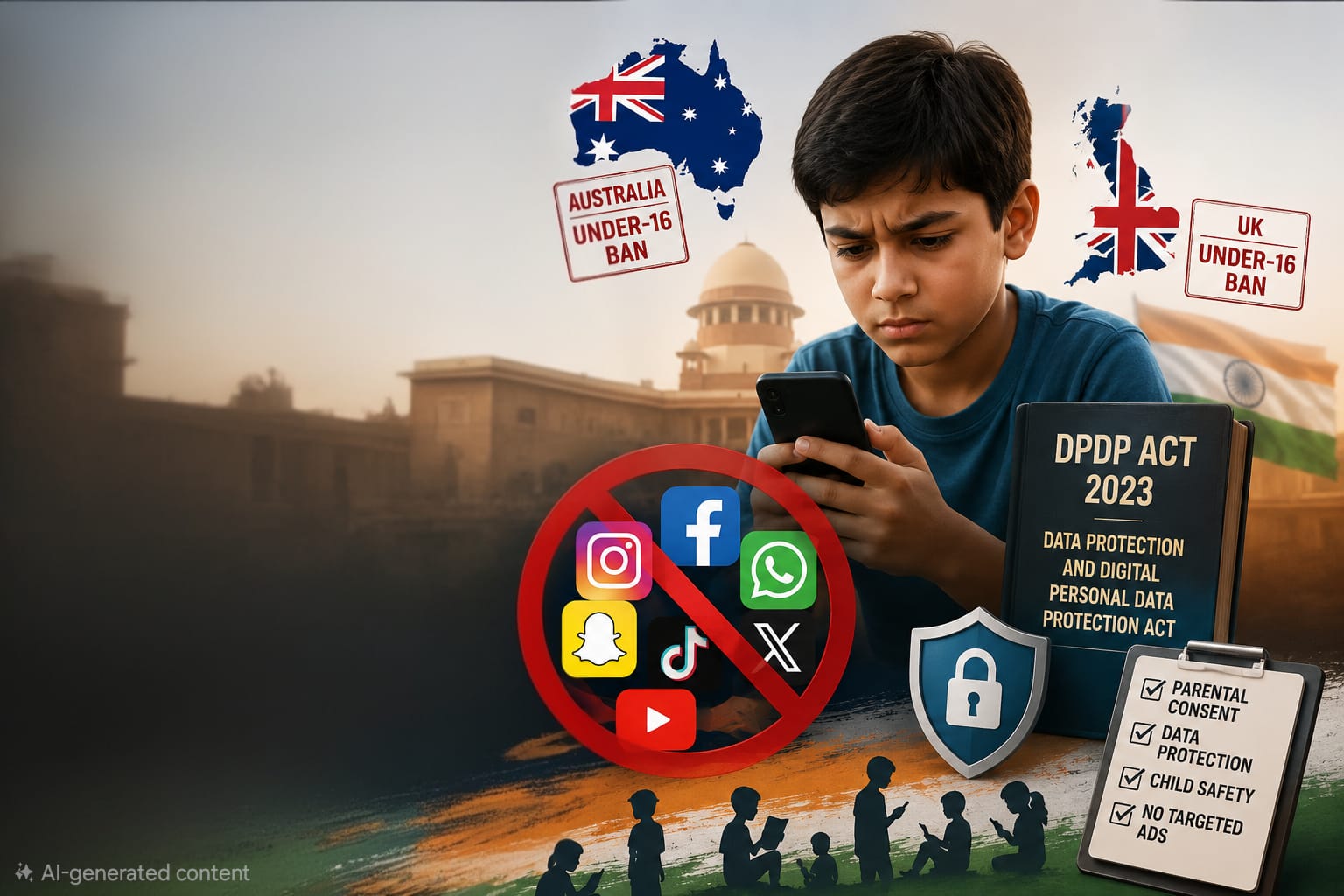
Governments from Australia to Europe are tightening laws to restrict children’s social media access. Following Australia’s landmark ban for under-16s, the European Commission announced plans in July 2026 for a phased regulatory framework. The push aims to shield youth from addictive algorithms and mental health risks.
BRUSSELS, Belgium — Governments across the globe are accelerating legislative efforts to restrict children and adolescents from accessing social media platforms. Following Australia’s pioneering under-16 social media ban, the European Commission confirmed on July 13, 2026, that it is drafting comprehensive EU-wide legislation to enforce age-based access limits and eliminate addictive platform designs aimed at minors.
The international regulatory momentum marks a fundamental shift in digital policy, transferring the burden of compliance and age verification from parents directly onto multinational technology companies.
Australia Sets Benchmark with Under-16 Account Enforcement
Australia became the first nation to enact an outright ban preventing minors under 16 from creating or maintaining social media accounts. Enforced through the eSafety Commissioner under amended Online Safety regulations, the policy requires covered platforms—including Instagram, TikTok, YouTube, Snapchat, and X—to take reasonable operational steps to remove under-age accounts or face financial penalties up to $49.5 million AUD.
Six months into implementation, Australian regulatory filings indicate that major tech platforms successfully deactivated over 4.7 million accounts associated with users under 16. However, Australian authorities continue to increase oversight, introducing stricter compliance checks to target workaround methods and parental consent bypasses.
European Union Prepares Phased Digital Safeguards
Building on the Australian precedent, European Commission President Ursula von der Leyen announced that the EU will introduce targeted legislation following recommendations from an expert panel. Rather than a single blanket ban, the proposed European framework establishes a "phased and gradual" digital transition:
Under 13 Years: Complete prohibition of independent social media accounts and platform access.
Ages 13 to 15: Graduated access governed by mandatory "safety-by-design" rules and a non-addictive "Youth Mode".
Algorithmic Bans: Strict prohibition of infinite scrolling, auto-play features, and targeted behavioral advertising directed at minors.
Several European member states are pursuing parallel national restrictions. France has pledged to ban social media for under-15s, while Spain and Greece are advancing legislation to limit access for under-16s, citing growing concerns over sleep deprivation, anxiety, and online exploitation.
Practical Impact on Tech Platforms, Parents, and Youth
For technology companies, global legislative movement necessitates the immediate deployment of robust age assurance technologies, such as facial age estimation, privacy-preserving double-blind ID checks, and algorithmic re-engineering. Platforms failing to comply face severe financial exposure under the EU Digital Services Act (DSA), with fines reaching up to 6 percent of global annual turnover.
For families, the regulations relieve parents of sole responsibility for monitoring digital consumption. However, privacy advocates and youth groups emphasize that restrictions must preserve safe access to essential educational, health, and messaging services without incurring invasive mass data surveillance.
Official Sources
According to official government announcements, regulatory reports, and legislative press releases:
Statements from Leadership and Officials
"We do not expect children to design their own seatbelts, nor do we expect parents to fit airbags at home," stated European Commission President Ursula von der Leyen. "The platforms have a duty of care toward their users, especially the most vulnerable among them, to protect them from predatory algorithms."
Reacting to compliance oversight, Australia’s eSafety Commissioner highlighted that responsibility remains firmly with technology executives, noting that platforms must demonstrate their environments are safe before exposing young audiences to algorithmic feeds.
Why It Matters
The global push to restrict children’s social media access represents a structural shift in how digital public squares are regulated. By legally penalizing engagement-maximising algorithms and imposing hard age limits, international regulators aim to mitigate youth mental health risks while forcing social platforms to restructure their core business models around safety rather than total screen time.
Key Facts at a Glance
Australia: Implemented a world-first social media account ban for under-16s, removing over 4.7 million accounts.
European Union: Drafting legislation for an EU-wide ban for children under 13 alongside a phased transition for teenagers.
Targeted Design Features: Regulators are banning infinite scrolling, push notifications, and targeted ads for minors.
Corporate Penalties: Tech firms face fines of up to $49.5M AUD in Australia and up to 6% of global turnover in the EU for non-compliance.
Frequently Asked Questions (FAQ)
Which countries currently have social media age bans for children?
Australia introduced a national ban prohibiting accounts for under-16s in late 2025. The European Union, France, Spain, Greece, and several other nations are actively advancing similar age restrictions in 2026.
How do social media companies verify a user's age?
Platforms use age assurance techniques, including facial age estimation technology, third-party identity verification, double-blind credential checks, and behavioral analysis algorithms.
Are messaging and educational apps included in the bans?
No. Most legislative frameworks, including Australia's Online Safety Rules, specifically exclude messaging services, online gaming platforms, educational resources, and health support networks.
Are parents or children fined if a minor accesses social media?
No. Under the legislative frameworks in both Australia and the European Union, legal liability and financial penalties apply solely to the social media platform operators.
Source: Official press releases and legislative documentation published by the Australian Government eSafety Commissioner, the European Commission Newsroom, and the European Parliament Secretariat.