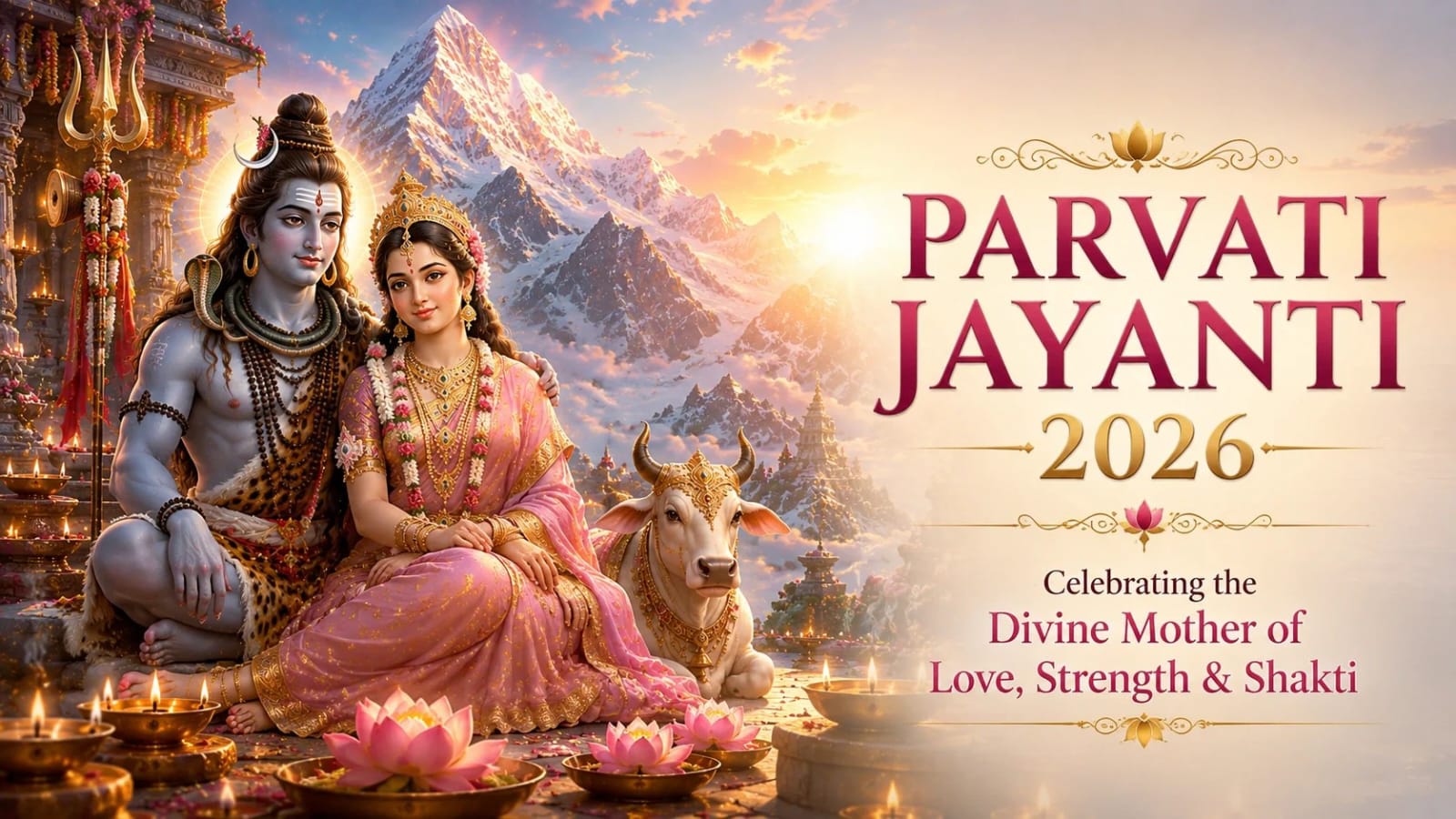
Devotees across India observe Parvati Jayanti on Tuesday, July 21, 2026, marking the birth anniversary of Goddess Parvati on Ashadha Shukla Ashtami. Symbolizing strength, devotion, and marital harmony, the day is commemorated through special fasts, temple rituals, abhishekam, and prayers dedicated to the Divine Mother.
NEW DELHI — Devotees across India and global Hindu communities are observing Parvati Jayanti on Tuesday, July 21, 2026. The auspicious occasion marks the divine birth anniversary of Goddess Parvati, revered in Sanatan Dharma as the embodiment of Adishakti (divine feminine power), ultimate devotion, and maternal strength.
According to the Vedic almanac, Parvati Jayanti falls annually on the Ashtami Tithi (eighth lunar day) during the Shukla Paksha (bright fortnight) of the Ashadha month. Astrologers and temple priests report that the astronomical timings for the festival carry immense religious importance for married couples, unmarried women, and spiritual seekers observing sacred fasts.
Auspicious Timings and Tithi Details for 2026
Calculations sourced from Drik Panchang establish the exact astrological window for the observance:
| Astrological Parameter | Official Timing / Date |
| Observance Date | Tuesday, July 21, 2026 |
| Ashtami Tithi Begins | July 20, 2026 at 5:32 PM IST |
| Ashtami Tithi Ends | July 21, 2026 at 6:46 PM IST |
| Associated Observance | Masik Durgashtami |
Because the Udaya Tithi (sunrise lunar day) falls on July 21, temple authorities and religious bodies are conducting the main ritualistic prayers, fasts, and abhishekam on Tuesday.
Spiritual Significance of Parvati Jayanti
In Hindu mythology, Goddess Parvati was born as the daughter of King Himavan (the personification of the Himalayas) and Queen Mena. Reincarnated from her previous form as Goddess Sati, she undertook severe penance (tapasya) to win the devotion of Lord Shiva.
Religious scholars emphasize that Parvati Jayanti represents more than a traditional anniversary. It symbolizes determination, marital fidelity, and balance between the cosmic masculine (Purusha) and feminine (Prakriti) forces.
For Married Women: Observing the fast on this day is believed to ensure marital longevity, domestic peace, and family prosperity.
For Unmarried Women: Devotees pray to Goddess Parvati seeking her blessings for a virtuous life partner.
For Spiritual Aspirants: The day serves as an opportune time for meditation, mantra chanting, and mental purification.
Traditional Puja Rituals and Observances
Prominent Hindu temples and household altars follow established scriptural steps (Puja Vidhi) for Parvati Jayanti:
1.Morning Purification:Pre-dawn / Brahma Muhurta.
Devotees rise early, take a holy bath, wear clean traditional clothing, and take a solemn vow (Sankalpa) to observe the fast with sincerity.
2.Altar Setup and Idol Sanctification:Morning Hours.
Clean the puja space. Place an idol or image of Goddess Parvati alongside Lord Shiva and Lord Ganesha. Offer Abhishekam using panchamrit (milk, curd, honey, ghee, and sugar) followed by clean water.
3.Shodashopachara Offerings:Mid-morning.
Offer fresh red flowers (particularly hibiscus or lotus), kumkum (vermilion), turmeric, sandalwood paste, shringar (cosmetic) items, fruits, and traditional sweets.
4.Mantra Chanting and Vrat Katha:Afternoon / Evening.
Recite sacred chants such as "Om Namah Parvati Devyai" or the Parvati Gayatri Mantra. Listen to or read the Parvati Vrat Katha, detailing her tapasya to marry Lord Shiva.
5.Aarti and Prasadam Distribution:Sunset / Pradosh Kaal.
Perform the evening aarti with a ghee lamp and incense. Offer home-cooked food items as bhog before breaking the fast or distributing prasadam to family members.
Official Sources Section
Statements, dates, and scriptural guidelines regarding Parvati Jayanti observances are released according to official announcements by regional temple boards, Hindu religious trusts, and Vedic calendar authorities.
"The Ashtami Tithi of Ashadha Shukla Paksha holds profound spiritual energy dedicated to Goddess Gauri and Parvati. Devotees observing fasts on July 21 are advised to perform rituals during the Udaya Tithi window for maximum spiritual benefit."
— Drik Panchang Calendar Authorities
Quote Section
According to temple priests and Vedic astrologers:
"Goddess Parvati embodies unwavering faith and supreme strength. Worshipping her on her appearance day brings harmony to households and strengthens the sacred bond of marriage, reminding us that perseverance in spiritual discipline yields divine blessings."
Why It Matters
The observance of Parvati Jayanti reflects the continued vitality of traditional cultural heritage and spiritual practice in modern society. Beyond household rituals, the date triggers increased economic and social activity across local markets—boosting demand for flowers, puja material, traditional attire, and sweet offerings. Furthermore, major shrines across South and North India draw thousands of pilgrims on this day, requiring local civil authorities to coordinate public safety, transport, and temple management.
Key Facts at a Glance
Event Date: Tuesday, July 21, 2026.
Tithi: Ashadha Shukla Paksha Ashtami.
Primary Deity: Goddess Parvati (also worshipped alongside Lord Shiva).
Core Practices: Nirjala or Phalahari fasting, shringar offerings, Vrat Katha reading, and evening aarti.
Concurrent Observance: Coincides with Masik Durgashtami.
Frequently Asked Questions
When is Parvati Jayanti in 2026?
Parvati Jayanti is celebrated on Tuesday, July 21, 2026, corresponding to the Ashadha Shukla Ashtami Tithi in the Hindu calendar.
What is the significance of Parvati Jayanti?
Parvati Jayanti commemorates the birth of Goddess Parvati, the consort of Lord Shiva. It symbolizes divine love, devotion, maternal energy, and marital harmony.
Can Parvati Jayanti be observed at home?
Yes, devotees can observe the fast at home by setting up a clean altar, offering red flowers, fruits, and shringar items, chanting Parvati mantras, and reading the Vrat Katha.
Which mantras are recommended to chant on Parvati Jayanti?
Devotees commonly chant "Om Namah Parvati Devyai", the Parvati Gayatri Mantra, or the Swayamvara Parvati Mantra for peace, harmony, and spiritual well-being.
Source: Drik Panchang Official Almanac, Dharmayana Panchang Desk, Ministry of Culture, Government of India.