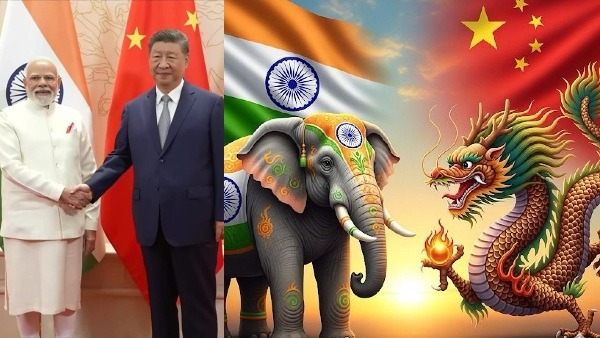
China’s portrayal of India as an “elephant” is a deliberate diplomatic metaphor, contrasting its own image as a “dragon.” While Beijing frames this analogy as a symbol of cooperation and respect, India remains cautious, viewing it through the lens of history, rivalry, and strategic competition.
China has repeatedly invoked the imagery of the “dragon and the elephant dancing together” to describe its relationship with India. This metaphor, first popularized in Western academic circles, was formally adopted into China’s diplomatic lexicon during Premier Wen Jiabao’s 2010 visit to India. Since then, Chinese leaders, including President Xi Jinping, have used it to signal partnership and mutual respect.
Symbolism Of The Elephant
The elephant is often associated with India’s civilisational heritage, patience, and strength. By portraying India as an elephant, China emphasizes India’s cultural depth and developmental potential. The metaphor suggests that while the dragon (China) is agile and powerful, the elephant (India) is steady, resilient, and capable of long-term progress.
India’s Reluctance To Embrace The Analogy
Despite repeated overtures, India has largely avoided reciprocating the “dance” metaphor. Analysts argue that New Delhi’s hesitation stems from its lived experience of border disputes, military confrontations, and strategic distrust. For India, adopting China’s framing risks legitimizing Beijing’s worldview, which may not align with its own geopolitical interests.
Diplomatic Context And Usage
Xi Jinping most recently invoked the metaphor in January 2026, in his Republic Day message to President Droupadi Murmu, calling for “dragon and elephant dancing together.” He repeated it during meetings with Prime Minister Narendra Modi, and Foreign Minister Wang Yi echoed the phrase at China’s annual legislative gathering. Chinese officials argue that the analogy underscores cooperation in development, trade, and global peace.
The Politics Of Animal Imagery
Animal analogies are not neutral; they carry symbolic weight in diplomacy. By casting itself as the dragon and India as the elephant, China positions itself as dynamic and dominant, while portraying India as slower but significant. This framing reflects both admiration and subtle hierarchy, shaping perceptions in international discourse.
Key Highlights
- China portrays India as an elephant to symbolize resilience, heritage, and developmental potential
- The “dragon and elephant dance” metaphor entered China’s diplomatic lexicon in 2010
- Xi Jinping and other leaders frequently use the analogy in official messages and meetings
- India remains reluctant to embrace the metaphor due to historical distrust and strategic caution
- Analysts note that animal analogies in diplomacy are never neutral and reflect underlying power dynamics
Sources: South China Morning Post, Hindustan Times, Pluralia