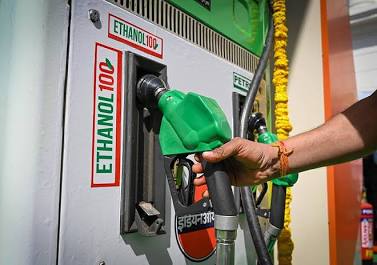
The Ministry of Petroleum and Natural Gas clarified that E20 petrol alone is not responsible for mileage changes. While ethanol blending can cause a minor 3–5% efficiency variation, real-world fuel economy is primarily driven by vehicle maintenance, tire pressure, driving habits, traffic, and air-conditioning usage.
NEW DELHI, INDIA — The Ministry of Petroleum and Natural Gas stated on August 15, 2026, that E20 petrol alone cannot be held responsible for variations in vehicle mileage. Addressing persistent consumer concerns regarding fuel economy, the government clarified that real-world mileage is heavily influenced by external variables, including driving habits, traffic congestion, vehicle maintenance schedules, tire pressure, and air-conditioning usage.
The official statement comes amid ongoing public discussion over the adoption of 20 percent ethanol-blended petrol across retail outlets in India. While technical evaluations acknowledge a minor variance in energy density compared to unblended fuel, government officials emphasized that everyday driving conditions play a dominant role in determining actual fuel efficiency on roads.
Factors Influencing Real-World Vehicle Mileage
The Petroleum Ministry detailed that while fuel composition affects burn efficiency, vehicle operational parameters remain critical to overall fuel consumption. According to technical assessments released by the ministry, real-world mileage variations depend on several interconnected operational elements:
Driving Behavior: Aggressive acceleration, frequent braking, and operating vehicles in lower gears during heavy city traffic significantly increase fuel consumption.
Vehicle Maintenance: Delayed oil changes, clogged air filters, and unaligned wheels directly lower fuel efficiency regardless of the fuel blend used.
Tire Pressure and Load: Under-inflated tires increase rolling resistance, leading to higher fuel draw per kilometer.
Auxiliary Usage: Continuous high-level air-conditioning load puts additional work demands on the engine, reducing overall kilometers per liter.
Quality Assurance and Testing Standards
Addressing motorist concerns over fuel quality and engine safety, the government stated that E20 petrol has undergone rigorous testing and validation protocols prior to nationwide distribution. Testing by automotive research bodies evaluated parameters including engine durability, startability, drivability, material compatibility, and corrosion resistance.
State-run Oil Marketing Companies (OMCs), including Indian Oil Corporation Limited, Bharat Petroleum Corporation Limited, and Hindustan Petroleum Corporation Limited, confirmed that nationwide sampling from refineries, storage depots, and retail outlets detected no widespread issues of fuel contamination or excess moisture. Regulatory inspections across underground storage tanks at fuel stations confirmed adherence to prescribed quality standards.
Official Announcements and Government Statements
The Ministry of Petroleum and Natural Gas issued an official statement outlining the technical basis for the E20 roll-out and addressing consumer queries regarding fuel efficiency.
"Mileage depends on more than fuel alone. Driving habits, traffic, vehicle maintenance, tyre pressure and AC usage all play a role," the Ministry of Petroleum and Natural Gas stated in an official communication. "E20 has undergone extensive testing and validation, while real-world mileage depends on the overall driving and vehicle conditions."
Impact on Consumers and the Automobile Sector
The government has previously noted that E20 petrol may lead to a marginal 3 to 5 percent reduction in fuel economy in certain older or non-optimized engine models due to the lower energy density of ethanol compared to pure gasoline. However, modern vehicles manufactured to comply with recent emissions and fuel norms are engineered to run efficiently on blended fuels.
For consumers, keeping vehicles serviced, maintaining recommended tire pressures, and practicing smooth driving techniques can help mitigate minor efficiency drops. Automobile industry bodies have maintained that E20 petrol complies with national engine safety standards and does not cause premature engine failure when basic maintenance is maintained.
Why It Matters
The transition to E20 petrol is a central pillar of India's energy roadmap, aimed at reducing crude oil import bills, lowering carbon emissions, and supporting the domestic agricultural sector through ethanol procurement. Understanding that mileage outcome is a combination of fuel type, vehicle health, and driving habits helps consumers manage expectations and optimize vehicle efficiency through regular maintenance.
Key Facts at a Glance
Government Stand: E20 petrol alone is not responsible for mileage fluctuations; driving style and maintenance are key factors.
Efficiency Impact: Technical benchmarks acknowledge a marginal 3–5% variance in fuel economy in certain vehicles.
Validation Standards: E20 petrol underwent testing for engine durability, drivability, and material compatibility before rollout.
Contamination Checks: Inspections by state oil marketing companies confirmed no water ingress or high chloride levels in tested fuel samples.
Frequently Asked Questions
Does E20 petrol reduce vehicle mileage?
Government technical notes indicate that E20 petrol may result in a minor 3 to 5 percent change in fuel economy in some vehicles due to ethanol's lower energy density, but real-world mileage depends primarily on driving style and maintenance.
What non-fuel factors affect my vehicle's mileage?
Key non-fuel factors include aggressive driving habits, heavy traffic congestion, under-inflated tires, improper maintenance, and high air-conditioning usage.
Has E20 petrol been tested for engine safety?
Yes, E20 petrol was subjected to testing and engineering validation covering engine durability, corrosion resistance, and material compatibility by authorized testing agencies.
Source: Ministry of Petroleum and Natural Gas Official Statements, Press Information Bureau (PIB) Releases, Indian Oil Corporation Limited Technical Updates.