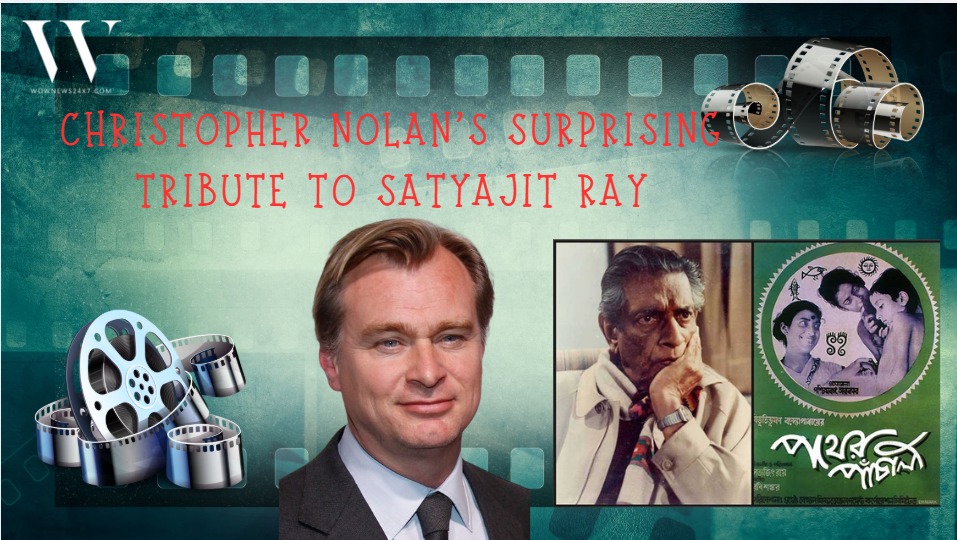
Hollywood director Christopher Nolan has publicly praised Satyajit Ray’s 1955 classic Pather Panchali, calling it a masterpiece that deeply impacted his view of cinema. The legendary Bengali film, the first in the Apu Trilogy, continues to receive global acclaim and support through ongoing international film preservation initiatives.
Acclaimed filmmaker Christopher Nolan has publicly lauded Satyajit Ray's cinematic masterpiece Pather Panchali, describing the landmark film as a work that profoundly impacted his perspective on cinema.
Global Recognition for Indian Cinematic Milestone
Renowned Hollywood director Christopher Nolan has reignited global appreciation for Indian cinema by praising Satyajit Ray’s classic 1955 film, Pather Panchali. During a recent retrospective discussion on international film history, the Oppenheimer and Inception director highlighted the Bengali masterpiece as an extraordinary achievement that left him deeply astonished. Nolan noted that the film's raw depiction of rural life in Bengal, combined with its lyrical visual storytelling, represents a defining pillar of world cinema.
Released originally on August 26, 1955, Pather Panchali marked the directorial debut of Satyajit Ray and formed the first installment of the celebrated Apu Trilogy. Based on the Bengali novel of the same name by Bibhutibhushan Bandopadhyay, the film revolutionized Indian filmmaking through its authentic neorealistic approach, natural lighting, and evocative Ravi Shankar musical score, earning widespread international acclaim at festivals including Cannes.
The Enduring Legacy of Indian Neorealism
The recent remarks by Christopher Nolan underscore the timeless artistic relevance of Satyajit Ray’s body of work in contemporary global cinema. Film historians and preservation archives frequently cite Pather Panchali as a vital textbook study for aspiring directors, demonstrating how modest budgets and deeply localized narratives can achieve universal emotional resonance.
The renewed acknowledgment also draws attention to ongoing digital restoration efforts spearheaded by international film preservation societies and the National Film Archive of India (NFAI). These institutions continue to remaster Ray's original negatives, ensuring that modern audiences and global auteurs experience the pristine visual and acoustic fidelity of Bengali cinematic heritage.
Impact on Cinephiles, Filmmakers, and Film Archives
The praise from a prominent global filmmaker carries practical implications across the international film community:
Global Cinephiles and Audiences: International viewers gain renewed awareness of classic Indian art-house cinema, driving digital streaming and physical media rediscoveries.
Independent Filmmakers: Emerging directors draw inspiration from Ray's minimalist storytelling techniques and commitment to authentic human experiences.
Film Restoration Initiatives: Archival organizations receive heightened public support and funding for preserving fragile classic celluloid prints.
Academic Institutions: Film schools incorporate critical analyses of Pather Panchali into global cinema curricula, examining its neorealistic framework.
Official Statements and Archival Insights
According to official archival updates and press announcements from international film preservation societies, global retrospectives frequently feature restored prints of Satyajit Ray's filmography to educate younger generations of filmmakers.
"According to officials and archival organizers, the enduring global praise for Pather Panchali by contemporary masters like Christopher Nolan highlights the universal power of Indian neorealism and the critical necessity of preserving cinematic heritage."
Why It Matters
When a globally influential director like Christopher Nolan acknowledges the brilliance of Satyajit Ray, it bridges cultural divides and elevates the global standing of Indian cinematic history. It reinforces the idea that true artistic achievement transcends geographical and linguistic barriers, inspiring modern audiences to explore foundational works that shaped the language of world film.
Key Facts at a Glance
Film Title: Pather Panchali (Song of the Little Road).
Director: Satyajit Ray.
Release Year: 1955.
Key Auteur Praise: Acknowledged by Hollywood director Christopher Nolan for its revolutionary impact on visual storytelling.
Historical Significance: The opening film of the Apu Trilogy and a benchmark of Indian neorealistic cinema.
Frequently Asked Questions (FAQ)
What did Christopher Nolan say about Satyajit Ray's Pather Panchali?
Christopher Nolan praised Pather Panchali as a film that completely blew his mind, lauding its profound visual storytelling and emotional depth.
When was Pather Panchali released?
The film was originally released in India on August 26, 1955.
What is the significance of Pather Panchali in cinema history?
Directed by Satyajit Ray, it marked a watershed moment for Indian neorealism, launching the acclaimed Apu Trilogy and earning major international recognition, including at the Cannes Film Festival.
Where can audiences watch Pather Panchali today?
Restored versions of the film are periodically screened at international film festivals, archival retrospectives, and select digital streaming platforms dedicated to classic world cinema.
Source: National Film Archive of India (NFAI) Archives, Criterion Collection Historical Releases, and International Film Festival Press Disclosures.