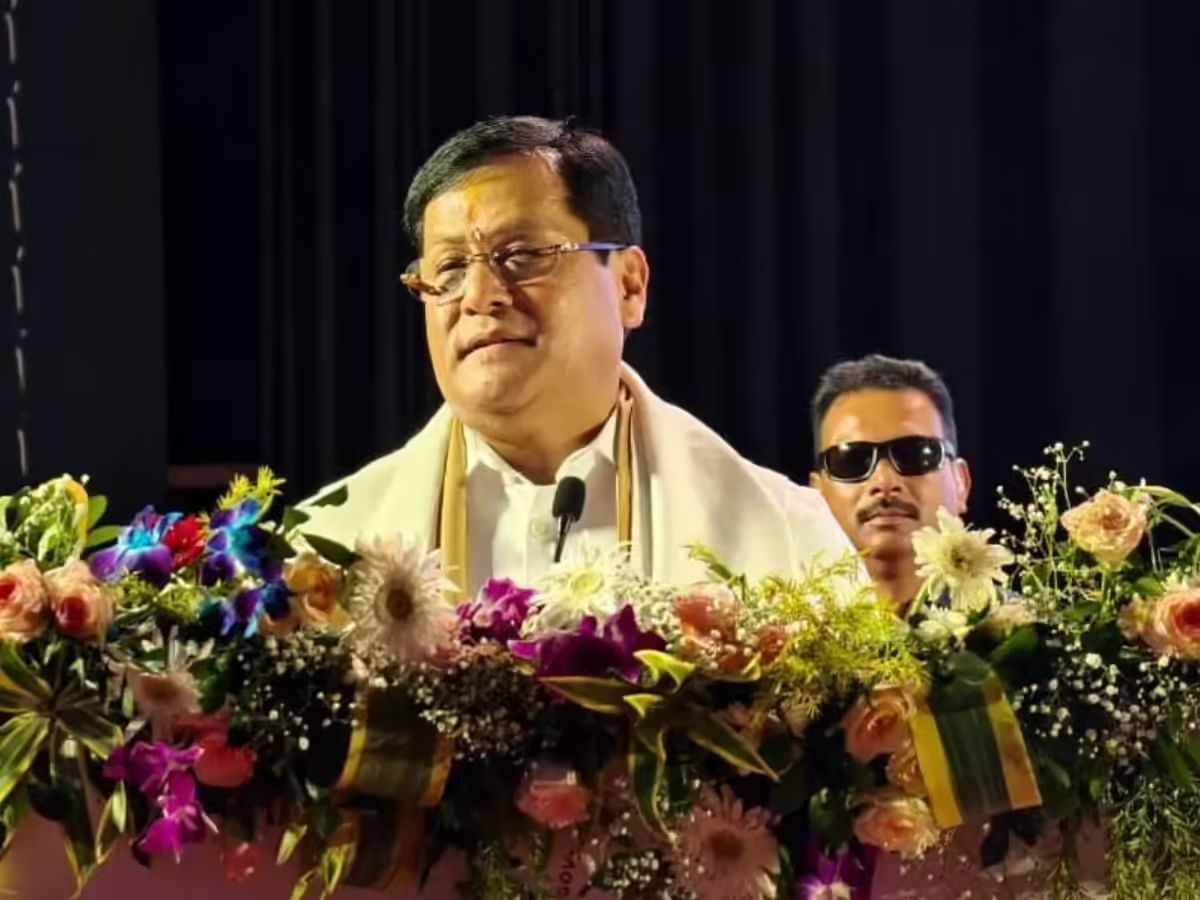
Union Minister Sarbananda Sonowal highlighted Northeast India's rapid transformation under Prime Minister Narendra Modi as a major national success story. Driven by the "Act East Policy," massive infrastructure funding has expanded operational airports from 9 to 17, secured 20+ national waterways, and reduced regional security incidents by 75 percent.
GUWAHATI, Assam — Union Minister of Ports, Shipping, and Waterways Sarbananda Sonowal declared on Monday, June 15, 2026, that the rapid developmental transformation of Northeast India stands as one of the country's most significant socio-economic breakthroughs. Speaking at an official administrative convention in Assam, Sonowal attributed the region's systemic advancement directly to targeted policy frameworks executed by the central administration led by Prime Minister Narendra Modi. He emphasized that the northeastern states have successfully transitioned from decades of structural isolation into a primary growth engine for the nation's broader industrial and logistics networks.
Shifting Focus From Isolation to Integration
According to detailed transcripts of the address, Sonowal stated that prior to 2014, the northeastern states suffered from chronic underinvestment, fragmented logistics corridors, and a lack of consistent political engagement from New Delhi. The Union Minister emphasized that the execution of the "Act East Policy" fundamentally altered this landscape, moving the region from the periphery of national planning to the center of multi-modal trade initiatives.
Central administrative registers highlight that the region's infrastructure deficit has been systematically addressed through massive fiscal allocations. The Ministry of Development of North Eastern Region (MDoNER) has overseen the modernization of critical transit lines, transforming borders into formal commercial gateways with neighboring Southeast Asian economies. This long-term connectivity plan has fundamentally altered operational realities for regional businesses, farmers, and logistics companies across the eight member states.
Multi-Modal Connectivity Drives Economic Expansion
A primary pillar of the region's modern transformation is the rapid development of high-capacity transport infrastructure. Official projects executed by the Ministry of Road Transport and Highways (MoRTH) and the Ministry of Ports, Shipping, and Waterways have established continuous corridors across complex geographical terrains.
The expansion of National Waterway 2 (Brahmaputra River) and National Waterway 16 (Barak River) has created cost-effective cargo options for local industries. Heavy cargo, agricultural yield, and machinery can now move directly to domestic markets and international trade channels via Bangladesh, bypassing lengthy and expensive overland paths.
Security Reductions Unlock Long-Term Capital Investment
The Union Minister also addressed how the stabilization of internal security has driven the region's economic growth. Decades of ethnic conflicts and insurgencies previously stalled large-scale corporate interest. According to administrative disclosures, the strategic resolution of long-standing border disputes and the signing of historic peace accords with multiple regional groups have led to a 75 percent reduction in security incidents over the last decade.
This improved internal stability has allowed the government to gradually lift the Armed Forces Special Powers Act (AFSPA) from the majority of districts in Assam, Nagaland, and Manipur. Local trade councils report that the resulting peaceful environment has made the region highly attractive to institutional investors, tourism developers, and major industrial conglomerates looking to set up manufacturing hubs near international borders.
Official Sources Section
The statements, statistical performance metrics, and infrastructure project updates detailed in this report correspond directly to formal public addresses delivered by Union Minister Sarbananda Sonowal, policy blueprints released by the Ministry of Development of North Eastern Region (MDoNER), and project delivery logs published by the Press Information Bureau (PIB).
Quote Section
"The rapid development of the Northeast under the leadership of Prime Minister Narendra Modi is undoubtedly one of India's biggest success stories," stated Union Minister Sarbananda Sonowal during the assembly. "For decades, this region was neglected and treated as a remote corner. Today, it is recognized as the 'Ashta Lakshmi' or the eight forms of wealth, driving India's economic future and anchoring our trade relationships with Southeast Asia."
"According to officials from the shipping ministry, ongoing investments in inland water transport will continue to reduce freight overheads by up to 60 percent compared to conventional rail and road networks, directly benefiting local tea, bamboo, and handicraft exporters."
Why It Matters
For regional residents and agricultural producers, this sustained infrastructure push has radically shortened travel times and expanded access to tier-1 healthcare, higher education, and larger consumer markets. For corporate businesses and logistics operators, the activation of high-capacity waterways and expanded air cargo options provides a reliable framework for large-scale operations. From a geopolitical standpoint, the transformation positions Northeast India as a critical land bridge connecting the larger Indian economy with the rapidly growing markets of the ASEAN bloc.
Key Facts at a Glance
Policy Reorientation: The execution of the "Act East Policy" successfully transitioned the Northeast from an isolated border region into a key international trade hub.
Transit Redundancy: Operational airport counts across the region rose from 9 in 2014 to 17 in 2026, significantly boosting regional air connectivity.
Maritime Integration: The development of more than 20 designated National Waterways has opened up efficient, low-cost cargo corridors via the Brahmaputra and Barak river networks.
Security Gains: A 75 percent reduction in security incidents has enabled the systematic reduction of AFSPA coverage across multiple states.
Trade Integration: Modernized land ports have turned border points in Tripura, Mizoram, and Assam into active trade hubs with neighboring international economies.
FAQ Section
1. What is the "Act East Policy" and how does it impact Northeast India?
The Act East Policy is a central government foreign policy framework designed to promote economic, strategic, and cultural relations with the Asia-Pacific region. For the Northeast, it positions the region as the direct geographical and logistical land gateway connecting mainland India with Southeast Asian markets.
2. How have river waterways improved trade conditions in the region?
By developing infrastructure on rivers like the Brahmaputra (NW-2) and the Barak (NW-16), the government has enabled bulk cargo transport through Indo-Bangladesh protocol routes. This provides regional industries with a far more affordable alternative to traditional road logistics.
3. What role does the Ministry of MDoNER play in regional development?
The Ministry of Development of North Eastern Region (MDoNER) handles the planning, execution, and funding of socio-economic development initiatives across the eight northeastern states, ensuring that central funds are efficiently channeled into critical infrastructure.
Source: Press Information Bureau (PIB) India, Ministry of Development of North Eastern Region (MDoNER), and The Economic Times.