The European Centre for Medium-Range Weather Forecasts and the WMO have confirmed the official onset of El Nino after Pacific surface temperatures breached critical thresholds. Fueled by deep ocean heat layers measuring 6 degrees Celsius above average, the system threatens to cause global droughts, heatwaves, and a weakened South Asian monsoon.
GENEVA — The tropical Pacific Ocean has officially breached a critical thermal threshold, triggering the official onset of an El Nino climate pattern. According to automated tracking models released by the European Centre for Medium-Range Weather Forecasts (ECMWF) and confirmed by the United Nations’ World Meteorological Organization (WMO) on Tuesday, June 2, 2026, sea surface temperatures in the equatorial Pacific have surged well past baseline limits, altering global atmospheric behavior.
The rapid development has prompted international climate entities to call on sovereign states to reinforce regional disaster mitigation frameworks immediately. With advanced spatial observations revealing an exceptionally vast reservoir of subsurface heat, meteorologists warn that this newly established El Nino could bring above-average temperatures nearly everywhere, fueling extreme weather anomalies on multiple continents.
Pacific Thermostat Adjustments Breach Critical Thresholds
The transition from a neutral state to an active El Nino phase follows months of steady subsurface ocean warming. Under standard climatological conditions, easterly trade winds push warm surface waters westward toward Asia and Australia, allowing cooler, nutrient-rich deep water to rise near the South American coast. Recent data indicates these critical trade winds have weakened considerably, allowing a massive volume of warm water to surge back toward the Americas.
According to precise tracking from the Copernicus Marine Service and the Australian Bureau of Meteorology, water temperatures in the central equatorial Pacific—specifically the critical Nino 3.4 monitoring zone—have firmly crossed the +0.5 degrees Celsius anomaly limit. Weekly regional metrics centered around mid-May surged even higher, reaching an average of +0.9 degrees Celsius above historical baselines.
Extreme Subsurface Sub-Layer Heat Accumulation
Of greater concern to planetary scientists is the unprecedented depth of the thermal anomaly. Subsurface ocean heat readings measured between the ocean surface and 300 meters deep are currently recorded at more than twice the thermal volume observed during the initial development phases of the historic 2023–2024 El Nino event.
WMO Secretary-General Celeste Saulo confirmed that subsurface temperatures in specific tropical zones are registering up to 6 degrees Celsius above historical averages. This massive subterranean heat reservoir provides a continuous supply of energy to the ocean surface, significantly reducing the likelihood of a rapid weakening of the system during the upcoming winter months.
Global Economic and Environmental Implications
The footprint of an active El Nino travels far beyond its geographic origin in the Pacific, introducing major operational risks for global supply chains, agricultural conglomerates, and civil infrastructure.
| Impacted Zone | Primary Expected Climatic Transformation | Economic/Social Consequence |
| South Asia / India | Delayed, significantly weaker monsoon precipitation (estimated at 90% of long-period average) | Decreased agricultural yields; lowered water reservoir levels |
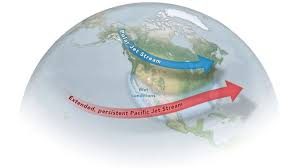
| Southern United States | Southward migration of the Pacific jet stream | Substantially wetter winters; heightened localized flood risks |
| Australia & Indonesia | Suppression of seasonal atmospheric convective systems | Extended drought conditions; elevated bushfire hazards |
| Atlantic Ocean Basin | Intensified upper-troposphere vertical wind shear | Lowered overall Atlantic hurricane frequency |
For international commodity investors, the arrival of El Nino introduces extreme volatility into global food markets. Extended droughts across Southeast Asia frequently decimate palm oil and sugar cane yields, while erratic rainfall across South America can disrupt major soybean and coffee harvesting cycles. Concurrently, insurance networks are adjusting liability baselines to account for severe heat stress events on municipal power grids.
Official Sources Section
The atmospheric data, temperature measurements, and statistical probabilities outlined in this report are based on official climate alerts issued by the World Meteorological Organization, seasonal modeling published by the Copernicus Climate Change Service, and operational data bulletins maintained by the India Meteorological Department.
Quote Section
"According to officials at the United Nations, global leadership must treat current oceanographic data as an urgent systemic warning, as coupled ocean-atmosphere interactions are now locking in patterns that accelerate global warming trends."
Why It Matters
The formal declaration of an El Nino serves as a critical warning system for governments to protect lives and livelihoods. While climate change does not necessarily increase the frequency of these natural cycles, an already warmed atmosphere and ocean provide a massive energy buffer that amplifies their consequences. This dynamic can transform standard weather shifts into devastating droughts, crop failures, and public health emergencies.
Key Facts at a Glance
Critical Breach: European and international meteorological monitoring networks have officially confirmed the formal onset of an El Nino.
SST Surge: Weekly sea surface temperature anomalies in the critical Nino 3.4 equatorial zone have reached +0.9 degrees Celsius above normal levels.
Subsurface Heat Reservoir: Deep-water temperatures down to 300 meters are registering up to 6 degrees Celsius above average.
Monsoon Suppression: The India Meteorological Department has projected a below-normal monsoon season, tracking at roughly 90 percent of the long-period average.
FAQ Section
What exactly is an El Nino event?
An El Nino is a naturally occurring climate pattern involving the warming of ocean surface temperatures in the central and eastern equatorial Pacific, leading to major shifts in global wind and rainfall patterns.
How long do these climate cycles typically last?
An El Nino cycle typically persists for nine to 12 months, usually developing during the northern hemisphere's spring or summer, peaking in winter, and dissipating the following year.
Why does this specific 2026 event cause greater concern among scientists?
The underlying subsurface heat content in the Pacific is twice as high as it was during the early stages of the powerful 2023 event, indicating the climate system has access to an exceptionally large reservoir of thermal energy.
Source: World Meteorological Organization Media Centre, Copernicus Marine Service Press Desk, India Meteorological Department Climate Diagnostics