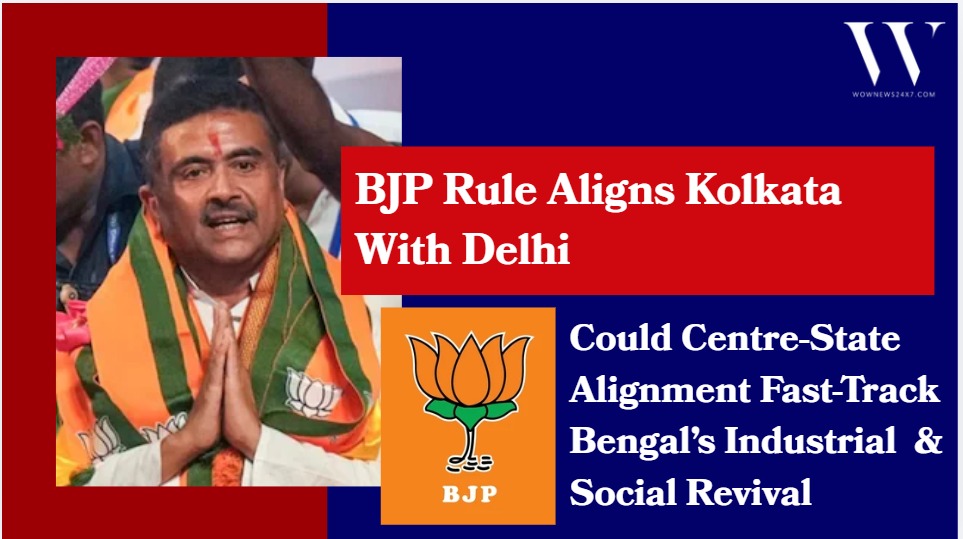
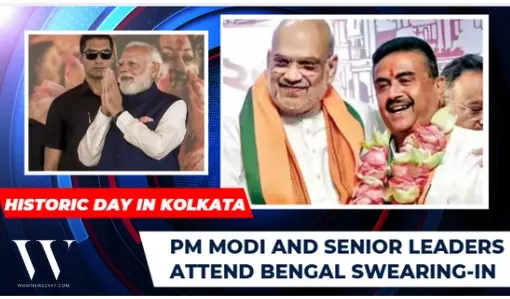
With BJP forming its first-ever government in West Bengal, the long-standing “Delhi wall” of political friction between Kolkata and New Delhi is set to disappear. This opens the door for stalled central schemes like Ayushman Bharat, PM-Kisan, and rural employment guarantees to finally reach millions of beneficiaries across the state.
For over a decade, West Bengal’s strained relationship with the Centre under Mamata Banerjee’s Trinamool Congress meant repeated clashes over welfare schemes, branding, and fund control. Now, with the BJP in power both in Delhi and Kolkata, the alignment is expected to unlock billions in central funds and accelerate welfare delivery.
Health And Social Security Schemes
One of the biggest changes will be the rollout of Ayushman Bharat-Pradhan Mantri Jan Arogya Yojana (AB-PMJAY), which provides ₹5 lakh annual health insurance coverage to poor families and elderly citizens. West Bengal had opted out in 2019, citing branding disputes, but BJP leaders have confirmed its immediate implementation. This will benefit over 1.24 crore families and nearly 16 lakh elderly above 70 years.
Additionally, BJP’s manifesto promises to expand women’s welfare support. The Lakshmir Bhandar scheme under TMC may evolve into BJP’s proposed Annapurna Bhandar, offering ₹3,000 monthly cash transfers to women, doubling current payouts.
Rural Development And Employment
The Centre had suspended funds under MGNREGA in 2022 due to alleged irregularities. With BJP in charge, the new Viksit Bharat-Guarantee for Rozgar and Ajeevika Mission (VB-G RAM G) will replace MGNREGA, reviving rural employment opportunities. Before suspension, 51–80 lakh families in Bengal availed the scheme annually, with spending exceeding ₹10,000 crore per year. The resumption could bring in ₹43,000 crore in pending central dues.
Housing schemes like PMAY-G (Pradhan Mantri Awas Yojana-Gramin) are also expected to restart, with ₹24,275 crore in central share dues projected for Bengal.
Jobs, Industry And Infrastructure
BJP’s roadmap for Bengal includes creation of 1 crore jobs, revival of MSMEs, and industrial investment inflows. Special focus will be on Darjeeling Hills, Terai, and Dooars regions, with recognition of Gorkha sub-tribes as Scheduled Tribes. Tea garden workers are promised land rights and wage revisions, while youth skilling programs aim to boost employability.
Infrastructure upgrades like roads, logistics, and connectivity are expected to accelerate, alongside railway expansion projects that were previously stalled due to Centre-state disputes.
Political And Social Impact
The removal of the “Delhi wall” is not just administrative—it signals a new era of cooperative federalism in Bengal. Citizens, especially women and rural households, stand to gain from enhanced welfare delivery. However, challenges remain in ensuring transparency, preventing misuse of funds, and balancing continuity of popular state schemes with central integration.
Key Highlights
- BJP’s win in Bengal ends Centre-state standoff over welfare schemes
- Ayushman Bharat rollout to cover 1.24 crore families and 16 lakh elderly
- Annapurna Bhandar to provide ₹3,000 monthly cash transfers to women
- VB-G RAM G to revive rural employment, unlocking ₹43,000 crore in dues
- PMAY-G housing scheme to resume with ₹24,275 crore central share
- BJP manifesto promises 1 crore jobs, MSME revival, and industrial growth
- Infrastructure and railway projects to accelerate under Centre-state alignment
Sources: The Indian Express, The Economic Times, Mint, The Statesman