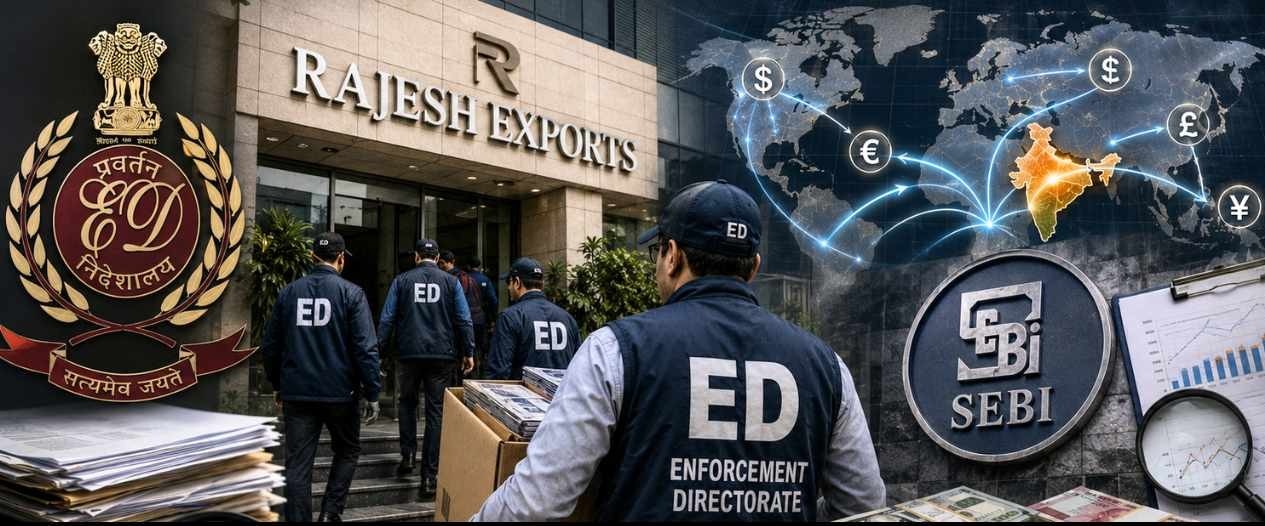
The Enforcement Directorate has raided nine locations linked to Rajesh Exports in Bengaluru and Mumbai, citing FEMA violations. The probe follows a SEBI investigation into alleged revenue inflation and involves significant discrepancies in gold inventory, suspicious foreign trade set-offs, and potential fund diversion through proxy share transactions.
The Enforcement Directorate (ED) conducted coordinated search and seizure operations on Tuesday across nine premises linked to Rajesh Exports Limited (REL) in Bengaluru and Mumbai. The action marks a significant escalation in the regulatory pressure facing the gold refining and jewellery manufacturing giant, which is already under investigation by the Securities and Exchange Board of India (SEBI) for alleged multi-year financial misstatements.
The ongoing operation is being conducted under the provisions of the Foreign Exchange Management Act (FEMA). Investigators are examining a series of complex financial transactions, including suspicious share dealings, significant discrepancies in physical gold inventory, and the alleged siphoning of over $20 million out of the country.
Allegations of Financial Irregularities
According to official sources, the probe into Rajesh Exports has identified several departures from standard commercial practices. Investigators have flagged specific areas of concern that form the basis of the current investigation:
Gold Inventory Mismatch: During the searches, officials reportedly found that the company's physical gold stock was nearly 40% lower than the inventory recorded in its books of accounts.
Suspicious Trade Set-offs: The agency is scrutinizing the adjustment of approximately Rs 3,000 crore in trade receivables against gold imports. Officials have described the underlying deliveries of these imports as "suspicious," suggesting that the transactions may lack genuine commercial substance.
Offshore Investments: Investigators are probing outward direct investments exceeding Rs 1,000 crore in African gold mines. Sources indicate that these investments were not properly reflected in the financial records of the company’s subsidiaries.
Dubious Foreign Entities: The ED is examining the netting off of another Rs 3,000 crore in receivables and payables involving four to five foreign entities based in the UAE, which are currently under investigation for potentially questionable credentials.
Share Manipulation: The investigation has uncovered multiple transactions involving the company's shares conducted through alleged "benamidars"—proxy entities used to conceal true ownership—to purportedly siphon funds.
Regulatory Context and Background
The Enforcement Directorate’s intervention follows an interim order issued on June 3, 2026, by SEBI. The market regulator alleged that Rajesh Exports had inflated its consolidated revenue by more than Rs 15.15 lakh crore over a five-year period (FY21–FY25). SEBI’s findings suggested that these revenues were attributed to overseas subsidiaries, notably the Swiss-based Valcambi SA, despite discrepancies between the subsidiary’s audited statements and the company’s consolidated filings.
Following the SEBI order, Rajesh Exports and its Chairman and Managing Director, Rajesh Mehta, were barred from buying, selling, or dealing in the company’s securities. The company has publicly denied the allegations of revenue inflation, attributing the regulator's concerns to a "communication gap" and discrepancies in reporting standards between different jurisdictions.
Impact and Ongoing Investigation
The raid has seized various incriminating documents and digital evidence, which are currently being analyzed by forensic teams. The outcome of this investigation could have profound implications for the company's operations, its stakeholders, and its standing in the international gold market. As the probe continues, the ED is focused on tracking the trail of diverted funds and verifying the legitimacy of the foreign entities involved in the flagged transactions.
Official Sources
According to officials from the Enforcement Directorate, the search operations are part of a wider probe into suspected money laundering and violations of foreign exchange laws. Organizers stated that the investigation is in progress and further details are expected as digital evidence is processed.
Why It Matters
The investigation into Rajesh Exports is significant because it highlights the risks associated with complex, multi-layered international trade transactions in the precious metals sector. For investors, the case underscores the importance of transparency in overseas subsidiary reporting, while for regulators, it represents a test of their ability to track cross-border fund flows and detect "benami" or proxy-led market manipulation.
Key Facts at a Glance
Scope: Operations covered nine premises across Bengaluru and Mumbai.
Legal Basis: The investigation is currently proceeding under the Foreign Exchange Management Act (FEMA).
Inventory Discrepancy: Physical gold stock was found to be approximately 40% less than the quantity reported in company records.
Fund Flow Scrutiny: Over $20 million is suspected to have been siphoned out of India through benami share transactions.
Financial Red Flags: Approximately Rs 6,000 crore in total trade receivables and payables are under scrutiny due to suspicious set-offs with foreign entities.
FAQ
What triggered the ED’s search at Rajesh Exports?
The search was prompted by ongoing investigations into alleged financial irregularities, including suspicions of share manipulation, inventory misreporting, and foreign exchange violations, which were compounded by recent SEBI findings.
Has Rajesh Exports commented on the allegations?
The company has previously denied allegations of financial wrongdoing, stating that its revenue reporting is accurate and that the issues raised by regulators are due to communication gaps.
What is a "benamidar" in the context of this probe?
A "benamidar" refers to a person or entity in whose name assets—such as shares—are held, while the actual beneficial ownership remains with someone else, often used to bypass regulations or hide financial trails.
What happens to the company's shares now?
Following the SEBI order, Rajesh Mehta and the company are barred from dealing in their own securities pending further investigation.
Source: Enforcement Directorate (ED), Securities and Exchange Board of India (SEBI), Reserve Bank of India (RBI)