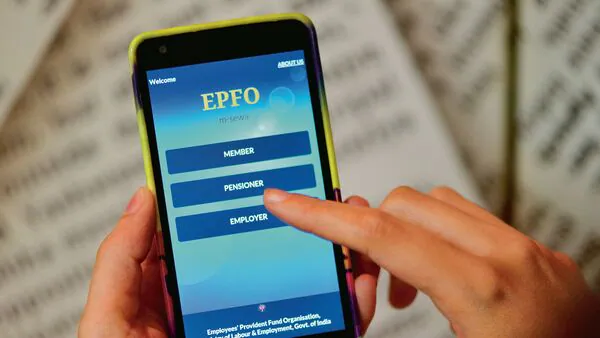
The Employees’ Provident Fund Organisation has streamlined advance withdrawal rules, establishing a 12-month membership requirement for education, marriage, and housing, with immediate access for medical care. While partial claims face lifetime frequency limits, a 25% balance reserve remains protected to safeguard workers' retirement compounding and financial security.
NEW DELHI — The Employees’ Provident Fund Organisation (EPFO) has updated operational norms governing advance claims, establishing clear eligibility windows and frequency limits for formal-sector employees seeking an EPF money withdrawal before retirement. The streamlined framework consolidates over a dozen legacy clauses into three broad categories—Essential Needs, Housing Requirements, and Special Circumstances—allowing formal workforce contributors to tap accumulated savings for critical life events without terminating their accounts.
Standardized Eligibility and Corpus Access
Under the revised EPFO framework, formal sector employees no longer face staggered service criteria spanning up to seven years for common life milestones. A uniform 12-month membership threshold now governs primary advance categories, including higher education, marriage, and home financing.
Medical emergencies carry zero minimum service constraints. Subscribers facing major hospitalizations or critical illnesses for themselves, spouses, children, or dependent parents can apply for immediate liquidity.
The policy also introduces a statutory protection mechanism: the 25% balance safeguard. EPFO requires that approximately 25% of total contributions (employee and employer share plus accrued interest) remain locked in the account until superannuation, ensuring members preserve a base retirement corpus while earning the statutory interest rate. Up to 100% of the remaining "Eligible Member Balance" can be drawn against verified categories.
Permitted Advance Grounds and Frequency Limits
The operational framework specifies statutory frequency limits to curb early fund depletion:
Medical Emergencies: No ceiling on claim frequency. Members may claim advances multiple times for documented medical treatments of self or family.
Higher Education: Allowed up to 10 times across total service tenure, covering post-matriculation studies for the employee or their children.
Marriage: Capped at five instances over the subscriber's entire working tenure, applicable to marriages of the member, children, or siblings.
Housing and Real Estate: Capped at five lifetime withdrawals, covering land acquisition, home construction, flat purchases, structural renovations, or home loan repayment.
Unemployment Support: Members facing sudden job transitions can withdraw up to 75% of eligible funds after one continuous month of unemployment.
Digital Processing and Administrative Impact
Claims are processed end-to-end via the EPFO Member Unified Portal and the central UMANG mobile interface. To initiate an online advance under Form 31, an employee’s Universal Account Number (UAN) must be fully seeded with Aadhaar, an active PAN, and verified bank account details.
Automated settlement channels have reduced verification timelines to between 3 and 7 business days, down from the historical multi-week turnaround.
Official Sources
According to guidelines published by the Employees' Provident Fund Organisation (EPFO) and notifications issued by the Ministry of Labour and Employment, non-refundable advance facilities are structured to offer timely liquidity during domestic emergencies while curbing permanent premature account closures.
Quotes
"According to officials familiar with retirement fund administration, standardizing service periods removes bureaucratic delays for younger workers while ensuring that essential pension and long-term interest-compounding protections remain intact across shifting career paths."
Why It Matters
The advance rules eliminate the need for salaried workers to resort to high-interest unsecured personal loans during sudden domestic crises or major life milestones. By allowing structured, non-refundable advances without requiring resignation, EPFO enables active contributors to bridge immediate cash shortfalls while retaining active employment records, employer matching, and long-term pension benefits.
Key Facts at a Glance
Uniform Service Threshold: 12 months of EPF membership qualifies subscribers for marriage, education, and housing advances.
Medical Waivers: No service waiting period or frequency restrictions apply for documented illness claims.
Cap on Withdrawals: Education claims are allowed up to 10 times; marriage and housing claims are capped at 5 lifetime instances.
Retirement Protection: A mandatory 25% share of aggregate accumulated balance remains protected from partial advances.
Tax Status: EPF advances taken for statutory purposes are non-refundable and do not constitute taxable premature closures if service thresholds are maintained.
Frequently Asked Questions
Is money withdrawn as an EPF advance taxable?
Statutory partial advances taken under Form 31 for authorized purposes (such as medical care, education, or housing) are non-refundable and do not attract premature withdrawal tax penalties. However, full premature closures prior to five years of continuous service remain subject to Tax Deducted at Source (TDS).
Do employees have to repay an EPF advance?
No. Advances permitted under EPFO guidelines are non-refundable, meaning the amount drawn is deducted permanently from the subscriber’s total accumulated provident fund balance without a loan-repayment schedule.
Can an advance be claimed if an employee recently changed companies?
Yes. Because the 12-month membership threshold applies cumulatively through the Universal Account Number (UAN), past eligible service transfers carry over to verify eligibility at a new employer.
Source: Employees' Provident Fund Organisation, Ministry of Labour and Employment, Government of India