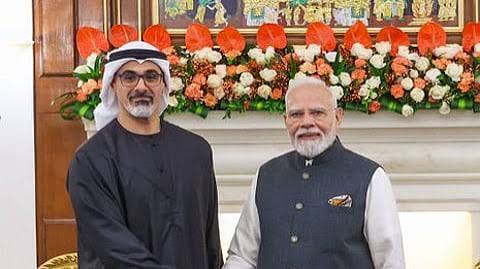
On the sidelines of the 18th BRICS Summit in New Delhi, Prime Minister Narendra Modi and Abu Dhabi Crown Prince Sheikh Khaled bin Mohamed bin Zayed Al Nahyan discussed strategic energy infrastructure. Talks prioritised expanding crude cavern reserves, long-term LNG supply stability, and sovereign investments in green grid corridors.
NEW DELHI — India and the United Arab Emirates held high-level bilateral talks in New Delhi on Saturday to evaluate new opportunities in strategic energy infrastructure, leveraging the sidelines of the 18th BRICS Summit to accelerate joint investments in emergency fuel stockpiles, gas transport corridors, and low-carbon transition assets. Prime Minister Narendra Modi and Abu Dhabi Crown Prince Sheikh Khaled bin Mohamed bin Zayed Al Nahyan reviewed bilateral connectivity, long-term energy security pacts, and the deployment of sovereign capital into critical national grids. The discussions come as both nations seek to insulate emerging market supply chains from volatile international commodity swings and maritime transit risks in West Asia.
Deepening Crude Stockpiles and Storage Corridors
The primary focus of bilateral discussions centred on expanding institutional cooperation across emergency hydrocarbon reserves. Officials reviewed ongoing collaboration between Indian Strategic Petroleum Reserves Limited (ISPRL) and the Abu Dhabi National Oil Company (ADNOC), assessing commercial and regulatory pathways to increase Gulf crude allocations stored at India’s underground cavern facilities.
The review builds on earlier agreements finalised in mid-2026 that cleared the way for enhanced commercial crude storage alongside preliminary studies into dedicated strategic liquefied natural gas (LNG) reserves. India currently relies on imported crude for over 85% of its domestic consumption, with the UAE serving as a primary supplier alongside meeting approximately 40% of India's annual liquefied petroleum gas (LPG) imports. The expansion of shared reserve facilities is intended to provide critical operational buffers against chokepoint disruptions along the Strait of Hormuz.
Mobilising Sovereign Capital for Energy Transition
Beyond conventional fossil fuels, delegates examined channels to deploy institutional sovereign wealth into cross-border clean strategic energy infrastructure. The leaders noted the catalytic role of UAE investment entities, including the newly formed sovereign fund L'Imad, in backing utility-scale solar projects, battery storage systems, and green hydrogen supply networks across India.
The bilateral dialogue also complemented broader multilateral initiatives tabled under India’s 2026 BRICS chairship. Energy and industry representatives gathered at the summit called for streamlined cross-border investments, development-bank financing, and standardisation frameworks anchored by the BRICS Digital Centre of Excellence for Smart Grids and Energy Storage. The UAE's formal inclusion in the expanded BRICS bloc provides institutional parity for long-term project co-financing, matching Gulf financial liquidity with Indian engineering capacity and green project pipelines exceeding 100 gigawatts.
Trade Corridor Integration and Economic Impact
The negotiations carry direct economic implications for heavy industrial consumers, power utilities, and downstream logistics operators across South Asia and the Gulf. A deepened energy partnership provides domestic Indian refiners and manufacturing hubs with long-term cost stability on feedstock contracts, mitigating retail inflationary spikes for everyday domestic fuel and cooking gas.
For institutional investors, the talks open avenues for joint equity stakes in Gujarat's planned maritime logistics hubs, coastal petrochemical processing facilities, and high-voltage direct current (HVDC) transmission lines. Bilateral discussions also touched upon linking digital cross-border trade settlements with the broader India-Middle East-Europe Economic Corridor (IMEC) architecture, reducing exchange-rate frictions on bulk fuel purchases.
Official Sources
Discussions and policy roadmaps were verified via official statements released by the Ministry of External Affairs of India (MEA), the Ministry of Petroleum and Natural Gas, and the state-run Emirates News Agency (WAM).
Quotes
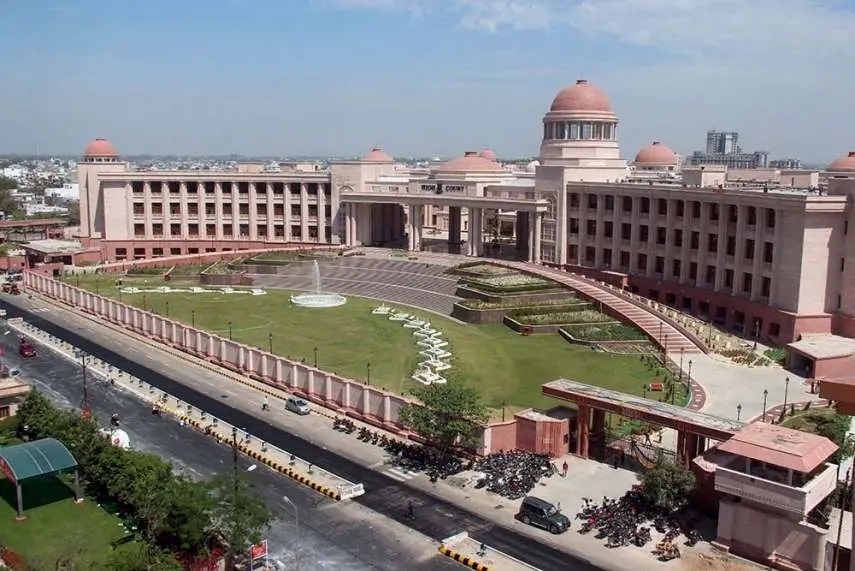
"According to officials familiar with the Hyderabad House deliberations, the discussions focused on converting historical buyer-seller ties into enduring equity and co-development partnerships across resilient transport nodes, emergency oil reserves, and clean power corridors."
Why It Matters
Securing guaranteed baseline hydrocarbon volumes alongside collaborative underground storage preserves fiscal stability for Indian industries amid shifting geopolitical conditions. At the same time, direct Gulf capital injections into Indian renewable storage platforms accelerate the domestic transition toward low-carbon generation without straining state balance sheets.
Key Facts at a Glance
Bilateral Setting: Prime Minister Narendra Modi and Abu Dhabi Crown Prince Sheikh Khaled bin Mohamed bin Zayed Al Nahyan met on the sidelines of the 18th BRICS Summit in New Delhi.
Hydrocarbon Reliance: The UAE supplies roughly 40% of India's aggregate LPG demand and remains one of its top four suppliers of crude oil.
Reserve Expansion: Talks focused on expanding ADNOC participation in underground storage caverns managed by ISPRL, alongside studies into strategic gas reserves.
Clean Energy Integration: Co-investment structures targeted utility-scale battery energy storage, smart grids, and green hydrogen supply corridors.
Frequently Asked Questions
What was the core outcome of the India-UAE talks at BRICS 2026?
The two countries evaluated expanded frameworks for strategic energy infrastructure, focusing on crude storage caverns, long-term LNG supply contracts, and sovereign co-investments in renewable energy grids.
How do strategic petroleum reserves benefit India's domestic economy?
Strategic petroleum reserves function as emergency stockpiles managed by ISPRL. They protect consumers and industrial supply chains from fuel price shocks and shipping disruptions during international conflicts or maritime chokepoint closures.
How does UAE's BRICS membership influence energy cooperation?
Full UAE membership in BRICS aligns Gulf capital reserves with emerging market consumer demand, establishing common technical standards, cross-border settlement channels, and development-bank financing for shared energy grids.
Source: Ministry of External Affairs, Ministry of Petroleum and Natural Gas, Emirates News Agency