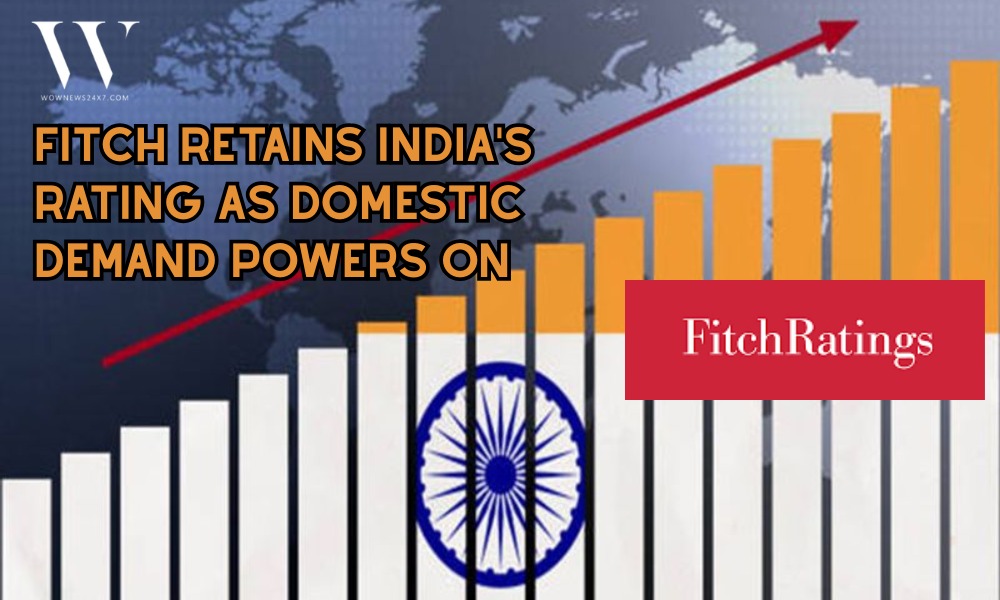
Fitch Ratings affirmed India's long-term foreign-currency issuer default rating at 'BBB-' with a stable outlook, citing robust economic growth and solid external finance fundamentals. The assessment highlights resilience against global energy shocks, supporting investor confidence and stable capital borrowing costs across domestic markets.
Global ratings agency Fitch affirms India's sovereign rating, citing robust growth and solid external finance fundamentals.
Overview
NEW DELHI — Global credit ratings agency Fitch Ratings announced on Tuesday that it has affirmed India’s long-term foreign-currency issuer default rating (IDR) at 'BBB-' with a stable outlook. The periodic sovereign assessment, published in August 2026, highlights India's robust medium-term economic growth outlook and solid external finance fundamentals as primary drivers stabilizing the country's credit profile despite external macroeconomic crosscurrents.
The ratings reaffirmation provides crucial economic reassurance to domestic policymakers, international investors, and market participants, underscoring resilience amid lingering global supply chain shifts and regional energy market volatilities.
Macroeconomic Resilience and Growth Momentum
According to official statements released by Fitch Ratings, India's broader economy remains strong, underpinned by steady domestic consumption, ongoing public infrastructure investments, and improving policy credibility. While acknowledging near-term macroeconomic headwinds stemming from energy market shocks and geopolitical friction in the Middle East—given India's position as a major net energy importer—the agency noted that these pressures are manageable and do not pose a durable threat to overall growth trajectories.
Fitch emphasized that India's solid external buffers and robust foreign exchange reserves insulate the economy against external financial volatility. However, the agency pointed out that structural constraints, including high fiscal deficits relative to peers and lagging governance indicators alongside lower gross domestic product per capita, continue to balance out credit strengths.
Implications for Investors and Sovereign Borrowing
For international bond markets, institutional investors, and domestic banking institutions, the 'BBB-' rating affirmation with a stable outlook preserves benchmark borrowing costs for sovereign and corporate debt issuances. Stable credit metrics allow major Indian financial institutions, such as the State Bank of India, to maintain predictable access to international capital markets.
Market analysts observe that maintaining the stable outlook reinforces investor confidence, supporting sustained foreign direct investment (FDI) inflows into manufacturing, infrastructure, and green energy transition sectors.
Official Sources Section
Details regarding the sovereign credit rating, economic evaluations, and rating drivers are sourced directly from official announcements and policy publications issued by Fitch Ratings.
"According to officials, macroeconomic stability and improving policy credibility will continue to underpin India's economic expansion, offsetting near-term risks from global energy price fluctuations."
Why It Matters
Sovereign credit ratings directly influence the borrowing costs of governments and domestic corporations alike. For businesses, consumers, and foreign investors, a stable rating affirms economic predictability, keeps capital funding costs competitive, and sustains national infrastructure development momentum.
Key Facts at a Glance
Reporting Agency: Fitch Ratings
Sovereign Rating Affirmed: Long-Term Foreign-Currency IDR at 'BBB-'
Rating Outlook: Stable
Key Growth Driver: Robust domestic demand, public infrastructure investments, and solid external finance fundamentals
Frequently Asked Questions
1. What is India's sovereign credit rating as per Fitch Ratings?
Fitch Ratings has affirmed India's long-term foreign-currency issuer default rating at 'BBB-' with a stable outlook.
2. What factors support India's 'BBB-' credit rating?
The rating is supported by India's robust economic growth outlook, solid external finance fundamentals, and steady domestic demand, despite external energy shocks.
3. What are the primary constraints on India's credit profile?
Fitch noted that high fiscal deficits and lagging structural metrics, such as governance indicators and GDP per capita, remain constraints to a higher sovereign rating.
4. Where can official rating publications be accessed?
Official sovereign research reports and credit analyses are published regularly on the Fitch Ratings portal.
Source: Fitch Ratings and international financial news wire services.