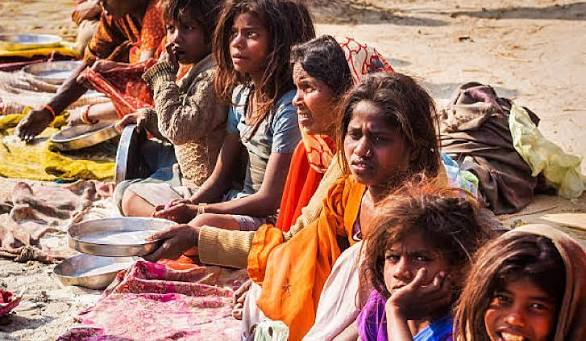
Delhi Chief Minister Rekha Gupta has announced the upcoming launch of the 'Child Beggar-Free Delhi' campaign across all 13 districts. The initiative focuses on non-coercive family counseling, educational rehabilitation, and cracking down on organized syndicates that force children into street begging.
NEW DELHI — In a major social welfare push, the Delhi government is set to roll out a comprehensive citywide campaign titled 'Child Beggar-Free Delhi'. Announced by Chief Minister Rekha Gupta, the targeted initiative aims to protect minors found begging at major road intersections, traffic lights, and public spaces across the national capital.
Scheduled to launch around Independence Day following a public feedback phase, the program seeks to transition vulnerable minors away from the streets by combining family counseling with institutional support, while simultaneously pursuing strict legal action against organized crime networks.
Rehabilitation Framework and Non-Coercive Approach
Unlike punitive sweeps, the administration has emphasized a non-coercive framework. According to official disclosures, children found begging will not be removed by force. Instead, the initiative will operate through coordinated efforts involving the Delhi Commission for Protection of Child Rights (DCPCR), local non-governmental organizations (NGOs), and child welfare committees.
Key operational pillars of the campaign include:
Family Counseling: Authorities will engage directly with impoverished parents and guardians to address the economic and social root causes driving children onto the streets.
Institutional Pathways: Rescued children will be provided safe alternatives, including placement in child care centers, formal education tracking for younger minors, and specialized skill training for older youth.
Targeting Organized Gangs: Alongside social welfare measures, law enforcement and administrative bodies will work to identify, expose, and dismantle criminal syndicates exploiting homeless and destitute children for financial gain.
Official Sources Section
Quote Section
According to statements released by Chief Minister Rekha Gupta regarding the upcoming campaign:
"The campaign will also identify and expose organised gangs forcing children into begging. We will counsel families, address their difficulties and provide better alternatives."
Why It Matters
For citizens, social workers, and urban planners, the proliferation of children at high-traffic intersections represents a persistent socio-economic challenge. By combining welfare-oriented rehabilitation with rigorous enforcement against exploitation rings, the Delhi government's campaign seeks to safeguard child rights, improve urban road safety, and dismantle forced-begging syndicates operating across the capital's 13 districts.
Key Facts at a Glance
Campaign Name: Child Beggar-Free Delhi.
Geographic Scope: All 13 administrative districts of the national capital.
Core Strategy: Family counseling, educational support, and institutional placement without forced removal.
Partner Agencies: Delhi Commission for Protection of Child Rights (DCPCR), NGOs, and child welfare committees.
FAQ Section
What is the primary objective of the 'Child Beggar-Free Delhi' campaign?
The campaign aims to protect children found begging at public places and intersections, providing them with safe institutional alternatives, formal education, and skill training.
Will children be removed from the streets by force?
No. Chief Minister Rekha Gupta clarified that children will not be removed coercively; instead, authorities will utilize family counseling and social support systems.
How will the government handle organized exploitation?
The campaign incorporates specific investigative measures to identify, expose, and take legal action against organized gangs that force vulnerable minors into begging.
Which organizations are assisting the Delhi government in this drive?
The initiative is being executed in close coordination with the Delhi Commission for Protection of Child Rights (DCPCR), local non-governmental organizations (NGOs), and child welfare committees.
Source: Delhi Government Communications, DCPCR, India Today