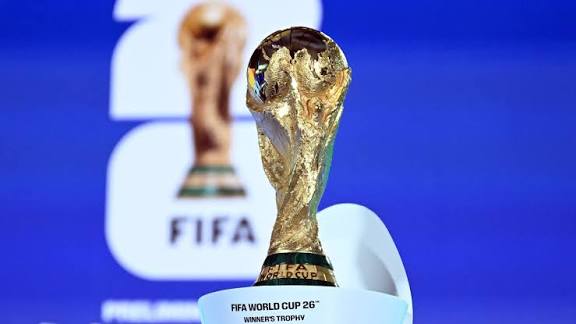
The FIFA World Cup 2026 has advanced to a critical juncture as its expanded group stage determines the first Round of 32 competitors. While co-hosts Mexico and the United States secured early knockout berths, complex tiebreakers and third-place rankings keep the remaining field tightly contested across North American venues.
NEW YORK - The expanded group stage of the FIFA World Cup 2026 has entered its most volatile phase as cross-continental qualification paths crystallize across North America. Following a series of high-stakes Matchday 2 encounters concluding on Monday, June 22, 2026, football's governing body confirmed the first set of mathematical entries into the newly introduced Round of 32. With tournament co-hosts Mexico and the United States officially leading the progression, global sports attention has shifted to the complex calculations governing the eight best third-placed teams that will complete the historic knockout bracket.
Early Qualification Orders Confirmed by FIFA
Official group configurations updated by FIFA demonstrate that the competitive pressure of the expanded 48-team framework has favored disciplined tactical set-ups. In Group A, tournament co-hosts Mexico became the first side to secure an absolute mathematical passage into the next phase. Back-to-back victories over South Africa and South Korea earned El Tri six points, ensuring they will finish at the top of their group before their final round-robin match.
Similarly, the United States Men's National Team locked down its knockout placement in Group D. Following an authoritative 2-0 victory over Australia at Seattle Stadium, the American squad accumulated a maximum of six points. According to tournament directives, both North American co-hosts are legally locked into hosting positions for the Round of 32, scheduled to begin on June 30, 2026, in Mexico City and domestic regional hubs.
Mid-Tier Logjams and Matchday 2 Deadlocks
While top-seeded nations have initiated structural advances, heavy internal competition has left multiple groups entirely deadlocked. Data from official stadium registers on June 22 highlighted stark parity in Groups G and H:
Group G Stalemate: Belgium played out a tense 0-0 draw against Iran at the Los Angeles Stadium, leaving both teams tied at two points each after two matches. A subsequent scoreless draw between New Zealand and Egypt at BC Place in Vancouver has left all four teams alive heading into the final matchday.
Group H Drama: Uruguay rescued a 2-2 draw against tournament debutants Cabo Verde in Miami, preventing an early exit but complicating their path as Spain commands the group with four points.
In Group E, Germany maintains an absolute advantage with six points and a positive seven goal difference, driven by a high-scoring display against debutants Curaçao. Meanwhile, Group B remains the most balanced sector of the tournament, where Canada and Switzerland sit tied at four points apiece after neutral stalemates.
High Stakes of the 48-Team Knockout Innovations
The structural inclusion of 48 teams—up from the traditional 32-team matrix utilized since 1998—fundamentally rewrites the historical mechanics of progression. The tournament consists of 12 distinct groups of four teams. Under revised code mandates, the top two teams from every group automatically advance, supplemented by the eight best-performing third-placed teams across the entire initial pool.
This dynamic has radically transformed team strategies. Coaches can no longer rely on a standard four-point safety margin to guarantee advancement. Instead, goal differentiation and cumulative yellow card counts serve as crucial secondary tiebreakers that could dictate millions of dollars in performance distributions and cross-border travel logistics.
Official Sources Section
The logistical, competitive, and statistical tracking detailed in this report is sourced directly from:
The FIFA Tournament Regulations and Competitions Division official updates published via the digital FIFA Media Hub.
Matchday Statistics and Standing Ledger Books authorized by the local organizing committees of the United States, Canada, and Mexico.
Live Match Reports cross-checked with official stadium feeds across host venues, including Miami Stadium and Los Angeles Stadium.
Quote Section
"The sporting intensity witnessed across our 12 groups validates the expansion model. We are seeing smaller footballing nations push former champions to their absolute limits because every single goal scored or conceded impacts the macro-level third-place ladder."
— According to officials from the FIFA Competitions Committee
Why It Matters
For global fans and travelers, the multi-city format demands fluid itinerary planning, as third-place permutations mean a team's knockout venue will not be finalized until the final group whistle blows.
For broadcasters and corporate advertisers, the prolonged relevance of nearly every final group match ensures sustained television viewership, avoiding dead rubbers that typically plague the final week of group play in older formats.
Key Facts at a Glance
The Expansion Baseline: The FIFA World Cup 2026 features 48 teams divided into 12 groups, creating a brand-new 32-team knockout round.
Co-Host Dominance: Both Mexico (Group A) and the United States (Group D) have parlayed home-field advantages into unblemished six-point starts to qualify early.
Third-Place Lifeline: Only four of the 12 third-placed teams will be eliminated at the end of the opening phase, leaving a wide margin of hope for lower-ranked squads.
Goal Differential Priority: Germany’s nine goals scored in Group E highlights the importance of offensive production under tight tiebreaking rules.
FAQ Section
1. How do the third-placed teams qualify for the Round of 32?
At the conclusion of the group stage, all 12 third-placed teams are placed into a centralized league table. The top eight teams are ranked by total points, goal difference, goals scored, and fair-play disciplinary points to fill the remaining knockout spots.
2. When does the knockout phase of the FIFA World Cup 2026 begin?
The single-elimination Round of 32 officially kicks off on June 30, 2026, featuring matches hosted across designated stadiums in Mexico, Canada, and the United States.
3. Can teams from the same group meet immediately in the Round of 32?
No. The knockout bracket algorithm is structurally arranged by FIFA to ensure that group winners and runners-up are matched against qualifiers from alternating groups during the initial elimination stage.
Source: FIFA Official Tournament Portal, CONCACAF Regional Bureau Reports, and U.S. Soccer Federation Media Desk.