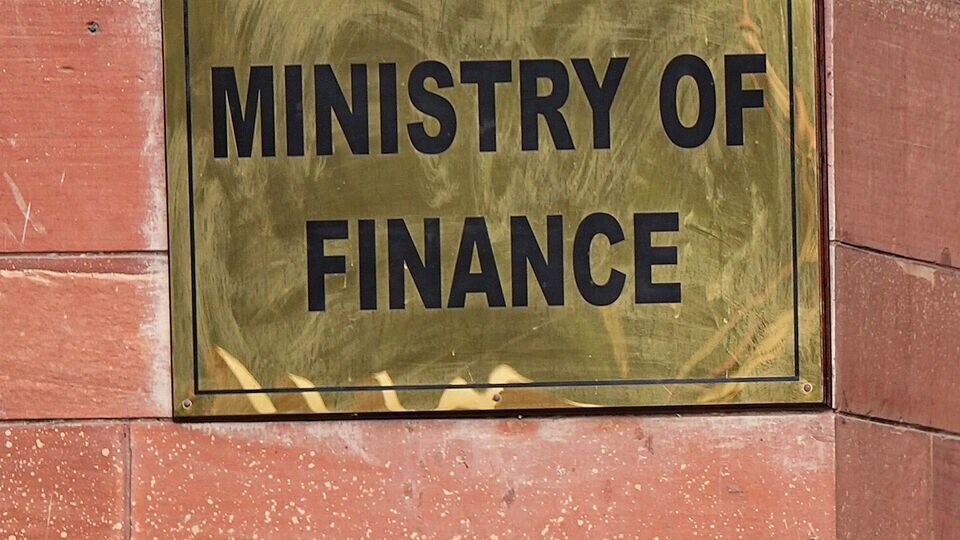
The Ministry of Finance’s June 2026 report outlines that cooling global commodity and crude prices will help keep imported inflation contained in the coming months. However, persistent West Asian conflicts and a deficient monsoon rainfall cycle have prompted a structural call to reorient agricultural policies toward climate-resilient cultivation.
NEW DELHI, India — The Union Ministry of Finance has officially released its Monthly Economic Review for June 2026, delivering a detailed assessment of India's macroeconomic landscape. The statutory review, compiled by the Department of Economic Affairs (DEA), details a significant easing of imported inflationary pressures driven by recent corrections in international crude oil prices and a stabilization of global raw commodity benchmarks. However, the documentation highlights that the persistent duration of the West Asian conflict, paired immediately with a deficient start to the domestic monsoon rainfall cycle, has underscored an urgent institutional need to reorient India's long-term agricultural policies.
Commodity Correction Eases Imported Inflationary Pressures
According to data presented in the comprehensive June review, the economic momentum of the early fiscal year remains fundamentally resilient, anchored by stable high-frequency indicators such as e-way bill generation, Purchasing Managers' Index (PMI) scores, and solid electricity consumption. A primary highlight of the report is the notable cooling visible across international raw material channels. The Ministry of Finance noted that the recent correction in global crude oil values, alongside a distinct softening of key agricultural inputs such as urea, will heavily help moderate imported inflationary pressures for the country.
The report projects that as the global trade environment evolves, headline inflation readings inside the domestic economy are heavily expected to remain relatively contained in the coming months. This structural buffer is further reinforced by proactive government interventions, including the strategic preservation of adequate buffer stocks for key agricultural commodities, which effectively shields consumer retail baskets from immediate supply-side supply disruptions.
West Asia Tensions and Monsoon Deficits Require Agricultural Pivot
Despite the positive pricing dynamics in global energy pipelines, the Ministry of Finance has raised serious warning flags regarding persistent domestic vulnerabilities. The longer-than-expected duration of the conflict in West Asia heavily tested India's logistics resilience, and while the recent cessation of hostilities has brightened the growth outlook, the geopolitical friction has exposed structural supply dependencies.
Compounding these external challenges is an immediate domestic risk: a deficient monsoon rainfall pattern observed during the critical initial phases of the sowing season. The report states explicitly that the combination of the Gulf conflict and the uneven precipitation underscores an urgent national need to rethink and reorient India's agricultural policies and pricing structures.
The review argues that existing minimum support frameworks must be systematically adjusted to heavily incentivize the cultivation of climate-resilient, water-insulated crops, while actively disincentivizing highly water-intensive agricultural patterns in regions experiencing chronic environmental stress.
Macroeconomic Impact on Investors and Public Consumers
For public retail consumers and financial market participants, the review provides an optimistic baseline for structural price stability. With international commodity inputs cooling down, domestic manufacturing margins are expected to stabilize, preventing sharp upward movements in retail consumer goods pricing.
Simultaneously, sovereign debt markets have already begun reacting to the containment of external deficit risks, marked prominently by a steady return of foreign portfolio debt investors into Indian government securities.
However, corporate boards and agricultural equity investors are advised to closely monitor changing policy priorities. The government has indicated that water conservation programs, recycling logistics, and the immediate deployment of budgetary allocations under the national Jal Jeevan Mission will be placed at the absolute top of the economic priority stack to buffer rural economies from the ongoing rainfall shortfalls.
Official Sources Section
The underlying economic indices, inflation forecasts, structural policy parameters, and agricultural statements reviewed inside this news coverage are transcribed directly from the official June 2026 Monthly Economic Review compiled and published by the Department of Economic Affairs under the Ministry of Finance (Government of India).
Government Commentary
"According to officials and analysts within the Department of Economic Affairs, while the Indian economy continues to exhibit remarkable structural resilience, the steady stream of destabilizing global and climatic events serves as a stark reminder of emerging challenges. Organizers stated that national policy frameworks must continuously stay a step ahead of these developments, specifically by restructuring agricultural pricing mechanisms to build long-term climate insulation."
Why It Matters
For everyday citizens and enterprise businesses, the Finance Ministry's report highlights a transition toward structured economic insulation. Lower imported input costs help keep everyday consumer prices stable, preserving household purchasing power.
Concurrently, the push to change crop incentives directly changes the future of rural supply chains, steering agricultural businesses away from vulnerable, water-dependent practices toward sustainable, climate-resilient farming models that ensure national food security.
Key Facts at a Glance
Inflation Baseline: Global commodity softening and oil price corrections are actively moderating imported inflationary pressures.
Macro Stability: The Ministry of Finance expects headline inflation readings to remain relatively contained over the coming months.
Policy Shift: Below-normal monsoon rainfall and past Gulf conflicts highlight the immediate need to restructure agricultural pricing.
Crop Incentives: Future agricultural models will focus heavily on prioritizing climate-resilient crops and reducing water-heavy cultivation.
Budget Strategy: Water management and the rapid execution of the Jal Jeevan Mission have been elevated to top policy priorities.
Frequently Asked Questions (FAQ)
How do cooling international crude prices affect the domestic economy?
As a heavy oil-importing nation, a downward correction in global crude benchmarks significantly lowers India’s import bill, reduces transportation overhead, and helps control imported inflation across retail supply chains.
Why is the Ministry of Finance calling for a change in agricultural policies?
The combination of international logistical shocks and unpredictable, deficient monsoon patterns has highlighted the economic vulnerability of relying too heavily on water-intensive crops, requiring a structural shift toward climate-resilient farming.
Where can investors access the complete macroeconomic review document?
The official monthly publications, statistical indices, and structural policy updates are archived publicly on the official digital portal of the Department of Economic Affairs under the Ministry of Finance.
Source: Monthly Economic Review (June 2026) issued by the Department of Economic Affairs, Ministry of Finance, Government of India.