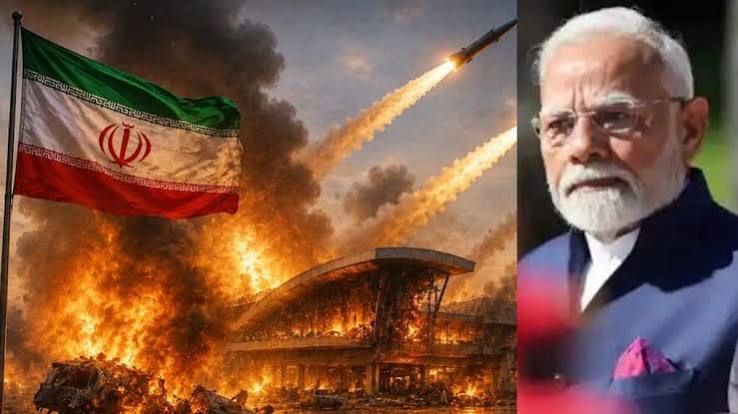
Five months into the Middle East conflict, India successfully safeguarded over 18,000 citizens, secured crude oil supplies, and protected commercial shipping routes. Through naval escorts under Operation Sankalp and proactive diplomatic outreach, the government effectively minimized economic and trade disruptions.
NEW DELHI - Five months into the geopolitical crisis involving Iran and surrounding West Asian corridors, the Ministry of External Affairs (MEA) and the Ministry of Commerce and Industry confirmed on Saturday, August 1, 2026, that India has successfully safeguarded over 18,000 Indian nationals and stabilized critical trade routes. Through diplomatic backchannels, contingency maritime rerouting, and active coordination with international partners, the Indian government has mitigated energy supply disruptions and maritime security risks across the Strait of Hormuz and the Red Sea.
This development is important today as it demonstrates how South Asia's largest economy has navigated complex West Asian volatility, preserving crude oil supply security, maintaining bilateral commerce through strategic ports, and protecting a diaspora exceeding nine million workers across the Gulf region.
Diplomatic Mobilization and Diaspora Protection Measures
Following the outbreak of heightened military operations in March 2026, the Ministry of External Affairs established 24/7 emergency control rooms across embassies in Tehran, Tel Aviv, Baghdad, and Riyadh.
Consular teams facilitated phased repatriations and voluntary evacuations for Indian seafarers, student populations, and skilled workers stranded in high-risk zones. By coordinating directly with maritime authorities and international shipowners, Indian diplomatic missions secured the safe release and passage of Indian crew members aboard commercial vessels intercepted along strategic maritime chokepoints.
Furthermore, diplomatic dialogues led by External Affairs Minister S. Jaishankar reinforced India's stance advocating for immediate de-escalation, adherence to international maritime law, and sustained humanitarian access.
Securing Energy Imports and Trade Logistics
To shield domestic consumers and businesses from global energy price spikes, the Ministry of Petroleum and Natural Gas initiated supplier diversification strategies. Indian state refiners adjusted purchasing configurations, increasing crude receipts from West Africa, Latin America, and domestic strategic petroleum reserves to offset shipping delays across the Persian Gulf.
To secure commercial cargo routes, the Indian Navy expanded its maritime security deployment under Operation Sankalp. Guided-missile destroyers and long-range maritime patrol aircraft were stationed along key transit lanes in the Gulf of Oman and Arabian Sea, providing continuous monitoring and escort support for Indian-flagged merchant vessels.
Strategic Continuity at Chabahar Port
Despite regional operational frictions, India maintained cargo throughput at Iran's Chabahar Port under its long-term management agreement signed with Iranian port authorities. The port served as a vital commercial gateway for humanitarian shipments and non-sanctioned bilateral trade to Central Asian Republics and Afghanistan, bypassing volatile surface corridors.
Logistics planners worked alongside export promotion councils to provide freight subsidies and alternative insurance coverage for Indian exporters affected by elevated marine war-risk premiums, preserving supply chain continuity for agricultural products, textiles, and engineering goods.
Impact on Citizens, Businesses, and Investors
For the millions of Indian expatriates working across the Middle East, proactive government advisories and embassy registration systems provided structural support during high-alert phases. For Indian import-export businesses, government-backed trade monitoring minimized contract cancellations and inventory shortages. For domestic markets, stable fuel supplies curbed inflationary pressures, sustaining investor confidence across national stock exchanges.
Official Sources
According to official briefings, consular notices, and trade data released by Central Government authorities:
Official Quotes
"According to official statements from the Ministry of External Affairs, India remains in constant communication with all regional stakeholders to ensure the safety of Indian nationals and protect national economic interests," ministry representatives affirmed in press statements. "Officials emphasized that Indian naval and diplomatic assets remain actively deployed to maintain maritime security and trade flow continuity."
Why It Matters
The five-month operational response highlights India’s evolving diplomatic and strategic maturity in managing crisis situations overseas. By balancing energy security, naval deterrence, and multi-aligned foreign policy, India has demonstrated its capability to insulate domestic economic stability while safeguarding its workforce across international conflict zones.
Key Facts at a Glance
National Protection: Over 18,000 Indian citizens assisted and safely repatriated from high-risk zones across West Asia.
Maritime Defense: Indian Navy's Operation Sankalp provided continuous escort and surveillance for merchant shipping in the Arabian Sea.
Energy Buffers: Strategic crude oil reserves and diversified sourcing shielded domestic consumers from severe price shocks.
Chabahar Operations: Maintained trade flows through Chabahar Port for Central Asian commercial routes.
Frequently Asked Questions
How has India protected its seafarers during the Middle East conflict?
The Indian government coordinated directly with international maritime organizations, shipowners, and regional authorities, while the Indian Navy deployed escort vessels under Operation Sankalp to safeguard commercial crews.
How did the crisis impact India's crude oil supply?
India prevented severe supply shortages by diversifying crude oil purchases from alternative international suppliers and drawing upon strategic petroleum reserves.
What steps were taken for Indian workers living in the region?
Indian embassies activated round-the-clock helplines, established registration databases, issued timely safety advisories, and facilitated voluntary repatriation flights.
Source: Ministry of External Affairs, Ministry of Commerce and Industry, Ministry of Petroleum and Natural Gas, Press Information Bureau (PIB)