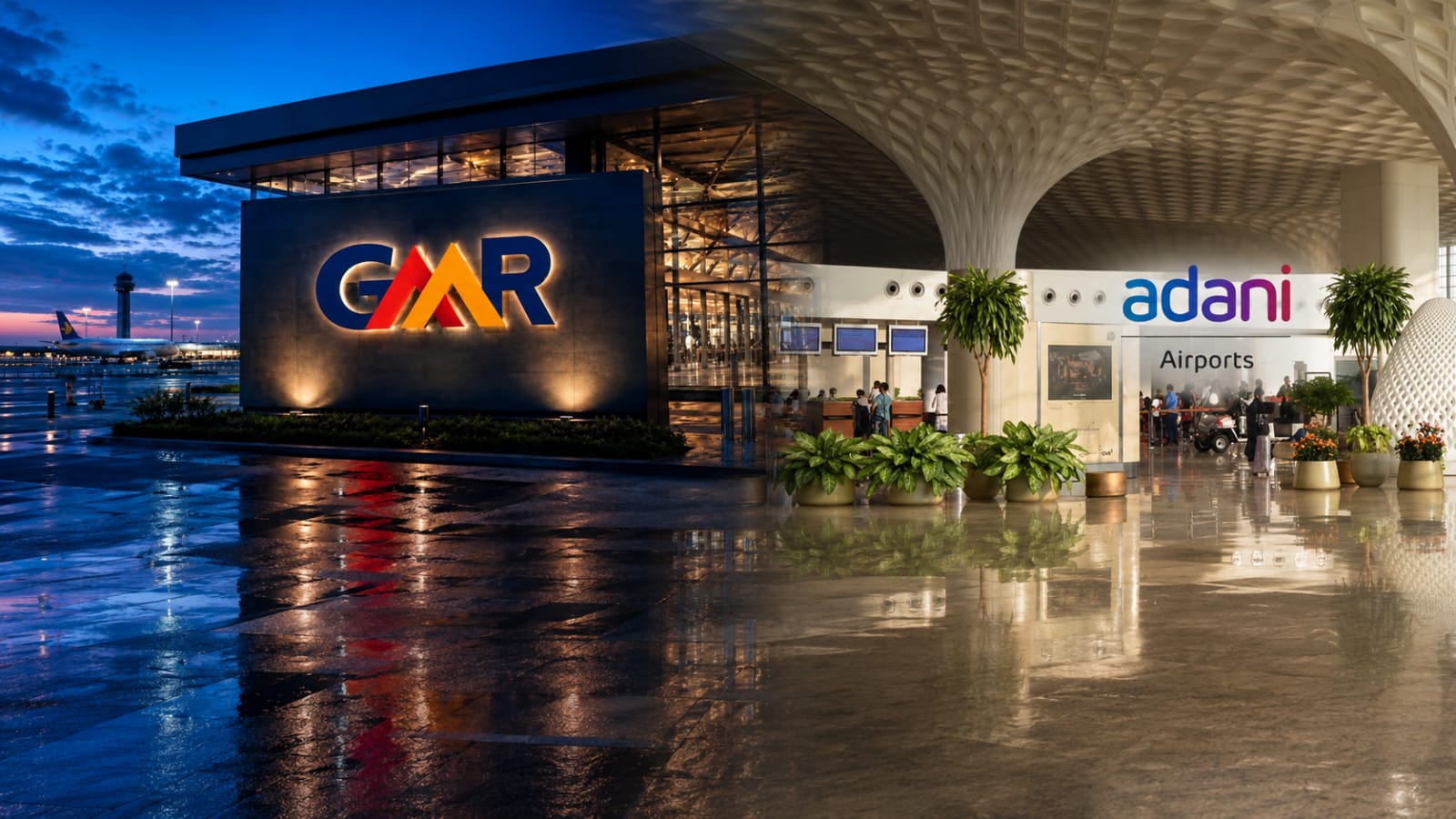
GMR Airports Limited has announced a $2 billion (₹19,400 crore) investment over five to seven years to expand its airports in New Delhi and Hyderabad. The move will double Hyderabad’s capacity to 80 million fliers, meeting surging domestic travel demand while solidifying GMR's market position against rival Adani Group.
NEW DELHI — GMR Airports Limited, the primary competitor to Adani Group’s airport operations, has announced plans to invest up to ₹19,400 crore ($2 billion) over the next five to seven years to expand and modernize its facilities in New Delhi and Hyderabad.
The investment strategy, disclosed on August 24, 2026, aims to address rapidly rising domestic passenger volumes across India's principal travel hubs. The initiative highlights strong market confidence in India's commercial aviation sector, which stands as the world's third-largest domestic travel market behind the United States and China.
The multi-year expansion will enhance terminal capacity and runway infrastructure to support projected passenger growth over the coming decade.
Capital Allocation and Project Breakdown
According to executive statements, the ₹19,400 crore outlay will be split between two of India's busiest aviation portals:
Rajiv Gandhi International Airport (Hyderabad): GMR has earmarked approximately ₹13,800 crore ($1.4 billion) to expand the southern hub. The project will more than double the airport's annual handling capacity from 34 million to 80 million passengers.
Indira Gandhi International Airport (New Delhi): Up to ₹5,600 crore ($680 million) will be deployed to modernize existing infrastructure and increase operational efficiency.
Financing Structure: Funding will be raised through a mix of debt and equity directly by the respective operating airport entities, rather than through parent entity GMR Airports Limited.
Market Dynamics and Infrastructure Competition
The strategic push comes amid steady growth in India's aviation market. Government estimates project overall domestic passenger traffic to reach 1.1 billion over the next 14 years, while the nation's commercial fleet is expected to surpass 2,350 aircraft by 2040.
GMR Airports remains India’s largest operator by annual passenger volume, while rival Adani Airport Holdings Limited maintains the largest portfolio by total number of managed facilities. Adani is currently pursuing a parallel $15 billion capital deployment across its aviation assets over five years.
In addition to Delhi and Hyderabad, GMR recently assumed operational control of Nagpur Airport in June 2026, where separate master planning and expansion proposals are under review.
Official Sources
According to official corporate updates and regulatory disclosures:
GMR Airports Limited: Strategic investor updates and executive interviews.
Ministry of Civil Aviation: National civil aviation traffic projections and fleet development estimates.
Stock Exchanges: Filings submitted to the National Stock Exchange of India Limited (NSE) and BSE Limited
Official Statements
"The investments, spread over the next five to seven years, are aimed at boosting capacity and modernizing infrastructure to keep pace with rapidly rising passenger volumes," said Saurabh Chawla, Executive Director for Finance and Strategy at GMR Airports.
Chawla further clarified that GMR Group intends to focus strictly on airport development, maintenance, and real estate, ruling out entry into airline management even if government rules change.
Why It Matters
The $2 billion expansion addresses growing airport congestion and provides critical infrastructure for expanding domestic carriers like Air India and IndiGo. For travelers and businesses, the added passenger capacity and upgraded facilities in Delhi and Hyderabad promise faster processing times, improved regional connectivity, and better international transit capabilities.
Key Facts at a Glance
Total Investment: ₹19,400 crore ($2 billion) allocated over 5 to 7 years.
Hyderabad Share: ₹13,800 crore to expand capacity to 80 million fliers annually.
Delhi Share: ₹5,600 crore allocated for infrastructure modernization.
Funding Model: Combination of debt and equity raised by specific airport subsidiaries.
Market Position: GMR remains India's largest airport operator by annual passenger volume.
Frequently Asked Questions
Which airports are included in GMR's $2 billion expansion plan?
The expansion plan targets Indira Gandhi International Airport in New Delhi and Rajiv Gandhi International Airport in Hyderabad.
How much will passenger capacity increase at Hyderabad Airport?
Upon completion of the upgrades, Hyderabad Airport's annual capacity will increase from 34 million to 80 million passengers.
How will GMR fund this aviation expansion?
The capital will be raised through a blend of debt and equity by the individual airport operating entities, not directly by holding company GMR Airports.
Does GMR plan to launch its own airline following government rule changes?
No. GMR executives confirmed the company will focus exclusively on airport operations, infrastructure development, real estate, and maintenance, rather than operating an airline.
Sources: Ministry of Civil Aviation, Government of India, GMR Group Corporate Portal, National Stock Exchange of India Limited (NSE), BSE Limited