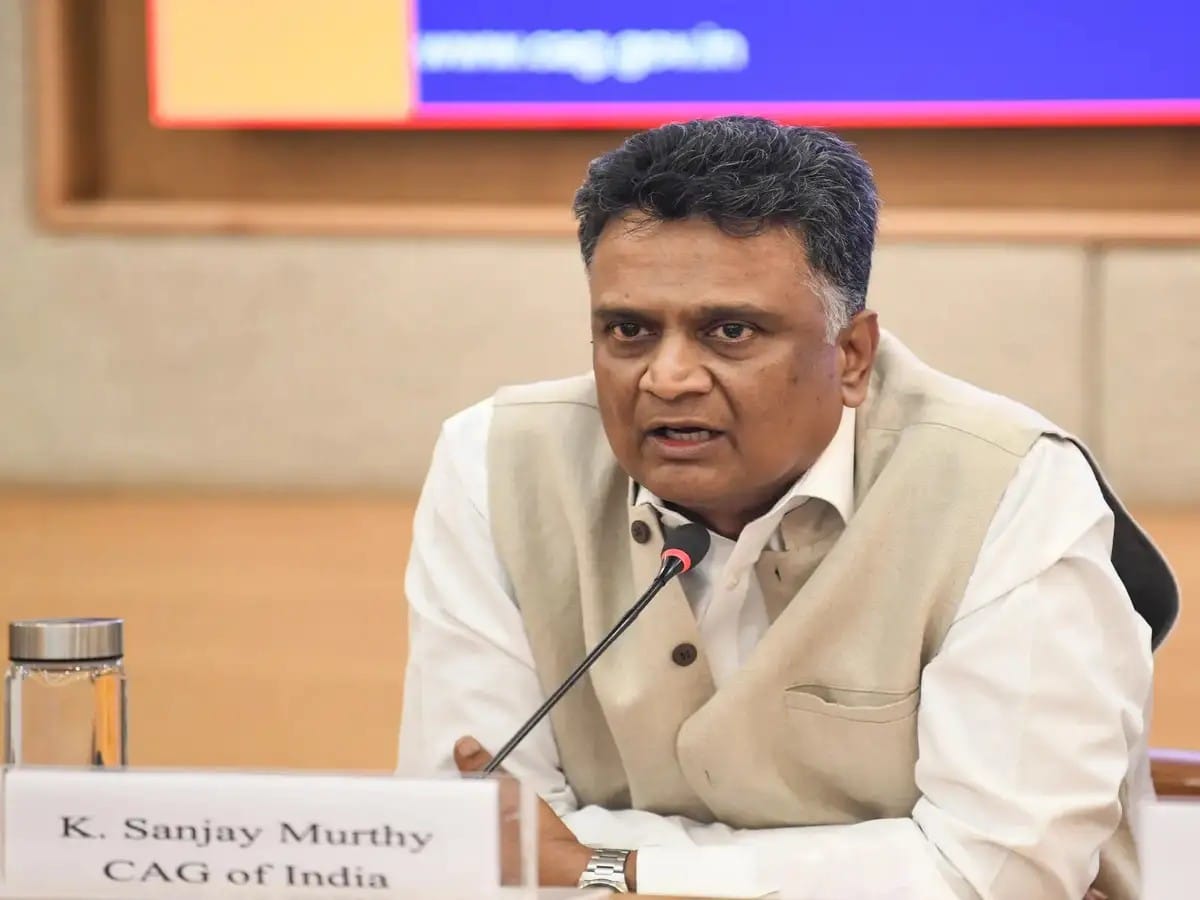
Speaking at the INTOSAI Working Group meeting in Kolkata, CAG K. Sanjay Murthy highlighted the expanding global role of Supreme Audit Institutions. Driven by citizen expectations, auditing is shifting beyond financial compliance toward digital follow-up audits that ensure government spending delivers real public value and systemic reform.
Kolkata — As modern governance faces unprecedented challenges ranging from rapid digital transformation to climate change, the role of Supreme Audit Institutions (SAIs) has expanded dramatically to satisfy growing public demands for transparency, state efficiency, and institutional integrity.
Speaking at the opening of the two-day INTOSAI Working Group on Follow-up Audit (WGFA) meeting in Kolkata, Comptroller and Auditor General of India (CAG) K. Sanjay Murthy emphasized that traditional public auditing must go beyond standard financial compliance. Modern legislative bodies and citizens now require firm assurance that state spending delivers actionable societal outcomes and that audit findings are rigorously implemented.
Expanding Expectations and the Need for Follow-Up Audits
According to officials, governments today operate in a complex global landscape marked by artificial intelligence, evolving digital governance, climate initiatives, and international commitments like the UN Sustainable Development Goals. In response to this shifting environment, public audit practices must evolve to evaluate real-world impact alongside traditional fiscal compliance.
"In this evolving landscape, the role of Supreme Audit Institutions has also expanded. While compliance and financial accountability remain fundamental, legislatures and citizens increasingly expect assurance that public expenditure delivers intended outcomes and that audit recommendations are effectively implemented," CAG Murthy stated during the inaugural proceedings.
Murthy highlighted that an audit report should no longer be viewed as the end of an oversight process. Instead, it marks the beginning of an ongoing cycle designed to strengthen administrative governance, optimize public resources, and improve service delivery for citizens.
INTOSAI Working Group Advances Strategic 2025–2028 Work Plan
The Kolkata conference builds on momentum generated during the working group's initial foundational session in Penang, Malaysia in 2025. Delegates from across the international INTOSAI community gathered to advance the global WGFA Compendium, review the 2026 Work Plan, and refine frameworks for measuring real audit impact across monetary, environmental, digital, and anti-corruption outcomes.
The group's overarching 2025–2028 Work Plan rests on three core operational pillars:
Knowledge Development: Developing structured frameworks to measure long-term audit impact.
Knowledge Sharing: Unifying international best practices into a comprehensive reference manual.
Capacity Building: Elevating technological and methodological capabilities across member SAIs.
These efforts align directly with international auditing standards, including INTOSAI Principle P-12—which mandates that SAIs build public trust and accountability—and ISSAI 100, which underscores continuous improvement in public administration.
India Leads Digital Integration in Global Audit Frameworks
As part of the global effort, SAI India is leading the development of the WGFA Compendium chapter dedicated to Information and Communications Technology (ICT) and digital tools.
According to official releases, technology is expanding how audit institutions gather evidence, track compliance, assess risks, and quantify public value. Leveraging advanced digital monitoring mechanisms allows SAIs to conduct follow-up audits faster, with greater efficiency, and with deeper focus on measurable governance outcomes.
Official Sources Section
According to official statements delivered by the Comptroller and Auditor General of India (CAG) and reports from the INTOSAI Working Group on Follow-up Audit (WGFA), the international audit community is actively reshaping standards to guarantee that audit recommendations translate into policy reforms.
Quote Section
"Recommendations create real public value only when they lead to stronger governance, better service delivery and more efficient use of public resources," stated CAG K. Sanjay Murthy. He added: "Technology is opening new possibilities for how we gather evidence, monitor implementation, identify risks and assess impact. Harnessing these possibilities can make follow-up audits not only faster and more efficient, but also more insightful and outcome-oriented."
Why It Matters
For taxpayers, businesses, and civic organizations, a shift toward structured follow-up auditing ensures that government expenditures produce concrete benefits rather than unfulfilled recommendations. By integrating digital tools and monitoring mechanisms into public sector auditing, state institutions can curb corruption, streamline fiscal waste, and improve public service delivery.
Key Facts at a Glance
Event: 2nd Meeting of the INTOSAI Working Group on Follow-up Audit (WGFA) in Kolkata.
Key Leader: K. Sanjay Murthy, Comptroller & Auditor General of India.
Strategic Focus: Progressing the 2025–2028 Work Plan, including Knowledge Development, Knowledge Sharing, and Capacity Building.
India's Contribution: SAI India is leading the draft chapter on ICT and digital tools in follow-up audits.
Core Standards: Guided by INTOSAI Principle P-12 and ISSAI 100 governance frameworks.
Frequently Asked Questions (FAQ)
What is a Supreme Audit Institution (SAI)?
A Supreme Audit Institution is the highest public auditing body in a nation (such as the Comptroller and Auditor General in India), responsible for auditing public sector revenues and expenditures to ensure fiscal accountability.
Why are follow-up audits important for citizens?
Follow-up audits ensure that government agencies actually implement recommendations made in primary audit reports, preventing recurring corruption, financial wastage, and operational inefficiencies.
How are digital technologies changing public auditing?
Digital tools, data analytics, and ICT allow auditors to track implementation in real time, monitor large data sets for financial risks, and measure the long-term monetary and social impacts of public expenditure.
Source: Comptroller and Auditor General of India | INTOSAI Working Group on Follow-up Audit | Press Trust of India