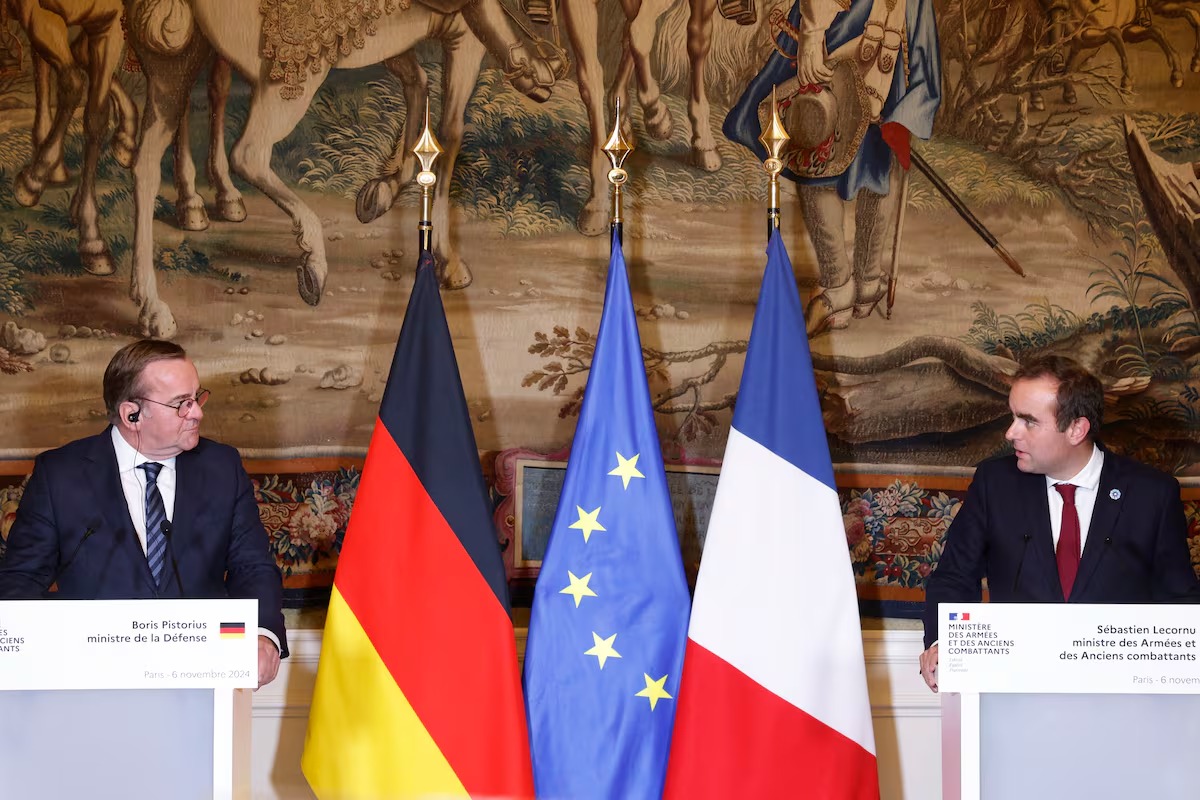
France and Germany are formulating a joint, modern defense industry cooperation work plan to be signed at July's Franco-German Ministerial Council. Seeking to eliminate historical procurement gridlock, the strategy narrows down bilateral cooperation to a few realistic, high-impact defense projects aimed at accelerating near-term equipment manufacturing and European military readiness.
BERLIN — The defense ministries of France and Germany are actively formulating a joint, modernized work plan for defense industry cooperation, according to two sources familiar with the matter. The bilateral strategy will explicitly target a limited number of realistic and relevant procurement projects, signaling a deliberate shift away from past over-ambitious industrial programs that have frequently suffered from political delays and contractual friction.
The comprehensive framework is expected to be formally introduced and signed at the upcoming Franco-German Ministerial Council in Germany this July. The development comes at a critical juncture for European security as both nations face mounting pressure to rapidly scale up military readiness, replenish domestic stockpiles, and coordinate long-term industrial output following years of geopolitical shifts across the continent.
Shifting Focus Toward Practical Procurement
According to institutional sources who spoke on the condition of anonymity, the upcoming defense industry cooperation roadmap is engineered to strip away political gridlock. Rather than launching sprawling, multi-decade initiatives, the defense ministries are prioritizing shorter-term, high-impact equipment manufacturing and logistical alignment.
Historically, joint industrial efforts between Paris and Berlin—most notably the Future Combat Air System (FCAS) and the Main Ground Combat System (MGCS)—have faced structural stagnation due to disputes over intellectual property, domestic industrial workshares, and divergent export control policies. By narrowing the collaborative scope to a few highly achievable systems, officials from both governments aim to deliver faster, standardized capabilities to their respective armed forces.
The renewed focus will likely encompass joint ammunition production lines, integrated air defense cooperation, and standardized software architectures for tactical vehicles. This pragmatic methodology reflects a broader trend within European procurement to favor immediately deployable tech over highly customized, prolonged developmental blueprints.
Implications for the European Defense Sector
The streamlined approach is anticipated to have a direct ripple effect on major industrial players across the continent. Key defense conglomerates, such as Germany's Rheinmetall AG and France’s Thales Group, will have to align their corporate bidding strategies with the tightly defined project list.
For defense investors and defense industry cooperation partners, a formalized work plan offers greater regulatory predictability. It provides clearer financial signals regarding where national procurement budgets will be directed over the next decade. For European citizens and military personnel, the strategic realignment is meant to lower production costs through economies of scale and ensure that joint forces can operate identical gear seamlessly during multilateral deployments.
Official Sources Section
The underlying timeline for bilateral defense dialogue is structured around the annual intergovernmental consultations outlined under the Treaty of Aachen. According to the German Federal Foreign Office, the annual Franco-German Ministerial Council serves as the primary executive vehicle for high-level policy synchronization. While specific components of the July text remain confidential ahead of the summit, previous framework conclusions issued via the [suspicious link removed] underscore a legal commitment to deepening European defense industrial autonomy.
Statements From Institutional Insiders
While official representatives from the French Ministry of Armed Forces and the German Federal Ministry of Defence declined to comment on ongoing pre-summit negotiations, details have emerged from diplomatic attaches.
"According to officials familiar with the preparatory text, the goal of the July session is to build an industrial framework that values speed and delivery over symbolic grandeur," stated one source. "The ministries want an actionable work plan that directly supports active manufacturing lines, ensuring our defense industry cooperation yields tangible hardware before the end of the decade."
Why It Matters
A modernized Franco-German defense work plan has profound practical implications for the broader North Atlantic Treaty Organization (NATO) and the European Union's defense initiatives. If France and Germany successfully synchronize their domestic assembly lines for key systems, it dramatically reduces the fragmentation that has plagued European military logistics for generations. Streamlining these projects ensures that emergency defense funding is spent efficiently, creating standard platforms that neighboring European allies can easily purchase and integrate.
Key Facts at a Glance
Timeline: The new defense industry cooperation plan is scheduled to be unveiled at the Franco-German Ministerial Council this July.
Strategic Shift: Focus is moving away from complex, long-term programs toward a limited number of realistic, short-term military projects.
Key Sectors: Expected priorities include cross-border ammunition output, electronic warfare integration, and logistical supply chain synchronization.
Industrial Impact: Major prime contractors in France and Germany will receive explicit, harmonized production mandates under the unified plan.
Frequently Asked Questions (FAQ)
What is the primary goal of the new defense work plan?
The plan seeks to establish a highly practical, modernized framework for Franco-German defense industry cooperation, intentionally focusing on a few achievable manufacturing projects to avoid procurement delays.
When and where will this agreement be made official?
The joint work plan is expected to be formally introduced and adopted during the Franco-German Ministerial Council meeting taking place in Germany this July.
Does this new plan replace major programs like FCAS or MGCS?
No, the plan does not replace existing long-term legacy programs. Instead, it introduces a parallel, near-term layer of defense industry cooperation designed to deliver rapid, immediate capabilities to both armed forces.
Source: German Federal Foreign Office,French Ministry of the Armed Forces,