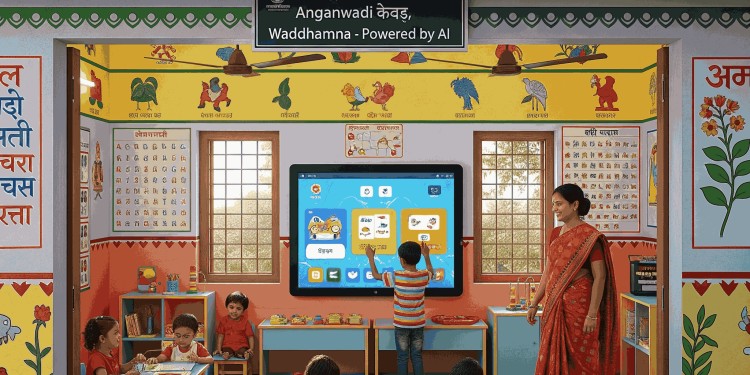
As artificial intelligence steadily transforms education worldwide, India stands at a crucial crossroads in preparing its vast school system for AI-powered, classrooms without boundaries. The promise of personalized, tech-enabled learning is accelerating adoption, with millions of students beginn...
As artificial intelligence steadily transforms education worldwide, India stands at a crucial crossroads in preparing its vast school system for AI-powered, classrooms without boundaries. The promise of personalized, tech-enabled learning is accelerating adoption, with millions of students beginning to interact with AI tools in their studies. Yet, significant challenges remain in infrastructure, teacher readiness, and equitable access. How ready are Indian schools to step into this AI-driven educational future?
Key Highlights on India’s AI Classroom Readiness
-
India’s school system is one of the world's largest, with nearly 25 crore students across about 15 lakh schools, of which over 10 lakh are government-run, highlighting the monumental scale of any AI integration effort.
-
Digital penetration is improving: computer access in schools grew from 57.2% in the 2023–24 academic year to 64.7% in 2024–25; internet availability rose from 53.9% to 63.5% in the same period.
-
The Central Board of Secondary Education (CBSE) has actively introduced AI into the curriculum since 2024, with around 8 lakh students enrolling in AI courses across 4,538 schools, and over 50,000 senior secondary students selecting AI as a skill subject.
-
Despite these promising numbers, significant gaps persist in digital infrastructure, consistent power supply, broadband connectivity, and widespread teacher training, especially among government-run and rural schools.
-
Education experts emphasize that technology alone cannot replace the irreplaceable social and emotional learning that happens in physical classrooms; instead, a "human-first, tech-forward" approach is essential.
-
National initiatives such as DIKSHA, PM e-VIDYA, National Digital Education Architecture (NDEAR), and Samagra Shiksha aim to support digital infrastructure enhancements, content delivery, and teacher training, but statewise disparities and uneven rollout limit their impact.
-
The National Education Policy 2020 sets ambitious targets, including 100% gross enrolment by 2030 and integration of AI across school curricula, reinforcing the government's commitment to transforming education via technology.
-
Experts caution that for AI classrooms without walls to become a reality, foundational investments in infrastructure and skill development are necessary to overcome the digital divide and ensure no student is left behind.
-
Future-ready education will focus not only on AI skill acquisition but also on fostering adaptability, creativity, curiosity, and emotional intelligence among students to thrive in a technology-driven era.
The Road Ahead: Scaling AI Education Inclusively
While urban private schools may pioneer AI-powered learning environments sooner, the challenge remains how to extend this capability across India’s diverse and complex schooling landscape. Closing digital gaps through investments in hardware, connectivity, and teacher empowerment will be crucial. Furthermore, embedding ethical AI literacy, data privacy awareness, and responsible use into the curriculum is vital to navigate AI’s benefits and risks.
In conclusion, Indian schools are making decisive strides toward AI integration, but the vision of seamless AI-enabled classrooms without walls demands comprehensive and inclusive efforts that balance technological innovation with human-centric education values. The future of learning in India promises to be dynamic and transformative, provided challenges are met with coordinated strategies and sustained commitment.
Source: India Today