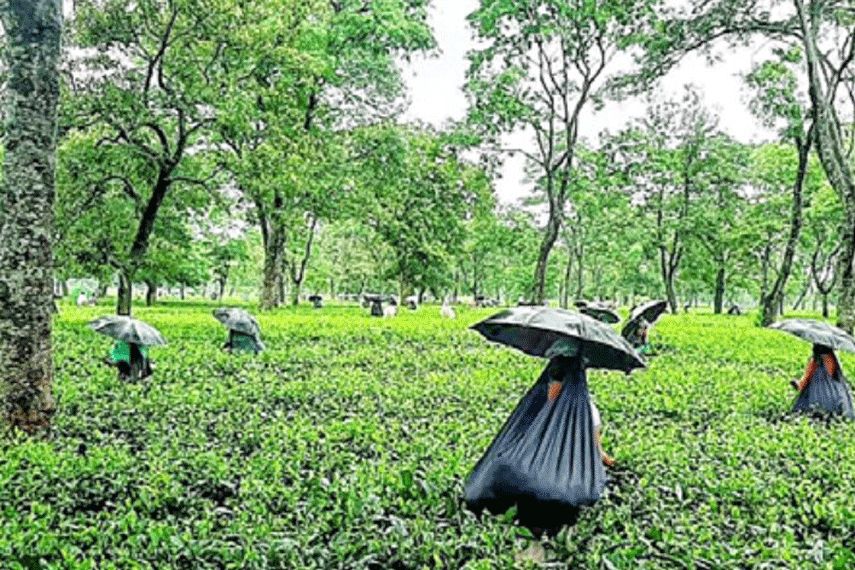
The Confederation of Indian Small Tea Growers Associations (CISTA) has urged West Bengal Chief Minister Suvendu Adhikari to form a separate small tea growers' development board. Contributing over 50% of the state's tea production, the growers seek formal agricultural status to unlock essential central credit, insurance, and farming welfare schemes.
SILIGURI — The Confederation of Indian Small Tea Growers Associations (CISTA) has officially petitioned West Bengal Chief Minister Suvendu Adhikari, urging the immediate creation of a dedicated state-level development board. Submitted via a formal memorandum, the apex industry body is calling for the establishment of the "West Bengal Small Tea Growers Development Board" to protect the livelihoods of tens of thousands of marginalized cultivators.
The move aims to address structural imbalances in the domestic plantation sector, specifically seeking to grant small tea growers official status as traditional agricultural farmers. If approved, the classification would open up access to critical state and central agrarian welfare schemes that have historically bypassed small-scale tea plantations.
The Structural Realities of a Changing Tea Economy
According to detailed sectoral data logs maintained by the Tea Board of India, the production model of the Indian tea industry has fundamentally transformed over the past two decades. Traditional, large-scale corporate estates no longer command an absolute monopoly over green leaf harvests. Today, small tea growers independently contribute over 50% of the total tea produced across West Bengal and more than 54% across the broader northeastern corridor.
Across North Bengal alone, approximately 50,000 small tea growers operate across the plains of Darjeeling, Jalpaiguri, Alipurduar, Cooch Behar, and Uttar Dinajpur districts. This localized network supports nearly three lakh workers who depend entirely on small-scale cultivation.
However, despite driving the rural economy, these small-scale cultivators face deep financial instability due to a volatile supply chain. They rely heavily on more than 150 independent Bought-Leaf Factories (BLFs) to process their raw green leaves immediately after plucking.
Overcoming Administrative Gaps in Agrarian Welfare
The core problem for small tea growers stems from a historical administrative mismatch. Because tea is legally classified as an industrial plantation crop rather than a traditional agricultural product, oversight sits under the Union Ministry of Commerce rather than the Ministry of Agriculture and Farmers Welfare.
As a result, small tea cultivators are structurally locked out of standard farming safety nets. This institutional gap leaves them highly vulnerable to sudden climate shocks, price drops, and crop failures.
CISTA's proposal outlines a broad-based, multi-stakeholder governance structure for the new board. The association recommends that the panel include representatives from small tea growers, senior officials from the State Commerce and Industries department, administrative officers from tea-producing districts, and specialized agricultural scientists.
Through this coordinated body, growers are pushing for formal inclusion in several essential central farm initiatives:
Kisan Credit Card (KCC): To provide cultivators with access to low-interest institutional credit and soft loans, reducing their reliance on unregulated local money lenders.
Pradhan Mantri Fasal Bima Yojana (PMFBY): To establish weather-based crop insurance models that protect against severe droughts and unseasonal rainfall.
Farmers Producer Companies (FPCs): To help small growers aggregate their yields, bypass exploitative middle agents, and negotiate directly with major processing blending factories.
Official Sources Section
The production metrics, structural demands, and stakeholder demographics cited in this report correspond directly to the official memorandum submitted by the Confederation of Indian Small Tea Growers Associations (CISTA). Regional socio-economic data and historical crop tracking parameters have been cross-verified with registries published by the Tea Board of India.
Quote Section
"According to officials and veteran cultivators in Jalpaiguri, small tea growers are functionally no different from traditional farmers since they manage perishable cash crops subject to identical weather risks. The proposed development board will serve as a vital bridge to nurture the sector, introduce a Minimum Support Price (MSP) framework, and eliminate the systemic bottlenecks currently stalling rural economic growth."
— CISTA Executive Committee Briefing
Why It Matters
Establishing a separate development board will introduce immediate, practical benefits for India's domestic beverage market, regional laborers, and consumer food supply chains. By creating a direct, regulated pipeline between small tea growers and processing factories, the board can strictly enforce safety protocols, map chemical usage to the Tea Board's Plant Protection Code, and eliminate substandard blending practices. For everyday consumers, this structural oversight ensures a much higher quality, safer, and more sustainably sourced cup of tea.
Key Facts at a Glance
Dedicated Board Appeal: CISTA has officially petitioned Chief Minister Suvendu Adhikari to establish the West Bengal Small Tea Growers Development Board.
Production Dominance: Small tea cultivators now produce over 50% of the total tea harvested in West Bengal, cementing their role as a backbone of the rural economy.
Farmer Classification: The association is pushing for formal recognition as agricultural farmers to secure access to central welfare schemes like PM-Kisan and the Kisan Credit Card network.
Socio-Economic Footprint: The small tea sector in North Bengal directly impacts the livelihoods of nearly 50,000 independent growers and three lakh plantation workers.
FAQ Section
Why are small tea growers currently excluded from standard central farming schemes?
Because tea is classified as a plantation crop, the sector is overseen by the Ministry of Commerce rather than the Ministry of Agriculture. This bureaucratic distinction blocks small growers from accessing standard agrarian subsidies, credit cards, and crop insurance models.
What role do Bought-Leaf Factories (BLFs) play in the small tea ecosystem?
Small tea growers do not own processing mills. Instead, they harvest green tea leaves and sell them directly to Bought-Leaf Factories, which process the raw leaves into commercial made-tea for public auctions.
How would a separate development board benefit everyday tea consumers?
A dedicated board would streamline training on the Tea Board's Plant Protection Code, help eliminate banned chemical usage at the grassroots level, and ensure that independent factories produce safer, higher-quality tea.
Source: Official memorandum records from the Confederation of Indian Small Tea Growers Associations (CISTA), production tracking data from the Tea Board of India, and regional industrial logs from the West Bengal Commerce Department.