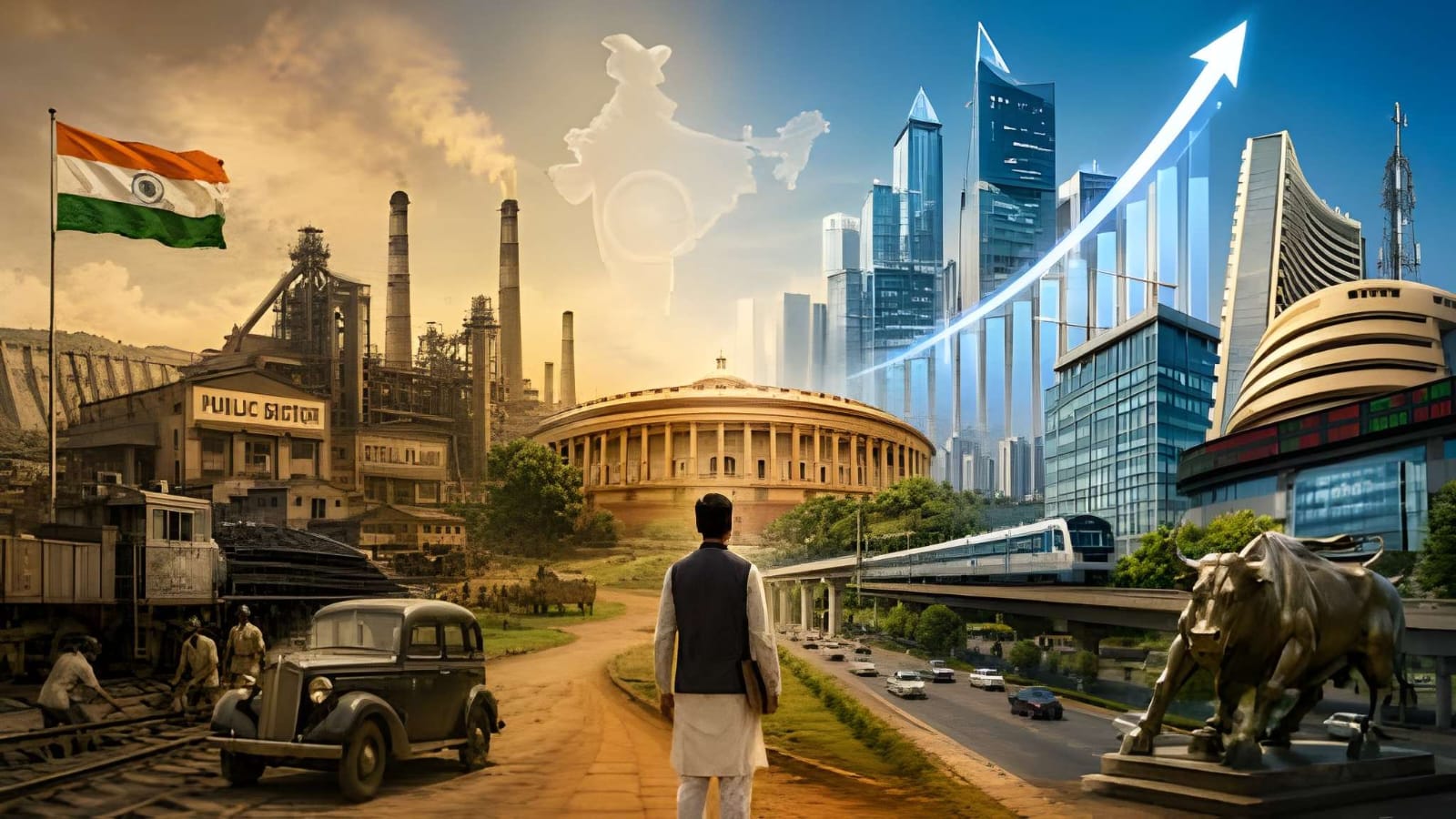
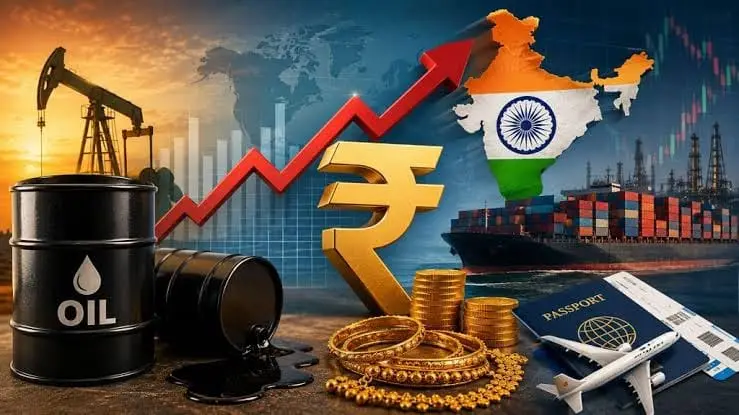
India's transition from a state-controlled economic model to an open market system reshaped its growth trajectory. Catalyzed by the 1991 balance of payments crisis, structural reforms opened the nation to foreign investment, expanded private enterprise, and transformed India into a modern, multi-trillion-dollar global economy driven by services and manufacturing.
NEW DELHI — India’s economic evolution from a heavily regulated, state-controlled model to a globally integrated market economy remains a primary driver of its modern financial landscape. Following decades of Centralized Planning following independence, structural economic reforms initiated in 1991 altered the nation's fiscal policies, expanding foreign direct investment (FDI), private enterprise, and international trade across key domestic sectors.
Historical Shift: From Public Sector Focus to Open Markets
Following independence in 1947, India adopted a public sector-led economic model aimed at preventing wealth concentration, achieving economic self-reliance, and reducing structural inequality. Under early Five-Year Plans, the central government regulated key industries—including steel, telecommunications, banking, and heavy machinery—while imposing strict licensing requirements on private businesses.
While this system established a core industrial base and expanded public infrastructure, complex regulatory frameworks hindered private capital deployment and limited international competitiveness over time.
The 1991 Balance of Payments Crisis and Structural Reforms
By 1991, severe external economic pressures culminated in a balance of payments crisis. Depleted foreign exchange reserves prompted the Indian government to initiate comprehensive economic adjustments under the Liberalization, Privatization, and Globalization (LPG) framework:
Liberalization: Elimination of industrial licensing requirements across most sectors and reduction of import tariffs.
Privatization: Phased disinvestment of government equity in state-owned enterprises to encourage market-driven operational efficiency.
Globalization: Capital account measures allowing expanded foreign portfolio investments and foreign direct investment (FDI).
These structural interventions altered India’s trade position, facilitating integration into global capital flows and supply networks.
Economic Growth Metrics (1950 vs. Modern Trajectory)
| Economic Metric | Post-Independence Era (1950s) | Modern Trajectory (2020s) |
| Primary Economic Focus | Agriculture & Heavy Public Industry | Services, Digital Tech, Advanced Manufacturing |
| Trade Policy | Import Substitution & Capital Controls | Export Integration & Active Bilateral FTAs |
| Foreign Exchange Reserves | Severely Restricted | Over $600 Billion USD |
| GDP Scale | Basic Post-Colonial Baseline | Exceeding $3.75 Trillion USD |
Regulatory Frameworks and Official Releases
According to official releases from the Ministry of Finance and macroeconomic reporting by the Reserve Bank of India, market-oriented policy updates remain focused on improving the domestic business environment. National initiatives—such as the Production Linked Incentive (PLI) schemes and regulatory updates via the Securities and Exchange Board of India—target increased private sector participation in domestic manufacturing and capital markets.
"According to officials, continuous structural refinements, digital public infrastructure expansion, and targeted regulatory modernization remain central to sustaining India's long-term economic expansion."
Impact on Citizens, Consumers, and Global Investors
The evolution toward an open market model has had direct implications across domestic and international markets:
Consumers: Enhanced access to global consumer goods, digital technology, competitive financial services, and expanded service delivery networks.
Businesses: Streamlined corporate compliance frameworks, access to international venture capital, and participation in international trade corridors.
Investors: Broader entry routes for Foreign Institutional Investors (FIIs) and global private equity across technology, infrastructure, and renewable energy sectors.
Why It Matters
Understanding India’s economic policy timeline clarifies current trade regulations, investment rules, and market behavior. As domestic markets expand, policy choices made by central regulators directly influence global supply chains, corporate capital allocation, and emerging market investment strategies.
Key Facts at a Glance
Policy Pivot: India shifted from state-directed planning to an open market framework following the 1991 financial crisis.
Current Scale: The national economy has grown into a $3.75+ trillion GDP system supported by robust service and technology industries.
Regulatory Modernization: Modern economic policy focuses on manufacturing incentives (PLI), trade liberalization, and digital public infrastructure.
Global Trade Integration: Foreign reserves and direct foreign investments have scaled significantly since the removal of mid-20th-century capital controls.
Frequently Asked Questions (FAQ)
Q: What triggered India's economic reforms in 1991?
A: A severe balance of payments crisis characterized by low foreign exchange reserves forced structural policy adjustments, leading to the adoption of Liberalization, Privatization, and Globalization (LPG) policies.
Q: How did the post-independence public sector model function?
A: The post-1947 model prioritized state control over major industries to prevent wealth concentration, protect domestic firms, and direct industrial growth through central Five-Year Plans.
Q: What are the main drivers of India's current economic growth?
A: Key drivers include a dynamic services sector, expanding digital public infrastructure, growing domestic consumption, and targeted government incentives for private manufacturing.
Source: Official releases from the Ministry of Finance, market policy updates from the Reserve Bank of India, and public economic history data compiled by Zee News.