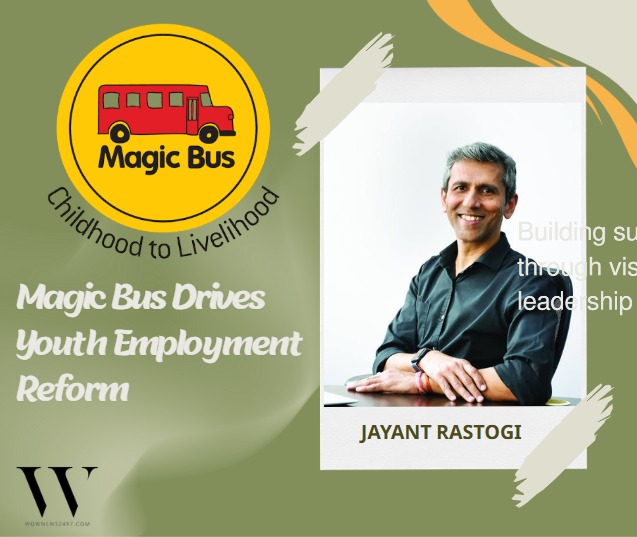
Magic Bus India Foundation, under Global CEO Jayant Rastogi, addresses the disconnect between education and employment for under-resourced youth. Through targeted school-based life skills and vocational training programs, the organization bridges the gap from school to work, enabling young adults to secure sustainable livelihoods in growing industry sectors.
Magic Bus India Foundation equips youth with workplace skills to ensure smooth transitions from academic settings to formal employment.
Addressing Youth Employability Challenges Across Emerging Economies
MUMBAI — Millions of young individuals across India complete formal schooling each year without acquiring practical skills required by modern employers. To resolve this structural disconnect, Magic Bus India Foundation, led by Global Chief Executive Officer Jayant Rastogi, has deployed targeted training initiatives designed to bridge the gap from school to work for under-resourced youth. The foundation works across multiple states to ensure secondary school students and young adults gain life skills, digital literacy, and vocational training tailored to current market demands.
The organization collaborates with state governments, educational institutions, and corporate partners to deliver its curriculum directly within government schools and community centers. By aligning training modules with sector-specific workforce needs, the initiative aims to increase sustainable employment rates and break generational poverty cycles across urban and rural communities.
Core Operational Framework and Skilling Programs
According to corporate disclosures and organizational reports, Magic Bus India Foundation operates two primary interventions to prepare youth for sustainable livelihoods.
Adolescent Program: Implemented in government schools, this module focuses on life skills, financial literacy, and career awareness to reduce dropout rates among secondary students.
Livelihood Program: Designed for young adults aged 18 to 25, this initiative offers localized skill development in sectors such as retail, customer service, digital services, and logistics.
Corporate Integration: The foundation works directly with hiring partners to map skill requirements, facilitating direct placement opportunities for program graduates.
Scalability and Institutional Collaboration
The organization leverages technology-driven monitoring tools to track student retention, skill acquisition, and job placement metrics across its training centers. Under Jayant Rastogi’s leadership, Magic Bus India Foundation has scaled its operations by integrating its life skills curriculum into state school systems through formal partnerships with local education departments.
This institutional model allows the foundation to reach larger student populations while maintaining standard delivery quality. The approach emphasizes soft skills—such as communication, problem-solving, and adaptability—alongside functional digital proficiency, addressing key gaps identified by private-sector employers.
Official Sources and Governance Disclosures
Official performance metrics and program outcomes are documented through audited annual reports and state government partnership agreements.
Magic Bus Annual Reports: Published financial statements and impact disclosures outline student enrollment figures, placement percentages, and program completion rates.
State Education Filings: Official memoranda of understanding executed with state governments detail the integration of life skills curricula into public school systems.
"According to officials and organizational statements, aligning foundational education with practical workplace requirements remains essential to improving youth employability and long-term economic mobility."
Why It Matters
The gap between formal education and market-ready skills poses a challenge for expanding economies seeking to leverage demographic advantages. For job seekers, acquiring practical workplace competencies increases early-career earning potential and job security. For businesses, standardized vocational and life-skills training reduces onboarding costs and improves employee retention rates across entry-level roles.
Key Facts at a Glance
Organization: Magic Bus India Foundation, led by Global CEO Jayant Rastogi.
Primary Objective: Bridge the gap from school to work for under-resourced youth through targeted skill development.
Target Demographic: Secondary school students (Adolescent Program) and young adults aged 18–25 (Livelihood Program).
Delivery Model: Direct implementation in government schools and community-based livelihood centers.
Frequently Asked Questions
What is the primary mission of Magic Bus India Foundation?
The foundation aims to equip young people from low-income households with essential life and vocational skills to facilitate a successful transition from education to formal employment.
How does Magic Bus bridge the gap from school to work?
By offering life skills education in schools and market-aligned vocational training for young adults, supported by direct placement linkages with corporate employers.
Who leads Magic Bus India Foundation?
Jayant Rastogi serves as the Global Chief Executive Officer of Magic Bus India Foundation, overseeing its global strategy and domestic operational scale.
Source: Magic Bus India Foundation Official Portal, Ministry of Skill Development and Entrepreneurship, and official corporate impact disclosures.