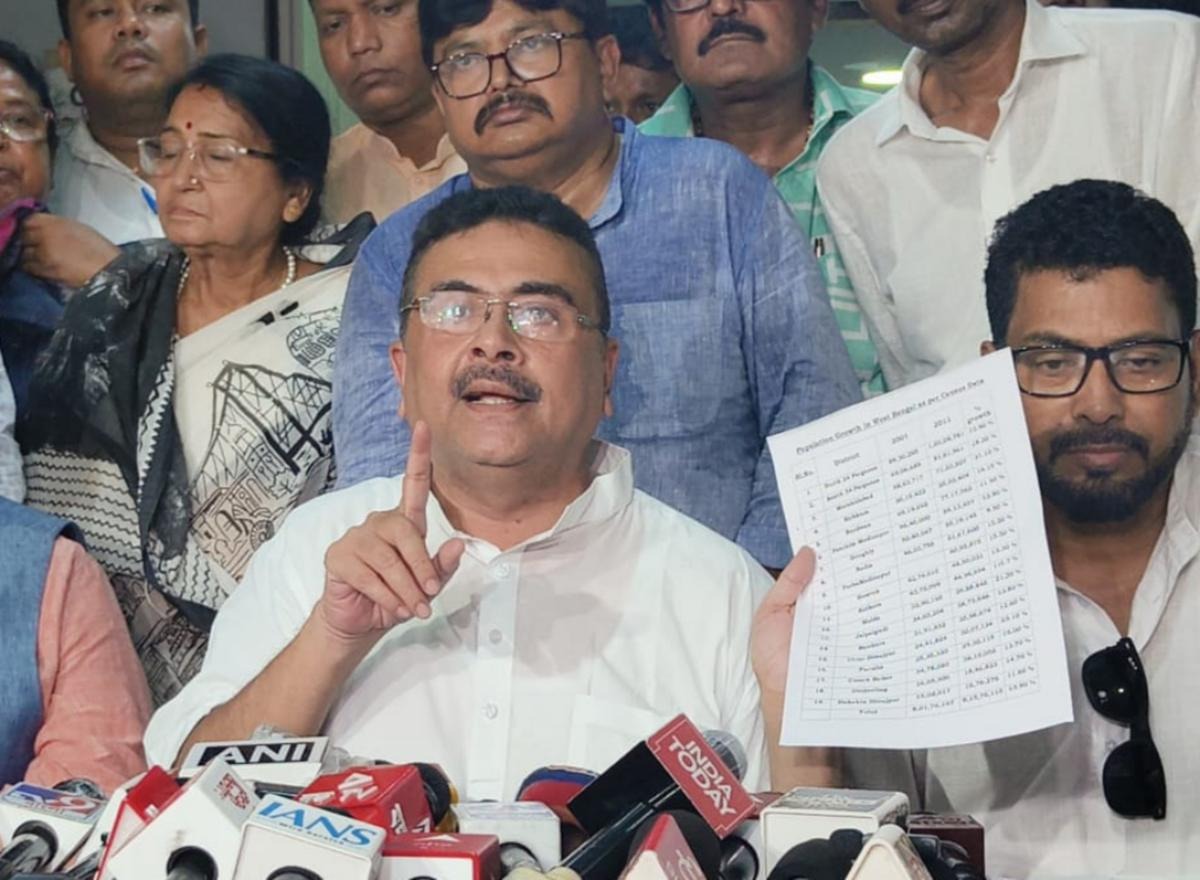
West Bengal Chief Minister Suvendu Adhikari has launched a sweeping three-step policy Detect, Delete, and Deport to tackle the long-standing issue of illegal Bangladeshi immigration in the state. The BJP-led government's hardline crackdown, backed by the Immigration and Foreigners Act, 2025, has already triggered mass border movement, with hundreds of undocumented migrants rushing to exit voluntarily.
A Policy Long In The Making
West Bengal's newly elected BJP government wasted no time after assuming power within days of taking charge, Chief Minister Suvendu Adhikari unveiled the "Detect, Delete and Deport" (3D) framework as its flagship immigration enforcement mechanism. The policy aligns with central guidelines issued by the Union Home Ministry on May 14 last year, directing all states to identify and repatriate illegal infiltrators through a special district-level task force. Adhikari also announced the transfer of land to the Border Security Force to complete fencing along a 27-km stretch of the India-Bangladesh border.
What The 3D Framework Actually Means
- The three Ds Detect, Delete, and Deport represent a sequential enforcement chain:
- Detect refers to the identification of illegal immigrants, primarily through voter list verification, where undocumented Bangladeshi nationals were first flagged.
- Delete means their names have been removed from the electoral rolls following court-backed verification drives.
- Deport is the final and active stage now in motion state police are detaining undocumented individuals and handing them directly over to the BSF, bypassing courts, in line with the Immigration and Foreigners Act, 2025.
On The Ground: Chaos At The Border
The policy's rollout has created palpable urgency at the border crossing. Hundreds of Bangladeshis without valid documents queued at the Bithari-Hakimpur border exit in North 24 Parganas, choosing to return home voluntarily rather than face detention. The state government has opened two "holding centres" in Malda and Murshidabad for detained migrants awaiting deportation. Adhikari made his stance clear with a sharp message: "Jaldi jaldi bhago nahi toh jo karna hai sarkar karega".
The Legal And Political Debate
While electoral roll deletions have received judicial backing, legal experts point out that citizenship determination and large-scale deportation are complex processes that require active cooperation from Bangladesh. Critics have raised human rights concerns regarding the speed of detention and the bypassing of judicial proceedings, while supporters argue the measures are necessary for border security and electoral integrity. Adhikari clarified that those protected under the CAA — from seven designated minority communities who entered India before December 31, 2024 — will not be targeted.
Key Highlights
- West Bengal CM Suvendu Adhikari formally launched the 3D Detect, Delete, Deport policy targeting illegal Bangladeshi immigrants
- Infiltrators detained by state police will be handed directly to the BSF, bypassing court proceedings
- Policy is backed by the Immigration and Foreigners Act, 2025, passed by Parliament in April 2025
- Two holding centres opened in Malda and Murshidabad for detained migrants awaiting deportation
- Hundreds of undocumented Bangladeshis voluntarily rushed to the Hakimpur border post to exit India
- Land transferred to BSF for fencing a 27-km stretch along the India-Bangladesh border
- CAA-protected communities from seven minority groups who entered before December 31, 2024, are exempt from action
- Experts flag legal complexity around large-scale deportation and need for Bangladesh's cooperation
Sources: Times of India, Telangana Today, Times Now, TBS News, Hindustan Times, Free Press Journal