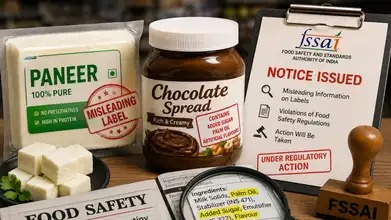
The FSSAI has issued notices to Heritage Foods, Dia Foods, and Cipzer Nutraceuticals for using misleading health and quality claims on product labels. The regulator flagged terms like "Fresh," "Healthy," "All Natural," and "100% Organic," emphasizing that food companies must substantiate all marketing claims and obtain proper organic/vegan certification.
India’s food regulator has issued formal notices to multiple companies, targeting deceptive labels on everyday items from paneer to spreads.
NEW DELHI — The Food Safety and Standards Authority of India (FSSAI) has launched a regulatory crackdown on food business operators (FBOs) for alleged misleading health and labeling claims. In a series of enforcement actions initiated on July 6, 2026, the authority targeted several prominent brands, demanding explanations for marketing terminology that it says may violate the Food Safety and Standards Act, 2006.
The move marks an intensification of the regulator's oversight regarding "health-washing" in the packaged food industry, where companies often use terms like "natural," "fresh," or "healthy" to influence consumer perception without scientific substantiation.
Regulatory Targets and Violations
The FSSAI issued notices to three major firms, citing specific non-compliance with the Food Safety and Standards (Advertising and Claims) Regulations, 2018.
Heritage Foods Limited: The regulator flagged the company’s "Heritage Fresh Paneer" for using the term "Fresh," stating it failed to meet the specific conditions laid out in Schedule V of the regulations. Additionally, the brand name "Healthy Happiness" was identified as potentially misleading, as the term "Healthy" implies a health-promoting property that is not in conformity with Regulation 8(3).
Dia Foods: The company’s "La Casa Vegan Hazelnut Chocolate Spread" faced scrutiny for using claims including "All Natural," "100% organic," and "Vegan." According to the official FSSAI notice, the product lacked the necessary organic and vegan endorsements on its license. Furthermore, the use of "100%" was noted as non-compliant with current regulatory definitions.
Cipzer Nutraceuticals: The brand’s juice capsules were cited for labeling themselves "FSSAI Approved," a phrase the regulator noted creates a false impression of direct government endorsement. Other objected claims included "Boost your immune system" and "Remove toxins from your body," which the FSSAI stated were made without required scientific substantiation.
Enforcing Transparency in Labeling
The FSSAI has provided these companies with a seven-day deadline to explain why regulatory action should not be initiated against them. This crackdown is part of a broader 2026 initiative to enforce stricter FSSAI labeling rules, which mandate that all packaged foods clearly display nutritional information, allergen declarations, and legitimate certifications.
According to officials, the regulator is particularly focused on protecting consumers from products that use unauthorized health claims or deceptive imagery, such as depicting fruits or vegetables on packaging that are not actually present in the ingredient list.
Why It Matters
The implications for consumers and the industry are significant. For businesses, this marks the end of a "lax" labeling era, forcing companies to ensure that every claim—from "organic" to "natural"—is backed by appropriate certification and scientific evidence. For consumers, the FSSAI’s stricter stance is designed to curb the prevalence of "health-washing," where products are marketed as nutritious despite being ultra-processed or lacking documented benefits.
Key Facts at a Glance
Regulatory Basis: Actions are taken under the Food Safety and Standards Act, 2006, and the Advertising and Claims Regulations, 2018.
Specific Claims Flagged: "Fresh," "Healthy," "All Natural," "100% Organic," and "Vegan" without valid licensure.
Official Stance: Claims like "FSSAI Approved" are strictly prohibited as they imply government endorsement of a specific product.
Deadline: Affected companies have seven days to respond to the regulatory notices.
Frequently Asked Questions
Why is "FSSAI Approved" considered a misleading claim?
The FSSAI notes that this phrase creates the false impression that the regulator has specifically endorsed the safety or efficacy of a product, which is not the function of a licensing body.
How can I verify if a product is truly organic?
Consumers are advised to look for recognized certification logos on the packaging, such as the Jaivik Bharat logo, NPOP, or PGS India Organic.
What happens if companies fail to comply?
Companies that fail to provide satisfactory explanations or correct their labels face potential penalties, including product recalls, heavy fines, or the suspension of their food business licenses.
Source: Food Safety and Standards Authority of India (FSSAI), Business Today, NDTV Food