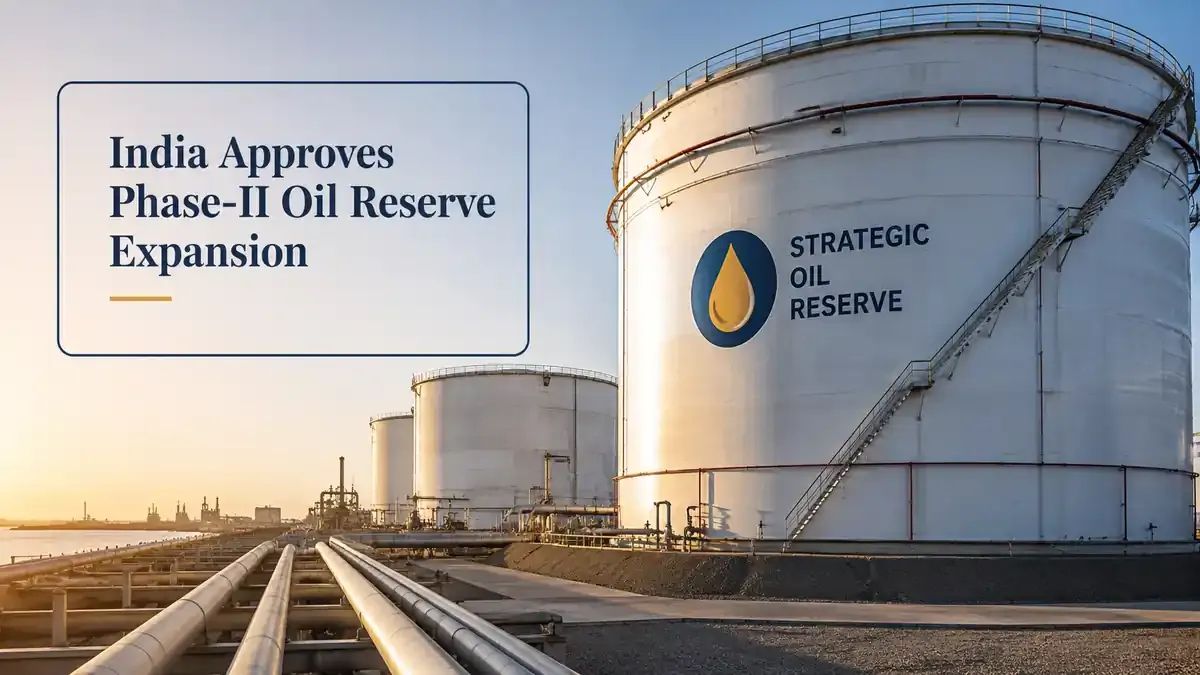
India is advancing Phase-II of its strategic petroleum reserve program at ₹14,527 crore under a public-private partnership model. Featuring government viability gap funding capped at 60 percent, the initiative adds 6.5 million tonnes of emergency crude storage across Odisha and Karnataka to secure long-term national energy resilience.
India launches a ₹14,527 crore Phase-II strategic petroleum reserve expansion under a public-private partnership model.
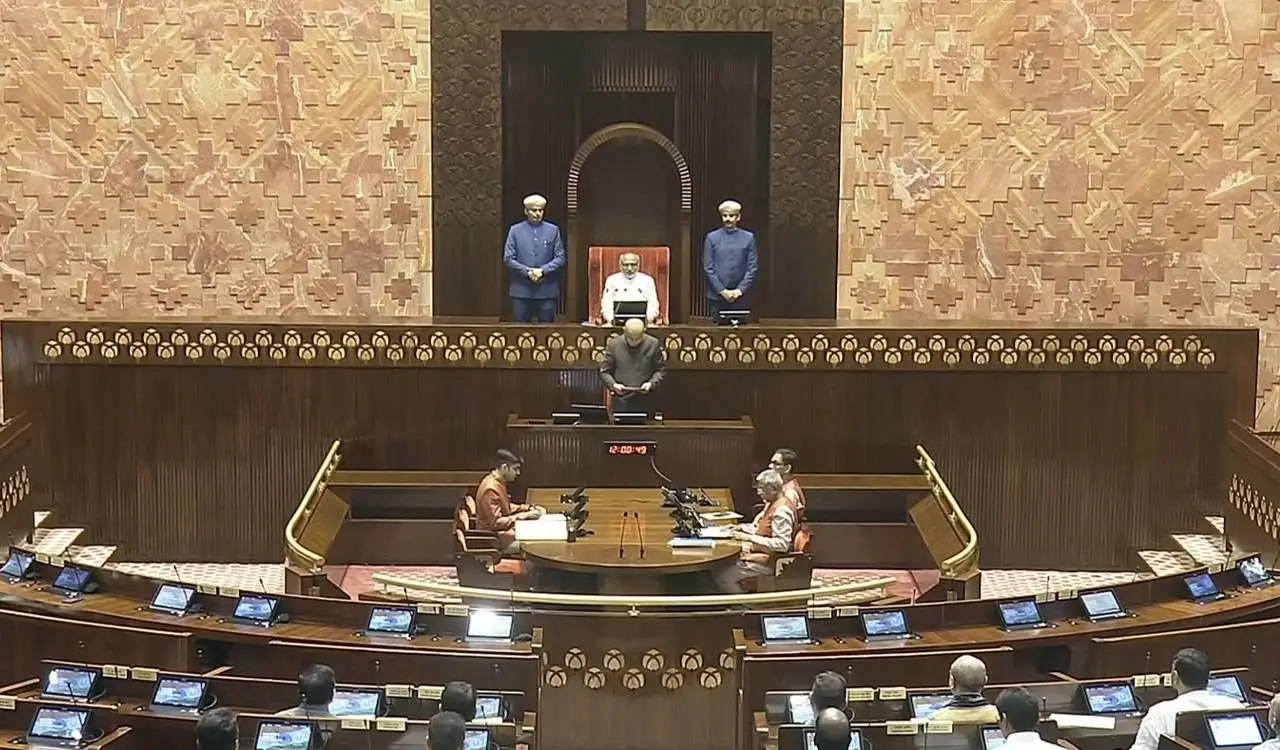
In a decisive move to fortify national energy security against global market volatility, the Indian government announced on Thursday, July 23, 2026, that the second phase of its strategic petroleum reserve (SPR) program will be executed through a public-private partnership (PPP) model. Disclosed via a written reply in the Lok Sabha by Minister of State for Petroleum and Natural Gas Suresh Gopi, the ambitious project carries an estimated capital outlay of ₹14,527 crore. The framework introduces a government viability gap funding (VGF) cap of up to 60 percent to attract private infrastructure investment while expanding the country's emergency crude oil storage capacity by 6.5 million metric tonnes.
Infrastructure Scaling Across Odisha and Karnataka
According to official parliamentary disclosures, the Phase-II expansion plan—initially approved in July 2021—aims to establish dual-purpose commercial-cum-strategic crude storage facilities across two key coastal states.
Geographic Distribution: The new developments comprise a 4 million tonne underground storage facility in Odisha (Chandikhol) and a 2.5 million tonne facility in Karnataka (Padur).
Financing and VGF Structure: Unlike Phase-I, which relied entirely on alternative funding models without direct government budgetary support, Phase-II utilizes a PPP structure backed by a government VGF limit of 60 percent to de-risk private participation.
Historical Foundation: Under Phase-I, Indian Strategic Petroleum Reserve Ltd (ISPRL) successfully built 5.33 million tonnes of storage across Visakhapatnam (1.33 MT), Mangaluru (1.5 MT), and Padur (2.5 MT) between 2016 and 2018.
Broadening Import Sourcing and Global Partnerships
The strategic reserve expansion aligns with broader administrative efforts to insulate domestic refiners and consumers from geopolitical shocks and supply chain disruptions. Government data highlights that India has systematically diversified its crude oil import base, expanding sourcing from 27 countries to 41 countries, while liquefied natural gas (LNG) suppliers have increased from six to 15 nations. Additionally, strategic international partnerships—such as ISPRL's leasing agreement with the Abu Dhabi National Oil Company (ADNOC) for a 750,000-tonne cavern in Mangaluru—demonstrate a robust framework for international commercial collaboration.
Why It Matters
For citizens, domestic industries, and energy investors, expanding strategic petroleum reserves provides a critical buffer against sudden crude oil price spikes and supply interruptions. Enhanced storage infrastructure ensures stable refinery operations and safeguards the national economy against external geopolitical volatility.
Key Facts at a Glance
Total Outlay: ₹14,527 crore for Phase-II expansion.
New Capacity: 6.5 million metric tonnes split between Odisha (4 MT) and Karnataka (2.5 MT).
Funding Model: Public-Private Partnership (PPP) with Government Viability Gap Funding (VGF) capped at 60%.
Existing Capacity: 5.33 million tonnes established across Visakhapatnam, Mangaluru, and Padur under Phase-I.
Frequently Asked Questions
What is the total estimated cost of India's Phase-II strategic petroleum reserve expansion?
The second phase is estimated to cost ₹14,527 crore.
Which regions are selected for the new crude oil storage facilities?
The new storage caverns will be built in Odisha (4 million tonnes) and Karnataka (2.5 million tonnes).
How is the Phase-II expansion being financed?
The project will be developed under a public-private partnership (PPP) model, with government viability gap funding capped at 60 percent of the total project cost.
Source: Ministry of Petroleum and Natural Gas, ET Energyworld, PSU Watch