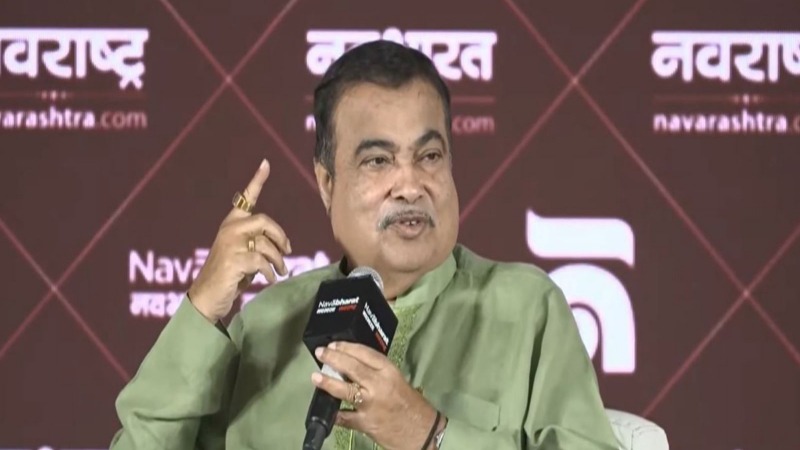
Union Minister Nitin Gadkari announced that the Indian government has initiated green hydrogen mobility trials across 10 critical transit routes. Partnering with corporate leaders like Tata and Reliance, the pilot aims to deploy hydrogen-powered buses and trucks to cut long-term fuel import costs and establish sustainable long-haul freight corridors.
GANDHINAGAR — In a major step toward clean energy transition, Union Minister for Road Transport and Highways Nitin Gadkari confirmed that the government has launched extensive alternative energy pilot projects. The ministry is actively conducting hydrogen trials on 10 prominent transit corridors across the country. The strategic deployment aims to validate the real-world operational viability of hydrogen as the definitive future of the transportation industry.
Addressing the Prawaas 5.0 and Bharat Prawaas Awards event in Gandhinagar, Gujarat, Gadkari emphasized that developing domestic hydrogen infrastructure is essential to reduce India's heavy fiscal reliance on imported fossil fuels. The multi-state pilot frameworks utilize cutting-edge Hydrogen Internal Combustion Engine (H2-ICE) and Fuel Cell Electric Vehicle (FCEV) technologies, targeting heavy-duty long-haul commercial logistics.
Technical Mapping of the 10 Active Hydrogen Corridors
According to official project manifests released by the Ministry of Road Transport and Highways (MoRTH), the ongoing field assessments span dense industrial arteries and tourism circuits to evaluate vehicle performance under varying payloads and topographies.
The pilot projects are actively running across these designated highway networks:
Northern Industrial Corridors: Greater Noida–Delhi–Agra and Sahibabad–Faridabad–Delhi.
Western Commercial Highways: Ahmedabad–Vadodara–Surat, Jamnagar–Ahmedabad, and the high-density Pune–Mumbai expressway.
Eastern Freight and Tourism Links: Jamshedpur–Kalinga Nagar, Bhubaneswar–Konark–Puri, and National Highway 16 (Visakhapatnam–Bayyavaram).
Southern Logistics Channels: Thiruvananthapuram–Kochi and Kochi–Edappally.
The execution of these pilots relies heavily on public-private supply alignments. Conglomerates such as Reliance Industries, Tata Group, NTPC, and Ashok Leyland have formalized technical pacts with the government to supply specialized commercial hydrogen buses and heavy-duty trucks.
Automotive Growth and Structural Rebalancing
The move to accelerate alternative energy options coincides with a rapid expansion of India's manufacturing base. Gadkari noted that the domestic automotive industry has surged from a valuation of ₹14 lakh crore to ₹22 lakh crore, establishing India as the third-largest automobile market globally.
However, scaling the green hydrogen transport ecosystem requires resolving capacity limitations in the public transport sector. Current industrial tracking data highlights clear operational friction points:
| Parameter | Current Capacity | Target Requirement |
| Annual Bus Production | 70,000–80,000 units | 300,000 units |
| Alternative Fuel Vehicle Share | Less than 5% | 35% by 2030 |
| Charging & Fueling Infrastructure | Localized hubs | Nationwide grid |
To address this gap, MoRTH is urging bus manufacturers to optimize productivity while passing the cost benefits of falling component prices onto end consumers.
Official Sources Section
The framework parameters are aligned with statutory directives issued under the National Green Hydrogen Mission, managed by the Ministry of New and Renewable Energy (MNRE). Real-time emissions tracking data and heavy vehicle safety clearances are being processed in coordination with the Automotive Research Association of India (ARAI).
Quote Section
"Our ministry is doing a pilot project on ten routes for hydrogen trials," stated Union Minister Nitin Gadkari during his keynote address. "I am sure the future of the transportation industry is hydrogen, and hydrogen is the fuel of the future, and we are working on that. The duty of our manufacturers is to give more comfort with reasonable economic value."
Why It Matters
Implementing hydrogen fuel systems carries direct practical implications for commercial fleet owners, corporate logistics firms, and environmental stakeholders. Unlike heavy battery-electric commercial trucks that require long charging windows and carry significant weight penalties, hydrogen systems offer rapid refueling times and comparable range to conventional diesel trucks. Over time, this shift lowers total cost of ownership (TCO) benchmarks, stabilizes consumer freight pricing, and significantly cuts transport-sector greenhouse gas emissions.
Key Facts at a Glance
Scope of Trials: Active testing of hydrogen mobility solutions is underway across 10 strategic highway corridors.
Industrial Partners: Major entities including Reliance, Tata Motors, NTPC, and Ashok Leyland are providing vehicle fleets and fueling setups.
Sector Growth: India's automotive segment has expanded to a ₹22 lakh crore valuation, ranking third globally.
Core Objective: Developing high-efficiency green corridors to transition India from a net energy importer to a clean energy exporter.
FAQ Section
Why is the government focusing on hydrogen over traditional electric vehicles (EVs) for heavy transport?
While battery-electric configurations work well for light city commutes, heavy-duty logistics require quicker refueling turnarounds and higher payload capacities. Hydrogen systems provide these advantages for long-haul trucking.
Which specific routes are involved in the current hydrogen trials?
The trials span 10 critical routes, including the Greater Noida–Delhi–Agra corridor, Pune–Mumbai, Ahmedabad–Vadodara–Surat, and Jamshedpur–Kalinga Nagar routes, among others.
When will hydrogen trucks and buses become commercially available to the public?
The current pilot testing phase is scheduled to run for up to 24 months to evaluate structural reliability and fuel delivery networks before wider commercial vehicle distribution begins.
Source: Official press updates from the Ministry of Road Transport and Highways (MoRTH) and project declarations via the Press Information Bureau (PIB) Delhi.