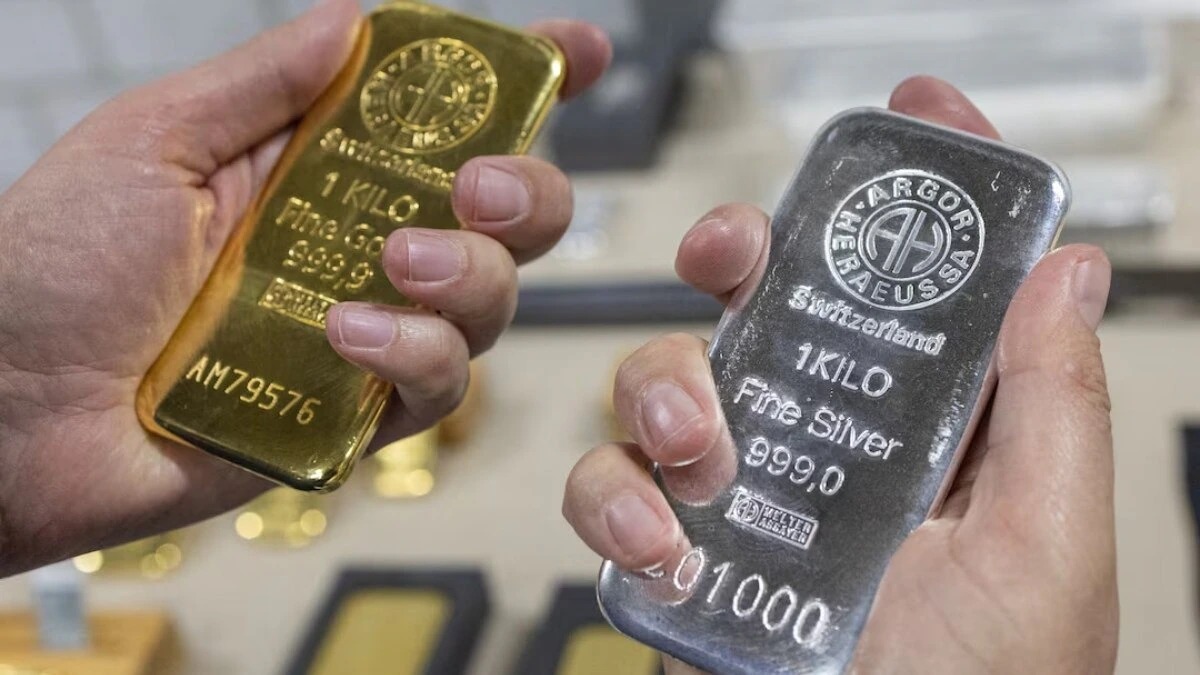
Retail gold prices fluctuated across Indian metros on July 10, 2026, with 24K gold settling at ₹1,44,600 per 10 grams in Delhi and ₹1,44,450 in Mumbai and Kolkata. Pure 999 silver stabilized at ₹2,34,900 per kilogram, mirroring tight consolidation on the MCX amid shifting international macroeconomic indicators.
MUMBAI — Indian physical bullion markets registered localized price fluctuations during morning trading on Friday, July 10, 2026, as retail spots adjusted to overseas geopolitical cues and macroeconomic policy signals. Commercial jeweller associations and multi-city exchange desks recalibrated retail rates for 24-karat (24K) and 22-karat (22K) gold products alongside pure 999 silver allocations.
The intraday variations across major urban hubs, including New Delhi, Mumbai, and Kolkata, reflect an active tug-of-war between flattening international safe-haven premiums and localized festive demand indicators. Concurrently, derivative contracts on the Multi Commodity Exchange (MCX) experienced tight trading bounds, tracking subtle fluctuations in global spot price indices.
Retail Bullion Benchmarks Across Key Metro Hubs
Retail pricing matrices released by the Indian Swage and Jewellers Association (IBJA) highlight minor price differences between the northern and western urban markets. These variations are primarily driven by localized municipal levies, octa-taxes, and regional shipping differentials.
The retail benchmarks for 10 grams of gold and 1 kilogram of silver were recorded as follows across the prime metros:
New Delhi Bullion Desk
In the national capital region, retail prices for fine physical gold adjusted slightly downward. The premium 24-karat (99.9% pure) gold standard was priced at ₹1,44,600 per 10 grams. Meanwhile, 22-karat gold the primary alloy standard utilized for traditional bridal jewelry settled at ₹1,32,560 per 10 grams.
Mumbai Financial District
Across the counter networks in Mumbai's Zaveri Bazar, bullion prices held a slim discount relative to northern centers. The retail value for 24-karat gold reached ₹1,44,450 per 10 grams. The 22-karat jewelry grade was fixed at ₹1,32,410 per 10 grams.
Kolkata Industrial Zone
Bullion desks across West Bengal mirrored Mumbai’s pricing structures. 24-karat pure gold bars were quoted at ₹1,44,450 per 10 grams, while the retail benchmark for 22-karat decorative gold settled precisely at ₹1,32,410 per 10 grams.
Industrial Silver Allocation
Unlike the minor localized variations seen in the gold market, industrial-grade 999 silver prices remained largely synchronized across major cities. The retail cost for 1 kilogram of pure silver was fixed at ₹2,34,900 in New Delhi, Mumbai, and Kolkata.
MCX Futures and Macro Catalysts
The underlying structural trends across physical counters were closely anchored by active derivative positioning on the Multi Commodity Exchange of India (MCX) platform. During the early morning clearing blocks, the active August MCX Gold futures contract hovered near ₹1,45,460 per 10 grams, logging a minor intraday adjustment of 0.28%. In contrast, industrial MCX Silver futures outperformed, ticking up 0.10% to trade around ₹2,27,160 per kilogram.
Market strategy desks note that domestic precious metals are reacting to specific underlying market forces:
Offshore Risk Adjustments: Recent geopolitical variations in West Asia have kept international safe-haven premiums active, providing a floor for bullion valuations.
Foreign Exchange Factors: The Indian rupee’s recent trading corridor against the US dollar has kept the landed import cost of raw gold bars high, helping support retail spot rates.
Central Bank Accumulation: Continued, programmatic physical gold purchases by global central banks continue to limit significant downside risk for long-term investors.
Official Sources Section
Daily precious metal calculations and retail guidelines are monitored and updated under the market standards published by the Indian Swage and Jewellers Association (IBJA). International spot tracking indexes remain aligned with raw data streams provided by the London Bullion Market Association (LBMA).
Quote Section
"According to officials managing spot treasury desks, current retail movements reflect short-term consolidation after a prolonged upward trend," independent commodity research briefs indicated. "While global interest rate adjustments cause periodic shifts on the MCX, underlying physical demand ahead of the upcoming festive and wedding season continues to provide strong support for domestic retail prices."
Why It Matters
Daily changes in precious metal prices directly affect retail consumer purchasing decisions, the cost structures of jewelry manufacturers, and the asset valuations of individual investors. For families planning wedding-related purchases, unexpected retail price spikes can alter household budgets and lead buyers to choose lower-purity options like 18K gold. For institutional investors, stability in the bullion market serves as an important hedge against inflation and equity market volatility, protecting overall portfolio value.
Key Facts at a Glance
Delhi Spot Benchmarks: 24K gold is priced at ₹1,44,600 per 10 grams, while 22K stands at ₹1,32,560.
Mumbai & Kolkata Uniformity: Both financial hubs quoted 24K pure gold at ₹1,44,450 per 10 grams.
Silver Retail Pricing: Pure 999 silver stabilized at ₹2,34,900 per kilogram across major metros.
MCX Performance: Gold futures saw a minor down-tick of 0.28%, while silver futures logged a 0.10% gain.
FAQ Section
Why do gold and silver retail prices differ between Indian cities?
Retail price differences are primarily driven by variations in state-level taxes, local transportation costs, octroi charges, and localized inventory demands among regional jeweler associations.
What is the structural difference between 24-karat and 22-karat gold?
24-karat gold represents 99.9% pure gold and is highly malleable, making it ideal for investment bars. 22-karat gold contains 91.6% pure gold mixed with durable alloys like copper or silver, making it strong enough for daily wear jewelry.
Do listed retail prices include GST and jewelry making charges?
No. Daily published spot benchmarks reflect the base price of the raw metal. Consumers must factor in a standard 3% Goods and Services Tax (GST) plus individual jeweler making charges at the final point of sale.
Source: Official Daily Spot Rate Directory, Indian Swage and Jewellers Association (IBJA) and live commodity futures data via the Multi Commodity Exchange of India (MCX).