India is gearing up to celebrate its second National Space Day on August 23, marking the anniversary of the historic Chandrayaan-3 soft landing on the Moon’s south pole. The day is set to be a nationwide celebration of scientific achievement, cultural heritage, and futuristic ambition, with...
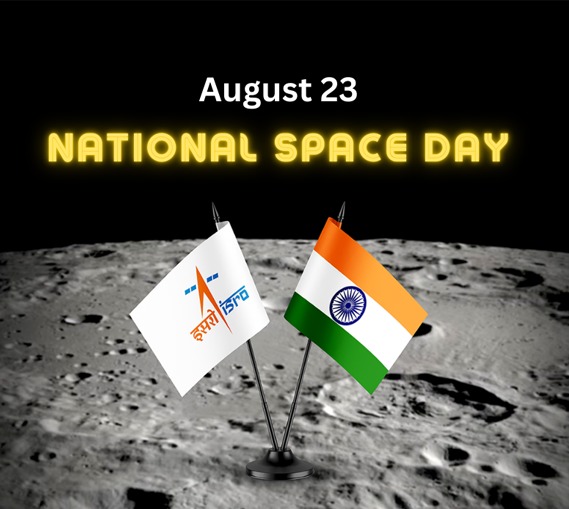
India is gearing up to celebrate its second National Space Day on August 23, marking the anniversary of the historic Chandrayaan-3 soft landing on the Moon’s south pole. The day is set to be a nationwide celebration of scientific achievement, cultural heritage, and futuristic ambition, with events planned across educational institutions, research centers, and public venues.
The theme for this year’s celebration, Aryabhata to Gaganyaan: Ancient Wisdom to Infinite Possibilities, reflects India’s journey from ancient astronomical traditions to cutting-edge space exploration. The day will not only commemorate past milestones but also spotlight the country’s bold vision for the future, including human spaceflight and interplanetary missions.
Key highlights of the celebration:
1. Prime Minister Narendra Modi will lead the central event in New Delhi, where Group Captain Shubhanshu Shukla will be honored for his recent return from an 18-day stint aboard the International Space Station. Alongside him, three other astronauts—Prashanth Nair, Ajith Krishnan, and Angad Pratap—will be recognized for their Gaganyaan mission training.
2. The Indian Space Research Organisation (ISRO) will host exhibitions, interactive sessions, and science fairs across its regional centers. These events aim to engage students, educators, and the general public in understanding India’s space achievements and future goals.
3. Educational outreach will be a major focus, with planetarium shows, quiz competitions, and lectures planned in schools and colleges nationwide. The goal is to inspire young minds to pursue careers in science, technology, engineering, and mathematics.
4. Institutions like the Karnataka State Open University (KSOU), NIT Durgapur, and Vikram Sarabhai Space Centre (VSSC) are organizing special events featuring miniature models of satellites, cryo-engines, and rockets. These exhibits will offer hands-on learning experiences and showcase India’s technological prowess.
5. The Ministry of Science and Technology and the Ministry of Culture are collaborating to integrate traditional Indian astronomy with modern space science. Exhibits will highlight ancient sky-mapping techniques and their relevance to contemporary research.
6. The Shiv Shakti Point, the site of Chandrayaan-3’s lunar landing, will be symbolically honored during the celebrations. This landmark achievement positioned India as the first country to land near the Moon’s south pole, reinforcing its status as a global space power.
7. ISRO scientists and engineers will participate in panel discussions and public talks, sharing insights into upcoming missions such as Gaganyaan, the Bharatiya Antariksha Station, and exploratory studies of Venus and asteroids.
8. The day will also serve as a platform to discuss the socio-economic impact of space technology, including its role in disaster management, weather forecasting, communication, and education.
9. Students from six schools in Durgapur, West Bengal, will join the festivities at NIT Durgapur, participating in exhibitions and lectures led by ISRO experts. Their involvement underscores the event’s emphasis on community engagement and youth empowerment.
10. A one-day workshop series will be conducted in Kerala, Lakshadweep, and Mahe by VSSC, LPSC, IISU, and IIST, offering localized programming and outreach tailored to regional audiences.
India’s second National Space Day is not just a celebration of scientific milestones—it’s a call to action for the next generation. By bridging ancient wisdom with modern innovation, the event aims to cultivate a culture of curiosity, resilience, and ambition in the realm of space exploration.
Sources: The Hindu, Star of Mysore, NewsBytes India, UNI India, MSN India, ISRO, PIB India, VSSC India