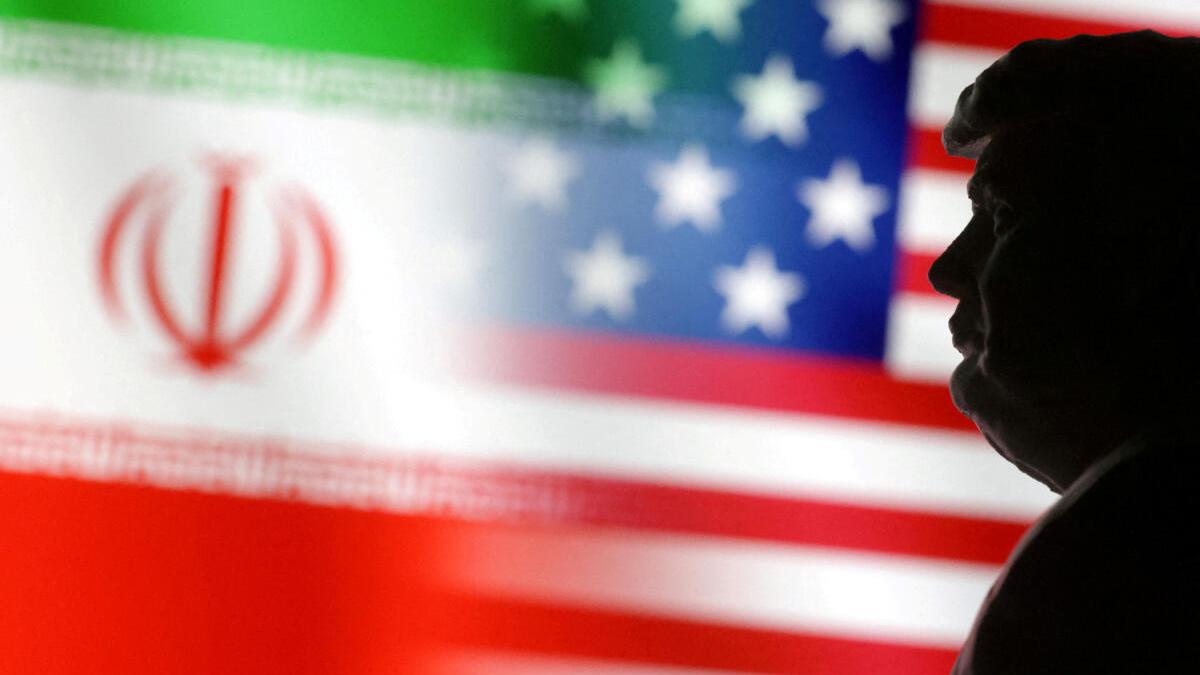
U.S. President Donald Trump announced that Iran has formally agreed to a strict clause permanently banning the development of nuclear weapons. Concurrently, Trump rejected widespread media reports alleging that Washington committed a $300 million financial payout to Tehran as part of the newly brokered historic maritime ceasefire agreement.
WASHINGTON — U.S. President Donald Trump announced that Iran has formally agreed to a critical diplomatic clause that permanently bans the country from developing or possessing nuclear weapons. The sudden declaration, delivered from the sidelines of the G7 summit in France, comes amid a major geopolitical shift as Washington and Tehran move to finalize a newly brokered maritime memorandum of understanding (MOU) to end months of active conflict in the Middle East.
While confirming the non-proliferation commitments, President Trump forcefully rejected circulating media reports alleging that the United States had agreed to an immediate $300 million financial payout to secure Tehran’s signature, labeling the claims fabricated political opposition narratives.
White House Clarifies Terms of Nuclear Restrictions
The diplomatic developments are part of a broader, newly negotiated bilateral framework intended to halt a highly destructive 15-week military confrontation in the Persian Gulf. Taking to social media on Monday evening, President Trump sought to establish the administration's primary strategic achievements ahead of a formal in-person signing ceremony scheduled for Friday in Geneva, Switzerland.
"Iran has agreed to never have a Nuclear Weapon!" Trump posted on Truth Social, framing the concession as a central security victory for the United States and its global partners.
The administration’s public announcements confirm that the nuclear clause will serve as an overarching operational guideline for subsequent technical negotiations over the next 60 days. According to details verified by White House officials, a core pillar of the newly drafted document ensures that the International Atomic Energy Agency (IAEA) and U.S. defense representatives will actively collaborate to oversee the monitoring, verification, and eventual dismantling of Iran's highly enriched uranium stockpiles.
The strict oversight measures represent a major shift from previous standoffs, though U.S. intelligence agencies remain highly cautious regarding long-term compliance.
Trump Rejects $300 Million Settlement Rumors
In the same public statement, President Trump targeted reports circulating in alternative media outlets and among congressional opposition groups that suggested the U.S. was making secret financial concessions. Critics had alleged that Washington agreed to transfer an immediate $300 million cash payment or asset release to Tehran as a signing incentive.
"Also, the story that the U.S. is paying Iran 300 million Dollars is Fake News, put out by the Dumocrats!" Trump stated, denying any direct cash transfers from U.S. taxpayers.
While Trump directly dismissed the $300 million figure, a separate report by the Financial Times indicated that senior administration aides have discussed the possibility of supporting a multi-billion dollar international reconstruction fund. However, officials clarified that this fund would be driven by private companies keen to invest in the region rather than direct government payouts, and any future sanctions relief or frozen asset access would remain strictly tied to verifiable nuclear concessions made during subsequent technical talks.
Regional Security Impact and Internal Skepticism
The announcement of the agreement has triggered divergent reactions across global security institutions and allied governments. Under the terms coordinated by international mediators, both the U.S. and Iran have ordered a preliminary halt to hostile operations. This includes an end to the U.S. naval blockade of Iranian ports and a commitment from Tehran to ensure toll-free transit for commercial shipping through the critical Strait of Hormuz starting Friday.
However, internal friction persists within the U.S. intelligence community. Reports compiled by intelligence watchdogs indicate that CIA Director John Ratcliffe expressed strategic doubts to senior administration officials regarding whether Iran’s hardline factions will fully honor the nuclear concessions over the long term.
Simultaneously, Israeli Prime Minister Benjamin Netanyahu’s administration has raised sharp public concerns over the deal, fearing it does not permanently eliminate Iran's underlying enrichment capabilities. Addressing these concerns, U.S. Vice President J.D. Vance noted during a national television broadcast that Washington expects regional allies to gradually support the agreement as implementation progresses and inspectors return to active verification sites inside Iran.
Official Sources Section
Diplomatic declarations and treaty frameworks are updated in accordance with briefings from the White House Press Office. Strategic assessments and intelligence overviews are monitored through public reporting by The Times of Israel and verified statements released via the International Atomic Energy Agency (IAEA).
Quote Section
"In fact, one of the core parts of the agreement is that the IAEA and the United States are going to help Iran destroy the highly enriched stockpile, and that's something that's spelled out very clearly," stated Vice President J.D. Vance during an interview with NBC News on Monday night.
"According to officials familiar with the text, the agreement establishes a temporary 60-day stabilization window, leaving the long-term structural dismantling of nuclear facilities to a secondary phase of technical talks."
Why It Matters
The formalization of a U.S.-Iran maritime agreement holds immense practical importance for the global economy and everyday consumers. The reopening of the Strait of Hormuz—the transit point for roughly one-fifth of the world’s petroleum and liquefied natural gas—directly reduces the steep geopolitical risk premiums attached to energy markets. This stabilization helps lower retail fuel costs, reduce global maritime shipping insurance premiums, and protect international supply chains from sudden, conflict-driven disruptions.
Key Facts at a Glance
Nuclear Pledge: President Trump confirmed that the text of the agreement contains a definitive clause preventing Iran from developing nuclear weapons.
Payout Denied: The White House explicitly refuted claims of an immediate $300 million financial transfer to Tehran, calling the reports false.
Inspectors Return: Under the active terms of the accord, international atomic energy monitors will be granted verified access to help destroy Iran's highly enriched uranium stockpiles.
Blockade Lifted: U.S. naval forces have been authorized to halt their maritime blockades, clearing the path for regular commercial shipping starting Friday.
Frequently Asked Questions (FAQ)
Did the U.S. agree to pay Iran $300 million?
No. President Trump and the White House have officially denied these reports, stating that no such cash payout exists within the negotiated terms.
What does the nuclear clause require Iran to do?
The clause requires Iran to pledge never to pursue or possess nuclear weapons and mandates cooperation with the IAEA to address and neutralize its highly enriched uranium stockpiles.
When will the final agreement be officially signed?
According to international mediators, the formal in-person signing of the Memorandum of Understanding is scheduled to take place this Friday, June 19, 2026, in Geneva, Switzerland.
How are international allies responding to the announcement?
While the Trump administration expresses strong confidence, the deal faces domestic skepticism from intelligence sectors and public criticism from Israeli leaders, who question Iran's long-term compliance.
Source: