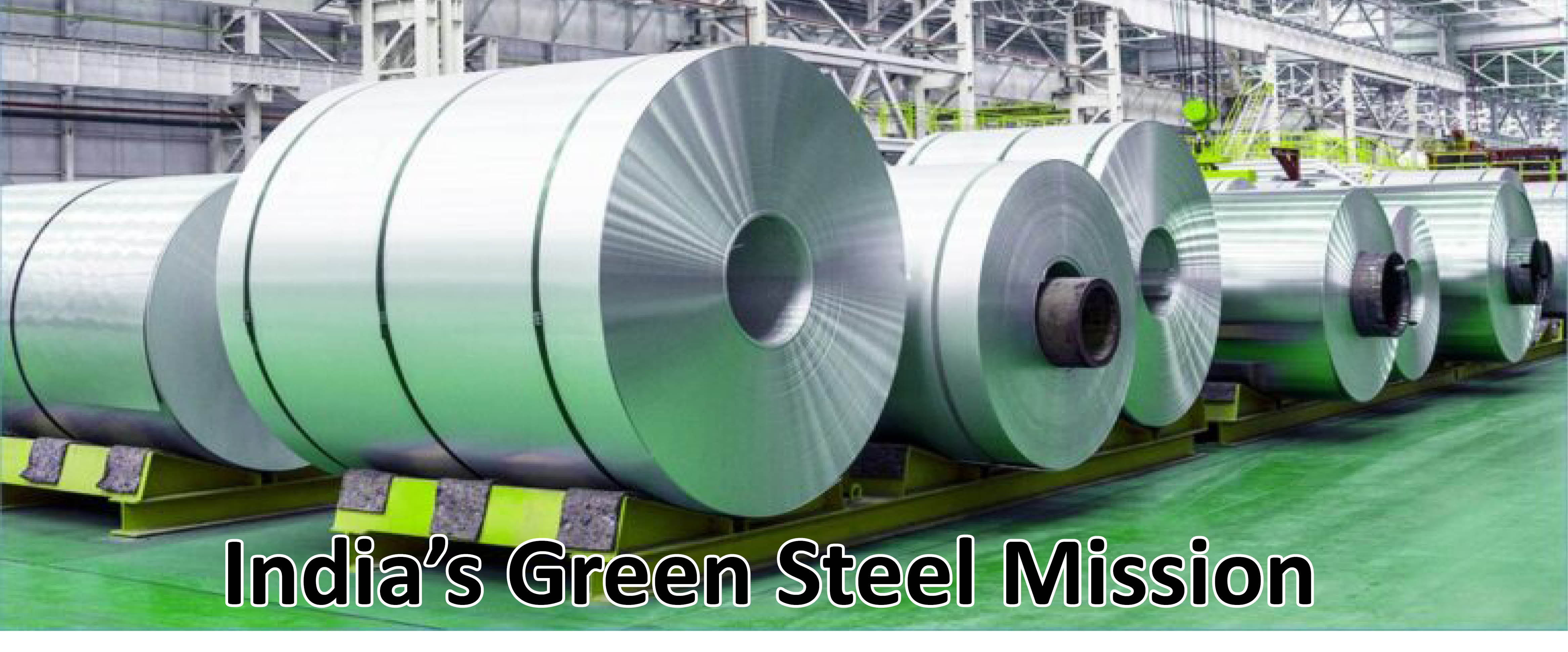
The Indian government plans to launch a ₹5,000 crore incentive scheme within three months titled the National Strategy for Sustainable Secondary Steel. Designed to lower carbon footprints, the scheme supports the adoption of green technologies and alternative materials, focusing heavily on modernizing secondary steel producers to meet net-zero climate commitments.
NEW DELHI — The Government of India is planning to introduce a comprehensive financial incentive program with a targeted outlay of ₹5,000 crore to accelerate the adoption of green technologies in the domestic steelmaking process. Formally titled the National Strategy for Sustainable Secondary Steel, senior government officials confirmed on Monday that the proposed policy is slated for an official rollout within the next three months. This major intervention arrives as a timely strategy to curtail heavy industrial greenhouse gas emissions, modernize secondary manufacturing units, and align India's core infrastructure assets with international carbon border standard compliance mandates.
Addressing Carbon Footprints in Secondary Manufacturing
The framework of the National Strategy for Sustainable Secondary Steel will cover all active steelmakers across the country. However, official sources have indicated that a substantial portion of the financial support will be structurally earmarked for secondary steel producers. Secondary players, which typically utilize scrap metal and electric arc furnaces, operate at lower baseline capacities than massive integrated plants and frequently lack the liquid capital necessary to deploy highly sophisticated, energy-efficient upgrades.
According to internal administrative metrics, the domestic steel industry is currently responsible for 10% to 12% of India's overall greenhouse gas emissions. The current carbon intensity of crude steel production in India stands at an average of 2.55 tonnes of CO₂ per tonne of steel produced. This footprint remains notably higher than the global manufacturing average, which floats around 1.9 tonnes of CO₂ per tonne of crude steel, highlighting the immediate necessity for systemic, state-supported technological remediation.
Fiscal Alignment and Market Impacts
The financial package is designed to foster a multi-pronged industrial modernization drive. The structural impact will filter down to multiple market levels:
Technology Subsidies: The ₹5,000 crore fund will subsidize the integration of alternative materials and cleaner production processes, such as scrap pre-heating, waste heat recovery systems, and localized energy-efficiency software.
Protecting Global Exports: As global export destinations enforce rigid decarbonization checks—most notably the European Union’s Carbon Border Adjustment Mechanism (CBAM)—the transition ensures Indian steel exporters do not face steep punitive carbon tariffs.
Investment Safeguards: For capital markets and institutional investors, the government-backed strategy reduces long-term regulatory risks for listed steel assets, converting traditional high-abatement operations into highly viable ESG-compliant investment models.
Official Sources Section
Regulatory files, program outlays, and manufacturing baselines are processed by the Ministry of Steel and the Union Cabinet of India. Statistical data regarding carbon emissions, sector allocations, and international treaties are tracked via database records maintained by the Press Information Bureau (PIB) and the Ministry of Environment, Forest and Climate Change.
Quote Section
"The scheme may go for approval of the Union Cabinet," a senior government official familiar with the policy drafting stated to the Press Trust of India. "The National Strategy for Sustainable Secondary Steel explicitly aims to promote the widespread adoption of clean technologies and alternative raw materials across various steelmaking processes to reduce carbon emissions from the domestic steel industry."
Why It Matters
Steel remains the fundamental building block of India's rapid infrastructure expansion, heavy manufacturing pipelines, and real estate growth. Implementing a green transition framework secures the long-term cost-competitiveness of Indian industrial products. By directly funding the technological overhaul of smaller, regional mills, the policy ensures that green energy adoption does not trigger localized supply constraints or price inflation for downstream builders and infrastructure consumers.
Key Facts at a Glance
Projected Outlay: A fixed allocation of ₹5,000 crore dedicated entirely to green tech integration.
Policy Name: National Strategy for Sustainable Secondary Steel.
Launch Timeline: Officially projected to launch within the next three months.
Target Concentration: Open nationwide, with a heavy emphasis on secondary and MSME steel producers.
Emission Target: Remediation of India's current 2.55 tonnes of CO₂ per tonne of steel footprint toward the global average.
FAQ Section
What is the primary objective of the new ₹5,000 crore steel scheme?
The scheme is designed to lower industrial greenhouse gas emissions by financially supporting the adoption of low-carbon technologies, energy-efficient machinery, and alternative raw materials in domestic steel mills.
Why are secondary steel producers receiving a larger share of the funds?
Secondary steel manufacturers generally work with lower operational capacities and face stricter capital barriers than massive integrated firms. The designated funding allows these smaller units to upgrade their equipment without facing financial insolvency.
How does India's steel emission profile compare globally?
India's domestic steel industry currently generates an emission intensity of 2.55 tonnes of CO₂ per tonne of crude steel, which stands higher than the global baseline of approximately 1.9 tonnes of CO₂ per tonne.
Source: Ministry of Steel, Press Trust of India, Press Information Bureau.