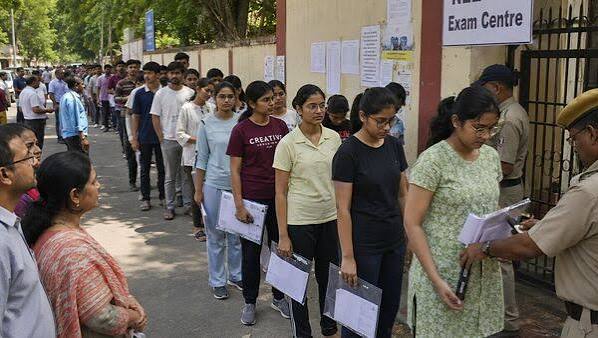
The Union Health Ministry is reviewing the zero-percentile NEET-PG rule for postgraduate medical admissions due to concerns over clinical standards and remaining vacancies. Government officials are evaluating a return to a 40th percentile baseline cutoff combined with multi-tiered counseling rounds to protect medical education quality.
NEW DELHI — In a major policy reassessment, the Union Health Ministry is reviewing the zero-percentile eligibility criterion for National Eligibility cum Entrance Test Postgraduate (NEET-PG) admissions across India's 85,839 medical seats. The governance review, confirmed by senior administrative officials on June 29, 2026, marks a pivotal turn after the zero-percentile rule failed to completely resolve vacant seat constraints while attracting intense pushback from medical associations. The government is actively discussing a shift toward a more merit-based framework, including a potential baseline cut-off set at the 40th percentile, alongside a structured, multi-tiered counseling roadmap.
Evaluating Academic Dilution Against Taxpayer Outlays
The regulatory evaluation of the zero-percentile NEET-PG rule addresses deep concerns over the standard of specialized healthcare. Originally implemented by the National Board of Examinations in Medical Sciences (NBEMS) to prevent post-counseling seats from going unfilled, the zero-percentile model lowered the technical eligibility threshold down to near zero for general streams and zero for reserved quotas. This framework effectively permitted candidates with low or negative marks to qualify for specialist training slots.
Despite these drastic eligibility cutoffs, data from the 2025–26 academic calendar revealed that 1,140 postgraduate medical seats still remained entirely vacant. Government assessments note that each specialized postgraduate medical slot represents a state expenditure of approximately ₹1.25 crore across the three-year course duration. Leaving these seats unfilled, or filling them with candidates holding deficient entry rankings, has raised alarms over the waste of public resources and the potential dilution of long-term medical education standards.
Intense Resistance From National Medical Organizations
The review comes as medical bodies expand their opposition, warning that allowing candidates with near-zero credentials to access critical clinical specializations risks patient safety. Organizations like the Federation of All India Medical Association (FAIMA) and the Federation of Resident Doctors Association (FORDA) have formally written to Union Health Minister JP Nadda to call for immediate policy corrections.
"According to officials, professional competence must take precedence over simply maximizing seat occupancy. While the initial policy sought to avoid structural seat vacancies, the current focus is moving back toward protecting the academic integrity of medical specializations."
In recent legal proceedings, the Directorate General of Health Services (DGHS) defended the historical policy by arguing that an basic MBBS qualification already establishes core clinical safety. However, the Supreme Court of India directed the government to justify how a near-zero eligibility bar does not degrade overall medical training quality, prompting the current internal ministerial audit.
The Proposed Framework: Higher Percentiles and Tiered Counseling
To balance academic quality with seat utilization, the health ministry is considering replacing the zero-percentile NEET-PG rule with a 40th percentile minimum qualifier. Under this proposed revision, candidate selections will follow a stricter baseline score requirement during primary admissions.
To address any leftover vacancies without lowering entry scores, the government plans to implement multi-tiered counseling windows. Instead of lowering percentiles uniformly, subsequent counseling phases will systematically release remaining unfilled seats to specialized sub-categories of qualified applicants, maintaining standard medical standards while optimizing institutional capacity.
Impact on Doctors, Medical Institutions, and Patients
For medical aspirants and resident doctors, the return to a merit-focused baseline provides assurance that intense preparation will not be devalued by ultra-low entry requirements. Private medical colleges, which historically relied on lowered cutoffs to fill expensive management quota seats, will face tighter regulatory compliance. Most importantly, for everyday citizens relying on government healthcare infrastructure, the policy update ensures that incoming medical specialists undergo rigorous screening before taking on advanced clinical responsibilities.
Official Sources Section
According to official briefings from Union Health Ministry representatives and administrative affidavits submitted to the Supreme Court of India, a high-level committee comprising members from the National Medical Commission (NMC) and NBEMS is finalizing the structural text of the revised admissions guideline.
Why It Matters
Medical education acts as the foundation for a nation's public healthcare safety. While filling infrastructure vacancies remains an important logistical goal, abandoning minimum entrance benchmarks entirely devalues specialized medical training. Reclaiming a higher percentile threshold ensures that specialists handling high-stakes clinical cases possess the verified technical capabilities necessary to protect patient safety.
Key Facts at a Glance
Policy Scope: The government is reviewing admission guidelines for 85,839 postgraduate medical seats nationwide.
Proposed Cut-off Changes: The ministry is considering a stable 40th percentile minimum benchmark to replace the controversial zero-percentile NEET-PG rule.
Vacant Seat Realities: Despite dropping the qualifying bar to zero, 1,140 postgraduate seats remained unfilled during the 2025–26 academic year.
Public Investment Costs: The state utilizes approximately ₹1.25 crore in taxpayer funding to sustain a single postgraduate medical residency over three years.
Alternative Counseling Models: Leftover operational seats will be managed via multi-tiered, merit-preserved counseling sequences rather than lowering general thresholds.
Frequently Asked Questions
What exactly was the zero-percentile NEET-PG rule?
The zero-percentile mechanism allowed any MBBS-qualified candidate who sat for the postgraduate entrance exam to participate in specialist selection counseling, regardless of how low or negative their actual test score was.
Why did the government decide to review this policy?
The review was initiated after 1,140 postgraduate seats still remained vacant despite the lowered bar. Additionally, widespread concern from medical associations and questions from the Supreme Court highlighted the risk of lowering clinical training standards.
How does the government plan to fill vacant seats moving forward?
The Ministry of Health plans to introduce structured, multi-tiered counseling rounds. This framework will offer remaining vacancies to eligible candidates who meet the baseline percentile requirement, rather than dropping general entry benchmarks.
Source: Policy consultation memos from the Ministry of Health and Family Welfare, administrative notices from the National Medical Commission, and examination monitoring archives managed by the National Board of Examinations in Medical Sciences.