The Indian government launched a co-investment model matching venture capital in Indian chip startups under the Rs 1,27,500 crore Semicon 2.0 framework. Simultaneously, Bengaluru AI startup Flam secured $40 million in Series B financing led by QED Investors to scale its proprietary interactive 3D enterprise technology across global corporate markets.
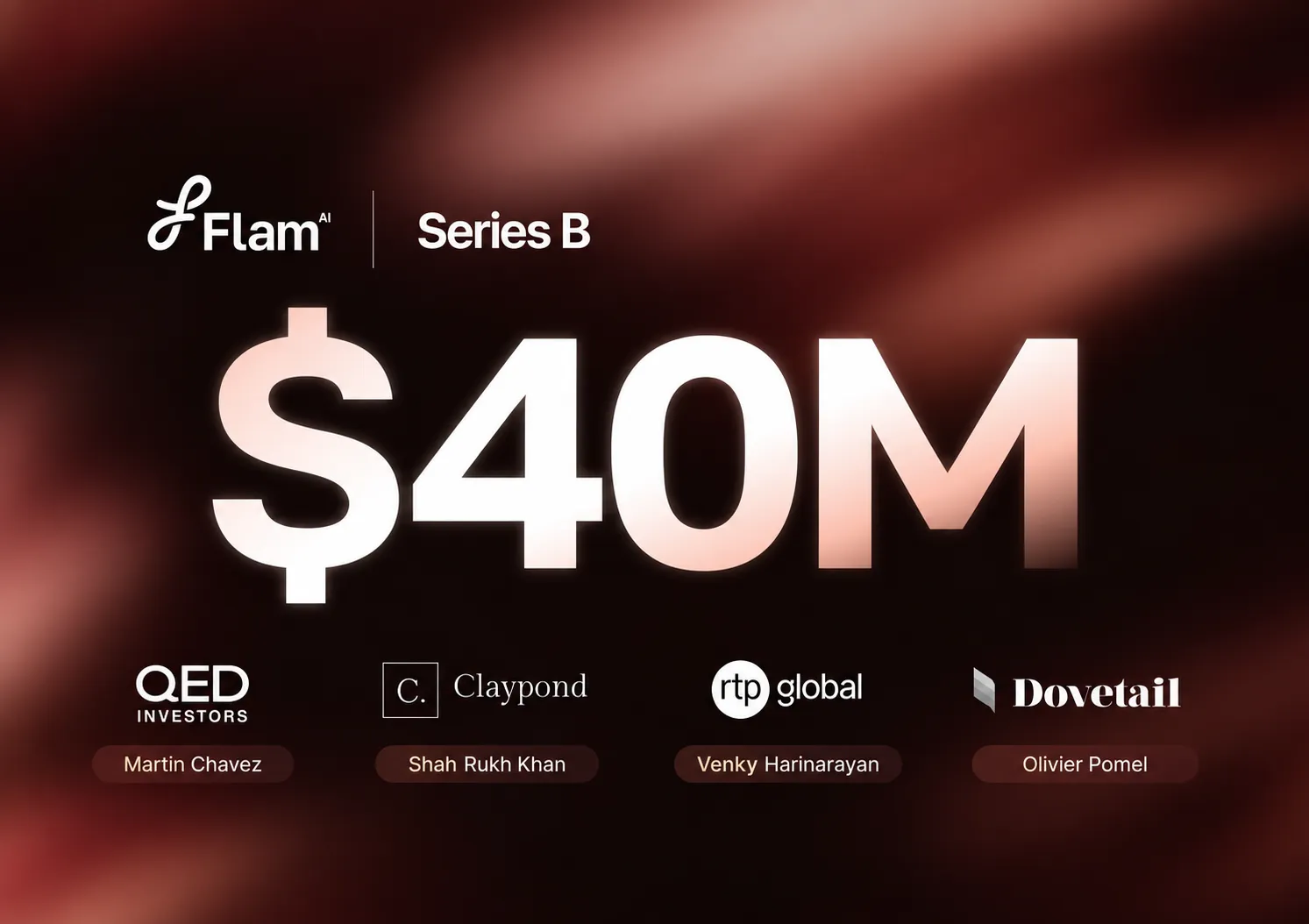
NEW DELHI — Federal authorities will now match venture capital investments into Indian chip startups rupee-for-rupee under the newly notified Rs 1,27,500 crore Semicon 2.0 scheme. Ministry of Electronics and Information Technology officials detailed the policy shift Wednesday ahead of Semicon India 2026. Simultaneously, in the private tech sector, Bengaluru-based artificial intelligence firm Flam closed a $40 million Series B funding round. QED Investors led the equity injection. The capital targets research and development expansion for Flam's proprietary interactive content models.
Direct Equity Matching Replaces Pure Grants
India Semiconductor Mission CEO Amitesh Kumar Sinha outlined the structural transition. Seed capital remains classified as grants. Once startups move beyond initial seed rounds, subsequent capital raises will directly trigger the federal co-investment model, providing companies with vital extended runway. The government shares both financial upside and failure risk by matching institutional VC terms directly.
Following initial cabinet approval of the massive Rs 1,27,500 crore financial outlay in mid-July, the Ministry of Electronics and Information Technology officially notified the finalized operating parameters on August 31. Capital allocation targets structural supply chain deficits. Plant equipment alone consumes approximately 65% of total fabrication facility setup costs, creating immense barriers to entry. By offering direct equity matches, federal administrators aim to onshore these specific critical supply nodes and rapidly lower domestic manufacturing premiums. Chemicals and specialized gases comprise half of ongoing operational expenses.
Series B Influx for 3D Content Generation
Venture markets demonstrated parallel liquidity in the application layer. Flam registered $40 million in new capital. QED Investors took the lead position. Regulatory filings confirm participation from Claypond Capital, RTP Global, Dovetail, and individual backers including actor Shah Rukh Khan and Olivier Pomel. Corporate disclosures indicate the funds will scale enterprise sales globally and accelerate product development.
The company maintains a 100-client roster. Current buyers include Reliance, Hyundai, and Google. Flam engineers deploy three core formats. Their Flicks product handles mid-playback video element switching via patented compression algorithms with a 50-millisecond time-to-first-buffer. Airboards render high-fidelity 3D camera interfaces in 300 milliseconds without native application installation.
Official Sources
Ministry of Electronics and Information Technology (MeitY) Semicon 2.0 Notification (August 31, 2026).
India Semiconductor Mission (ISM) pre-conference disclosures.
Flam Inc. Series B corporate funding announcements (September 15, 2026).
Market Comments
According to regulatory disclosures and company announcements, Flam founder Shourya Agarwal observed that internet content distribution is shifting rapidly. "Content has moved in waves, from text to images to video, and every wave flowed one way, creator to viewer. We think interactive is the next default for the internet," Agarwal stated.
Addressing the federal matching policy, ISM CEO Amitesh Kumar Sinha confirmed the equity mechanics. "Seed funds for startups are grants; the rest is our investment, so the government shares both the upside and the failures," he noted.
Why It Matters
Direct federal equity matching alters the risk profile for early-stage hardware investing. Institutional VCs can deploy capital into Indian chip startups with effective leverage, mitigating the historical barrier of high initial capital expenditures. On the software front, Flam's funding indicates enterprise willingness to adopt low-latency, browser-based 3D generation. Bypassing app installation removes a significant consumer friction point in retail and marketing environments.
Key Facts at a Glance
Semicon 2.0 operates with a federal outlay of Rs 1,27,500 crore.
MeitY transitions from pure grant disbursement to direct equity co-investment.
Flam's $40 million Series B advances its 26-billion-parameter language model.
Airboards generate 3D visual formats requiring under 300 milliseconds to load.
FAQ
How does the Semicon 2.0 VC matching work?
The government matches institutional venture capital investments rupee-for-rupee in approved hardware startups, acquiring equity on identical terms.
What does Flam's technology actually do?
The company builds AI models that generate interactive 3D content and modify video elements in real-time without requiring users to download separate applications.
Who funded Flam's Series B?
QED Investors led the $40 million round, joined by Claypond Capital, RTP Global, Dovetail, and individual investors including Shah Rukh Khan.
SOURCE: YourStory, Entrackr, Analytics India Magazine